
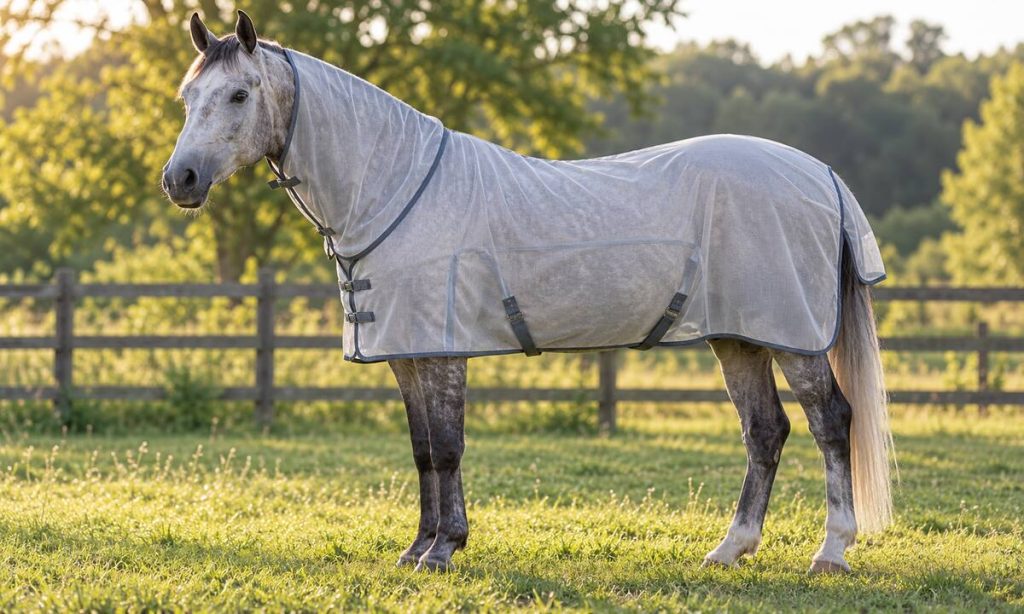
How to size a fly sheets for horses begins with careful measurements and the manufacturer’s chart. A sheet that is too tight may rub the shoulders and withers, while one that is too loose can slip, bunch, or catch on turnout obstacles. Horses vary in body length, chest width, back shape, and movement, so height alone does not determine a safe fit. The goal is breathable insect coverage that stays in place without restricting the horse’s natural stride.
This guide explains where to measure, how to compare sizing conventions, and what to check during a trial fitting. Owners browsing fly sheets for horses should use fit rather than labels such as full or cob as the starting point. You will learn to assess neck, shoulder, belly, tail, and leg-strap areas, then recheck the sheet in real movement. A correct number on a label is only the beginning of proper sizing.
Measure the Horse Before Choosing a Size
When deciding how to size a fly sheets for horses, use a flexible measuring tape and a calm horse standing squarely on level ground. Many US blanket and sheet charts measure from the center of the chest around the side to the tail area. However, different manufacturers may define starting and ending points differently. Follow the exact measuring illustration for the sheet being considered. Have a helper steady the tape without pulling it tight or allowing it to sag. Record the measurement in inches if the chart uses US sizing.
Measure again if the horse has gained or lost significant condition, is growing, or has changed muscle shape. Do not assume a previous blanket size will match a new fly sheet, even when both have familiar size labels. Length is only one dimension. Check the chest and shoulders, the withers, and the desired belly coverage. The horse blanket measuring guide explains related measurement principles, but use the fly sheet maker’s chart for the final decision.
Compare the Chart With the Horse’s Body Shape
Sizing charts may list body lengths, suggested ranges, or label sizes that differ among manufacturers. If the horse falls between two sizes, do not automatically choose the larger one. Review the brand’s specific guidance and assess how each available option fits the chest, back, and hindquarters. A broad-chested horse might need a different cut from a narrow horse of equal body length. Extra fabric that swings or folds is not always more comfortable. A correctly fitted fly sheet should lie smoothly without a hard pulling point.
Consider special construction details such as shoulder gussets, high wither shaping, detachable neck pieces, belly closures, and tail flaps. Each feature changes how the sheet sits. A neck extension that is too tight can pull the body panel forward; one that is too long may fold awkwardly. If the horse has a prominent wither, sensitive shoulders, or unusual proportions, evaluate contact points particularly carefully. Learning how to size a fly sheets for horses means matching the complete design, not merely buying the nearest number.
Test Chest, Wither, Shoulder, and Belly Fit
Fit the clean, dry sheet on the horse in a secure area. Fasten the front according to the maker’s directions and check that the chest closure stays flat rather than pressing or gaping. The withers should not experience constant pressure. Observe the shoulder area as the horse turns its head and walks forward. The sheet should move with the horse without digging into the coat or sliding backward. Watch for wrinkling that creates a rough ridge under the shoulder or near a seam.
Check belly protection next. A belly panel may help reduce exposed skin, but it should not sag into the legs or pull tightly against the underside. Fasten cross-surcingles and leg straps exactly as instructed so they cannot dangle or tangle. Do not improvise extra knots or clips. The fly-sheet comfort guide for hot weather discusses coverage choices that also influence daily wear. Remove the sheet if the horse becomes distressed or the fit looks unsafe.
Check Movement and Turnout Safety
A stationary fitting can miss problems that appear during grazing and walking. Lead the horse calmly and observe a few steps, turns, and head-lowering movements when safe. Check whether the sheet shifts sideways, rides up the shoulders, moves toward the tail, or restricts the forelegs. Make sure straps remain in their intended positions without swinging below the belly. If possible, check the horse again after a short supervised trial period before relying on the fit for longer turnout.
How to size a fly sheets for horses is also influenced by paddock conditions. A sheet that fits in a quiet stable may catch on protruding hardware, broken fencing, or low branches outside. Inspect turnout areas for snag hazards. Watch the horse’s temperature and comfort during warm weather; mesh does not guarantee that every horse will remain cool in every condition. The University of Minnesota Extension includes fly sheets among physical barriers for insect control, alongside sound facility hygiene. Equipment must support comfort, not simply provide more fabric coverage.
Recheck Fit After Wear, Washing, and Seasonal Changes
Once the sheet is in routine use, remove it regularly and inspect the horse for rubbing, hair loss, heat, swelling, or skin irritation. Check seams, closures, straps, and mesh for stretching or tears. Washing may alter how some fabrics sit, while daily movement can loosen buckles or change strap tension. Follow care instructions and let the sheet dry fully before refitting. Never solve repeated slipping by making every strap excessively tight. Persistent movement may indicate that the cut or size is wrong.
Review sizing after changes in body condition, workload, coat, or season. Horses may not maintain the same topline and chest shape throughout the year. A growing young horse may outgrow a previously comfortable sheet. Replace fabric with large tears, failing closures, or edges that create rubbing. Document the horse’s measurement and the brand’s stated size so future fitting is easier. Consistent checks help distinguish normal seasonal adjustments from equipment that should no longer be worn.
Frequently Asked Questions
Fly sheets differ in sizing charts, shape, and coverage. These questions clarify common decisions during measuring and fitting.
A good fit should allow normal movement while keeping straps secure. Check the individual horse after fitting rather than relying only on a size label.
Where do I start measuring for a fly sheet?
Follow the exact maker’s diagram. Many US charts measure from the center of the chest along the side to the tail area, but conventions vary.
Should I size up if my horse is between sizes?
Not automatically. Compare the maker’s guidance and check chest, shoulder, and overall fit. Extra fabric can create slipping and rubbing.
Can a horse wear the same size as its winter blanket?
Possibly, but do not assume it. Fly-sheet cuts and sizing systems vary, so remeasure and use the specific chart.
How can I tell if the sheet is too tight?
Look for pulling at the chest, pressure on the withers, shoulder rubbing, restricted movement, or straps that press into the skin.
How often should I recheck fly-sheet fit?
Check during fitting and after removal, and reassess regularly throughout use. Repeat measurements after notable body-shape or condition changes.
Final Words
How to size a fly sheets for horses means measuring accurately, using the particular manufacturer’s chart, and confirming comfort in motion. Check chest, shoulders, withers, belly, neck attachments, and straps instead of focusing on length alone. Inspect the sheet again after washing and as the horse’s body condition changes. Remove any covering that slips dangerously, causes rubbing, or interferes with normal movement.
When evaluating fly sheets for horses, prioritize a shape that fits the individual horse and can be checked easily during turnout. Keep measurements on record, observe how the sheet behaves during movement, and correct hazards promptly. Proper sizing supports comfortable insect protection, but clean facilities and routine horse care remain important parts of fly management.









