
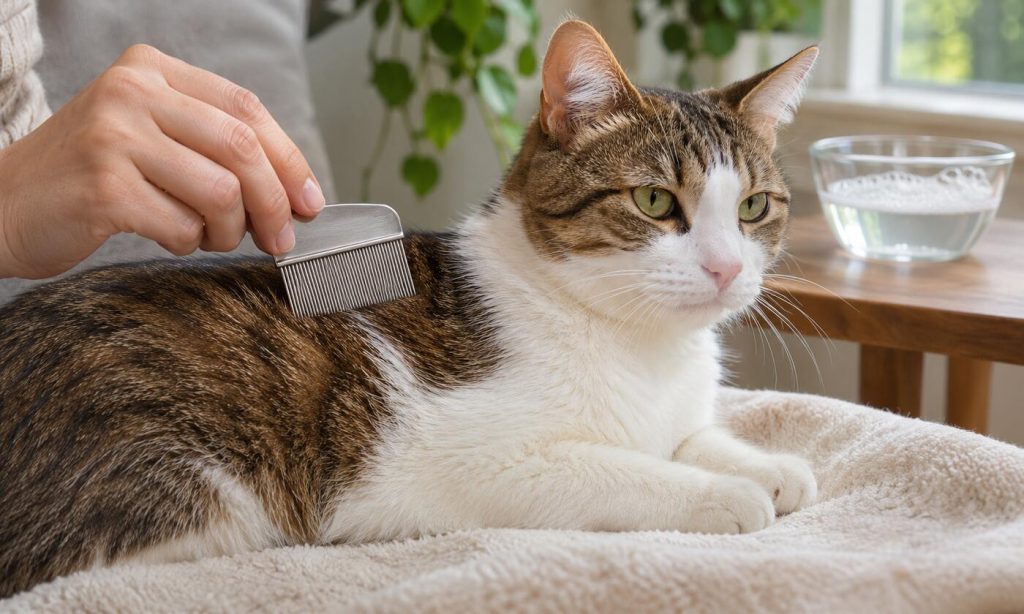
A flea comb is a simple inspection tool, but not every comb feels comfortable in every cat’s coat. Tooth spacing, edge smoothness, head width, and handle control can all change how well you can examine the skin. If you want to compare flea comb for cats options by fit and use, begin with your cat’s coat type and tolerance for handling. A gentle, repeatable inspection is more useful than one exhausting session.
Using a flea comb for cats can reveal live insects and dark flea dirt. Cornell’s feline health guidance describes fine-toothed combing as one way to detect flea signs. Yet finding and removing a few fleas does not eliminate an infestation in the home. This guide explains generic comb designs, safe technique, cleaning, and the situations that require veterinary flea prevention. It deliberately focuses on practical features and welfare rather than recommending specific products.
Compare tooth spacing and smoothness carefully
A flea comb generally has teeth positioned close together so hair can pass while small fleas and debris are caught. Very widely spaced teeth may miss tiny parasites. Teeth that are unusually sharp, bent, or rough may scrape sensitive skin. Inspect the tips before use and move the comb gently through a small section of fur. A comb that catches or pulls repeatedly is not a good fit for that coat, even if it looks sturdy. The useful comparison is whether it separates hair comfortably while trapping visible specks for examination.
Consider the coat’s thickness and length. Short, close coats are often easier to reach with a compact fine-toothed head. Dense undercoats or longer fur may need gentle parting into small sections before combing. Do not force the flea comb through mats, which can hurt the cat and damage the tool. For general coat management, long-haired cat combing considerations help explain why ordinary detangling and flea inspection are separate tasks. A flea comb should inspect near the skin without becoming a painful de-matting instrument.
Choose a head and handle that allow controlled movement
A narrow comb head may help around the neck, behind ears, and other small areas. A wider head can cover more of the back, but only if you can keep the teeth flat and gentle. Handle grip matters because a cat may turn suddenly. Look for a shape that stays secure in your hand without requiring a tight, tiring squeeze. Check that the head is firmly attached and has no exposed sharp joints. A good tool should allow you to slow down immediately when the cat shows discomfort. Control matters more than speed.
Some handles are easier to grip with damp hands; others may feel too narrow for a steady hold. Test the empty comb first by gently moving it over a cloth, then over a small calm patch of fur. Keep the cat supported on a non-slip surface. Never restrain forcibly just to finish a full-body combing. If your cat resists touch, use short positive sessions and seek professional guidance. The guide for cats that dislike grooming describes calmer handling routines. Tool fit includes the human hand and the cat’s comfort.
Use a method that helps you recognize flea signs
Choose a quiet place with bright light and a pale towel or sheet beneath the cat. Start with a few easy strokes along the shoulders or back. Then examine the base of the tail and other tolerated areas, avoiding irritated skin. Pull the comb slowly in the direction of hair growth and stop when it snags. Examine the teeth after each pass. Fleas may move quickly, while flea dirt can look like dark peppery specks. Cornell notes that flea dirt and adult fleas are useful clues during an infestation assessment.
You can place suspected dark flecks on damp white paper to look for a reddish-brown stain, which can suggest digested blood in flea debris. This is not a complete diagnosis. Photograph uncertain findings if your veterinarian requests them. The guide to recognizing fleas on cats discusses other signs, including scratching and skin changes. If your cat has extensive irritation, scabs, or hair loss, stop repeated combing of sore areas. A veterinarian should help assess whether fleas, allergies, or another condition are involved.
Clean the comb and do not mistake it for treatment
Remove caught insects and debris promptly, using a safe disposal method such as dipping the comb into a small container of soapy water that stays away from the cat. Do not put soap on your cat unless specifically advised by a veterinarian. Wash the comb with mild soap and water if its materials allow, rinse, and dry completely. Inspect the teeth again before storing. Do not share an uncleaned comb between animals with known skin problems. The comb cleaning and storage guide explains material-dependent care.
Combing removes only parasites the teeth reach. Eggs and immature flea stages in the home can continue the infestation. The US Environmental Protection Agency recommends combining pet attention with environmental control, including thorough vacuuming. Discuss a cat-appropriate prevention and treatment plan with your veterinarian, particularly if several animals are affected. Never use a dog flea treatment on a cat unless a veterinarian confirms it is labeled and appropriate; some dog-only ingredients are dangerous to cats. A flea comb is useful for monitoring progress, but it does not replace effective, suitable flea control.
Know when flea findings require veterinary care
Repeated scratching, skin sores, excessive grooming, or flea allergy signs justify veterinary assessment. Heavy infestation can cause anemia, particularly in kittens or medically fragile animals. Pale gums, weakness, rapid breathing, or collapse are urgent concerns. A cat may also ingest fleas while grooming and develop tapeworm infection. These possibilities mean that choosing a comb is only one small piece of a broader health plan. If a kitten seems ill or carries many fleas, do not delay veterinary care while trying home methods.
Keep records of when fleas or dirt were found and whether other pets have symptoms. Check sleeping areas and vacuum appropriate surfaces thoroughly. The article on reducing home flea reinfestation explains why environmental action matters. After appropriate treatment starts, use gentle combing to watch for ongoing signs if your cat tolerates it. Be patient: the flea life cycle can make control take time. A sudden disappearance of visible adult fleas does not always mean the environment is clear.
Frequently Asked Questions
The right flea comb should be fine enough to capture clues and gentle enough for repeated inspections. These answers clarify what combing can and cannot accomplish for cat health.
Do not force a cat through painful grooming, and never use a flea comb as a substitute for a veterinarian’s treatment plan. Parasite control also involves the pet’s surroundings.
Can a flea comb remove every flea from a cat?
No. It can catch some adult fleas and debris, but missed fleas and immature stages in the environment can sustain an infestation.
Is a metal comb always better than plastic?
Not always. Smooth teeth, appropriate spacing, secure construction, and comfortable handling matter more than material alone. Avoid rough or sharp edges.
How often should I comb a cat with fleas?
Ask your veterinarian about monitoring frequency. Gentle short sessions may help, but excessive combing can irritate already sore skin.
Does flea dirt prove my cat has active fleas?
It is an important clue, but interpretation depends on context. Check for other signs and seek veterinary confirmation when uncertain.
When is flea infestation an emergency?
Pale gums, severe weakness, collapse, or breathing changes require urgent veterinary attention, especially in kittens or vulnerable cats.
Final Words
To compare flea comb for cats options by fit and use, examine tooth spacing, smoothness, head control, and your cat’s tolerance. Practice slow, gentle passes and inspect debris under good light. Clean and dry the comb after use, and do not force it through tangled or sore fur. A suitable tool makes monitoring more practical, not treatment optional.
A flea comb for cats works best as one part of a broader prevention plan. Use the cat flea identification guide to understand what you find, then discuss proper parasite control with your veterinarian. The cat’s comfort and health should guide every decision.
Reference
The following veterinary and government resources informed the discussion of flea detection, health concerns, and environmental control. They provide general guidance, not individualized diagnosis or dosing advice.
Consulted sources include Cornell University College of Veterinary Medicine’s feline flea guidance, the US EPA home flea-control information, and the US EPA pet flea-control guidance.









