
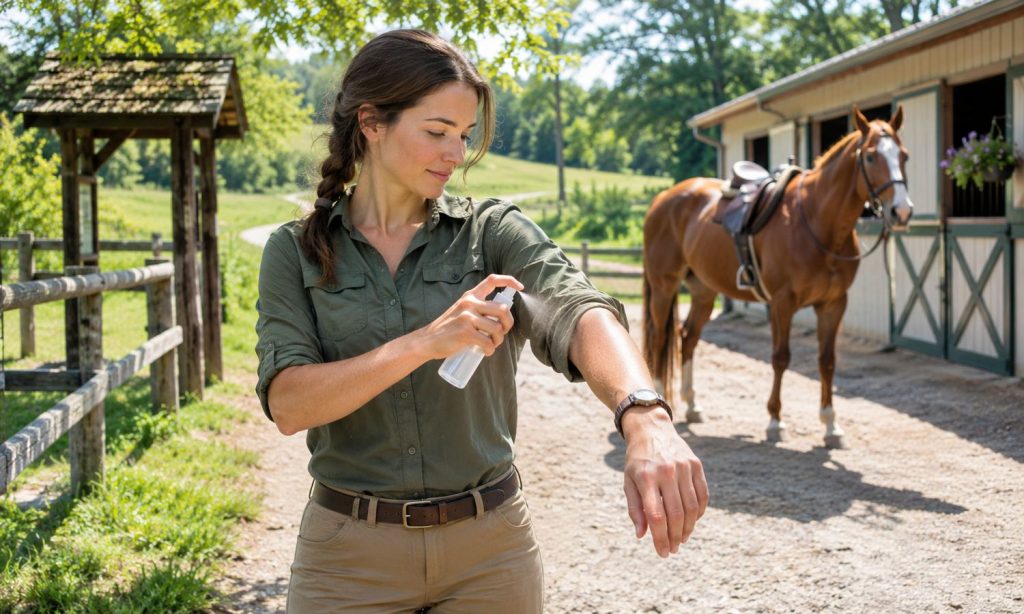
Horse flies can turn a peaceful afternoon at the barn into a frustrating series of sharp bites. Riders and horse handlers need personal protection, yet a spray intended for horses is not automatically safe for human skin. If you are wondering what features matter most in a horse fly repellent for humans, begin with its label, the insects it addresses, and how you will use it around animals. A useful repellent should fit the actual conditions, not merely promise an impressive number of hours.
This guide explains how to evaluate human-use repellents without naming or ranking products. You can also explore our best horse fly repellent for humans comparison for broader category context. Here, the focus is practical: choose a suitable application method, understand protection limits, avoid common mistakes, and reduce fly pressure through stable management.
Start With a Human-Use Label and the Target Insect
The first essential feature is permission for application to people. Read the complete product label, including age restrictions, application sites, warnings, and reapplication instructions. A horse fly spray may be formulated for equine coats, facilities, or equipment. None of those uses establishes that it belongs on a rider's arms or legs. Some formulations repel insects; others are designed to kill them on animals or surfaces. These jobs are different, and the distinction matters near bare skin.
Next, check the insects listed on the label. A repellent that mentions mosquitoes or ticks does not necessarily carry the same claims for horse flies. Horse flies are persistent biting flies with their own feeding behavior. They may remain active near water, wet ground, or livestock. What features matter most in a horse fly repellent for humans therefore depends partly on the pest you actually encounter. Use a human-use label with relevant claims, then judge performance against your conditions rather than assuming one formulation covers every biting insect.
Understand Ingredients and Evidence Without Chasing Stronger Claims
In the United States, most skin-applied insect repellents are regulated by the Environmental Protection Agency. EPA registration indicates that a labeled use has been evaluated for safety and effectiveness when directions are followed. It is not a promise that no insect will bite. Some minimum-risk products may have different regulatory status, so an attractive natural-sounding claim is not the same as equivalent evidence. Treat labels and directions as the basis for decisions, especially for sensitive skin or use around children.
Active ingredients, formulation, and concentration influence how a repellent behaves, but higher concentration does not automatically mean stronger immediate protection against every fly. The relevant question is whether the specific label supports the intended use and how often the user may need to reapply. When thinking about what features matter most in a horse fly repellent for humans, compare the stated insect coverage, permitted skin areas, and use instructions together. An ingredient name alone tells only part of the story. FYI, a dramatic front-label slogan is not a substitute for the back label.
Match Protection Duration to Real Barn and Trail Conditions
A brief grooming visit and a full trail ride create different demands. For a short visit, convenient controlled application may matter more than a long duration claim. For a day outdoors, clothing, sweating, heat, and repeated exposure can change the practical plan. Follow the product's labeled reapplication schedule. Do not apply extra amounts merely because flies remain annoying; overspraying is not a safe strategy. Keep the directions available when heading away from the barn.
Evaluate duration claims with realistic expectations. Rain, washing, sweat, and skin contact with tack or clothing may affect a repellent's persistence. The label determines what to do next. Horse flies also respond to movement, dark objects, and local conditions, so complete bite prevention may be unrealistic. For additional protection, consider loose protective clothing where compatible with safe riding and clear visibility. When deciding what features matter most in a horse fly repellent for humans, reliable instructions and suitable coverage usually matter more than the largest number printed on the package.
Choose an Application Method You Can Control Safely
Sprays, lotions, and wipes require different handling. A spray can cover exposed areas quickly, but drifting droplets may contact a horse, feed, water, or another person. A wipe or lotion may offer more controlled placement. Whatever the format, read the directions on where and how much to apply. Do not spray directly toward your face. For products allowing facial use, the EPA advises applying to your hands first, then carefully to the face while avoiding eyes and mouth. Wash hands afterward when directed.
Think through your routine before applying. Keep a horse secured safely and a reasonable distance from the application area, especially when spraying. Do not use human repellent as a substitute for how to use fly spray safely with horses. Apply repellent only where the human-use label permits, not to broken skin or under clothing unless explicitly directed. Avoid contaminating food, drinks, and feed equipment. The best application format is the one you can use accurately, consistently, and without exposing the horse to accidental drift.
Pair Personal Protection With Better Fly Management
Even an appropriate skin repellent works within a larger environment. Horse flies may breed in wet habitats, and several other fly species thrive around manure, feed waste, and standing moisture. Reducing nuisance fly pressure requires identifying which insects are present rather than assuming that every fly responds to the same method. A useful companion is our guide to reducing flies through stable and manure management, which covers regular cleaning and practical prevention.
Environmental strategies also include thoughtful ride timing, appropriate fly barriers for horses, and maintenance around high-use areas. A trap should be selected for the insect species and positioned according to its instructions; placing it beside a barn doorway can create an unwanted congregation. Our horse barn fly trap safety guide explains placement considerations. For riders, what features matter most in a horse fly repellent for humans includes compatibility with these broader measures. A bottle can help, but it cannot replace sensible barn hygiene.
Notice Skin Reactions and Know When to Stop
People vary in their tolerance of topical formulations. If irritation, rash, burning, or other concerning symptoms develop, stop using the repellent, wash the affected skin as directed, and seek medical advice when needed. Follow label instructions for accidental eye exposure or swallowing. Do not improvise with essential oils, concentrated agricultural insecticides, or equine-only fly products on human skin. A pleasant smell does not establish a formulation's safety, and homemade mixtures lack the evaluation behind labeled registered products.
For children, pregnancy, or a preexisting skin condition, carefully follow applicable labeling and speak with a health professional if the suitability of a product is uncertain. Keep repellents in their original containers and away from food and children. Check the expiration or storage guidance and avoid leaving containers in a hot vehicle. Sensible protection also means knowing when to leave an area with heavy fly activity. What features matter most in a horse fly repellent for humans? Clear instructions, realistic limits, and safe application are the foundation.
Common Mistakes When Comparing Human Repellents
The easiest error is treating a horse-care product and a human-use repellent as interchangeable. Another is looking only at ingredient concentration while ignoring whether the label covers the target insect. Some riders also apply repellent immediately before handling feed or petting a horse, which increases unwanted contact. A little planning avoids those situations. Keep personal products separate from grooming supplies, and wash as directed before tasks that involve food or animal care.
Do not assume a waterproof claim means unlimited protection after sweating or washing. Nor should you rely on a scent, color, or marketing description as proof of effectiveness. If the label is unreadable, damaged, or missing, do not use the container. For lengthy rides, carry only an appropriately secured amount when permitted, and keep packaging out of reach of animals. In my view, the most important comparison question is simple: can the user follow the instructions under actual trail conditions? If not, another suitable application format may be easier to manage.
Frequently Asked Questions
These questions address details that riders often discover only after reaching the barn. They focus on personal insect repellent use, not medications for horses or directions for applying equine fly spray. Always let the specific product label take precedence over general suggestions, because formulations differ in claims, permitted ages, and how they should be applied.
Protection is also more than a bottle. The right response can include changing the time of a ride, adding suitable clothing, or addressing fly breeding sites. Use the answers below to check a plan before you begin. If insects remain exceptionally aggressive or a reaction occurs, reassess rather than simply applying more product.
Can I use my horse's fly spray on myself?
No, not unless its label explicitly authorizes human skin use. Products formulated for animals can have different ingredients and concentrations. Use only a repellent labeled for people, and follow its directions.
Do mosquito repellents automatically repel horse flies?
Not necessarily. Insect claims vary by formulation. Read the label to see which pests it addresses and what application instructions apply. A mosquito claim alone does not confirm horse fly protection.
Should I reapply repellent after sweating?
Check the product label. Sweating and washing can affect performance, but application frequency must follow the specific directions. Do not exceed labeled usage or mix multiple products without guidance.
Are natural ingredients always gentler on skin?
No. Plant-derived substances can still irritate skin or cause reactions. Evaluate the complete label, the permitted uses, and any relevant safety evidence. Natural origin by itself does not establish safety.
What else helps during heavy horse fly activity?
Appropriate clothing, adjusted ride timing, and fly-control practices around stalls and paddocks may reduce exposure. Identify the fly species before choosing traps or environmental measures, and keep horse products separate from human repellents.
Final Words
What features matter most in a horse fly repellent for humans comes down to four checks: a label for human use, relevant insect claims, practical application instructions, and realistic duration. A strong-looking bottle cannot compensate for an unsuitable label. Keep your horse away from accidental spray drift, and remember that fly management in the barn supports personal protection on the trail.
For a wider overview of the category, see best horse fly repellent for humans. That context can sit alongside the safety steps above, rather than replacing them. If you compare options carefully and respect their limits, you will be better prepared for an ordinary barn visit and a longer ride alike.









