
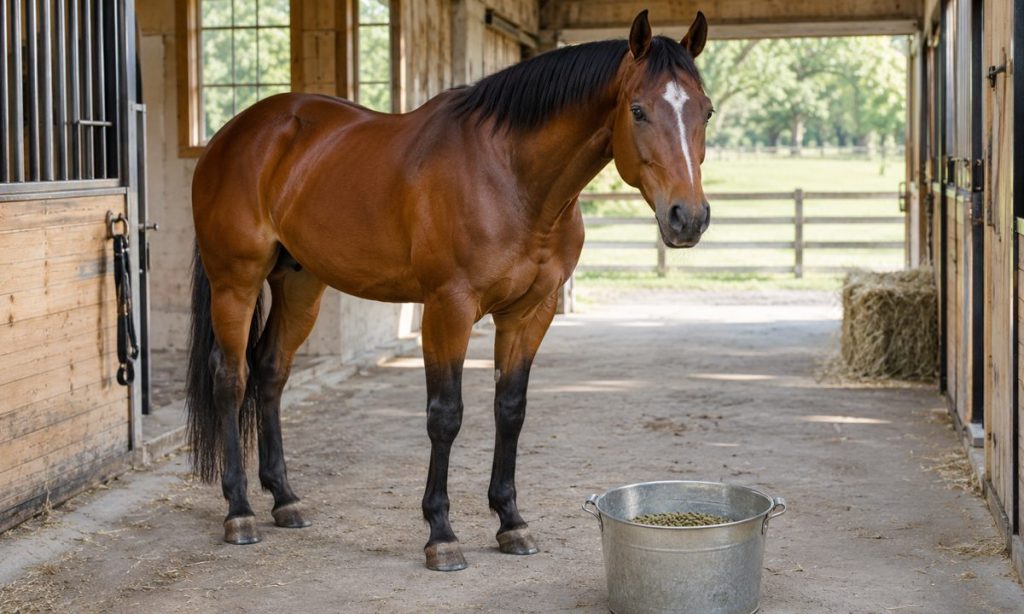
Alfalfa pellets provide a compact form of legume forage, but their convenience should not lead to an abrupt feeding change. Learning how to introduce a alfalfa pellets for horses to your pet means deciding why they belong in the ration, measuring the amount accurately, and considering the horse's chewing and swallowing ability. Some horses may benefit from a carefully planned forage alternative, while others already receive adequate calories and protein from hay and pasture.
This guide explains how to evaluate the ration, introduce pellets slowly, consider soaking when appropriate, and monitor the horse. Our best alfalfa pellets for horses article provides related category context. The safest starting point is a forage-based feeding plan reviewed with a veterinarian or equine nutritionist, especially for seniors, horses with dental problems, or those managing medical conditions.
Decide Why Alfalfa Pellets Are Being Added
Alfalfa pellets may supply forage nutrients in a convenient measured form. Their protein, calcium, energy, and fiber content can differ from grass hay, and the exact analysis varies by manufacturer and batch. They are not automatically a complete feed or a substitute for all long-stem forage. Consider whether the goal is supporting an underweight horse, supplementing an established ration, or replacing some forage when chewing is difficult. Each goal calls for a different calculation.
Begin with body condition, weight, forage intake, workload, and any health diagnosis. Weigh ordinary hay and record grain or ration balancer amounts before making changes. Use a forage test when possible and examine the pellet's guaranteed analysis. Our guide to reading horse feed and hay labels explains why nutrient values need context. How to introduce a alfalfa pellets for horses to your pet should always address the whole ration, not just whether the horse likes the taste.
Check the Label and Plan a Gradual Transition
Choose a product explicitly intended for horses and read its feeding directions. Note the serving size, ingredients, nutrient analysis, storage information, and whether soaking is advised. Measure pellets by weight where practical, because a scoop's volume is not equivalent across products. Ask a veterinarian or equine nutritionist to help calculate the amount to add or substitute. The amount needed depends on the current ration and the horse's individual needs; there is no safe universal number of scoops.
Introduce a modest amount within the approved plan, increasing gradually over several days or longer as advised. Adjust other feed components as needed to avoid overfeeding total calories or unbalancing minerals. Monitor appetite, manure, water intake, and signs of discomfort. Do not replace most long-stem hay overnight. Feeding changes can alter digestive conditions, and sudden large changes raise avoidable risks. Keep a written schedule so all caregivers know the current amount and do not accidentally add extra servings.
Consider Choke and Chewing Safety
Pellets are dry, compact particles. Some horses bolt feed, have poor teeth, or struggle with swallowing, increasing concern about choke. Ask the veterinarian whether the pellets should be soaked to a soft mash and how to prepare them. Follow the specific product's instructions. Use an appropriately sized feed tub and observe the horse while eating, particularly during the initial transition. A horse with a history of choke needs individual veterinary guidance before being offered new dry feed forms.
Never ignore coughing, saliva or feed material from the nostrils, repeated swallowing attempts, distress, or a sudden inability to eat. These may indicate choke or another urgent problem. Remove access to feed and water as directed by the veterinarian and call promptly; do not attempt to force food or liquid down the throat. Proper introduction is as much about eating mechanics as nutrition. How to introduce a alfalfa pellets for horses to your pet should include a plan for safe texture and close observation during the first meals.
Maintain Forage and Water Access
Horses are adapted to spend significant time foraging. Pellets can be consumed more quickly than long-stem hay, so replacing all hay without a carefully balanced plan may reduce chewing time and change normal feeding behavior. Maintain appropriate access to forage and fresh water. When pellets are used as a larger forage substitute, discuss fiber needs and meal distribution with an equine nutritionist. Frequent forage access matters for digestive function and welfare.
Monitor whether the horse drinks normally, particularly when dry feed forms are introduced. Do not assume adding water to a mash replaces free access to clean water. For horses sharing a paddock, feed separately when needed to confirm that each animal receives its assigned amount. Our guide to estimating daily hay portions for horses can help establish a baseline. A pellet addition should not accidentally result in underfeeding hay or creating long gaps without suitable forage.
Store Pellets to Protect Their Quality
Keep bags sealed in a clean, cool, dry feed area, away from moisture, pests, and chemicals. If transferring to a storage container, preserve the original label, lot number, and expiration information. Never use a bin that previously held pesticides or other unsafe substances. Check for dust, musty odor, unusual clumping, insects, or visible mold before feeding. Discard questionable feed. Protect opened bags from rain and condensation, and rotate stock so older supplies are used within their safe period.
Use a dry scoop for dry pellets. If soaking a portion, prepare it according to the feeding plan and do not leave wet mash standing for extended periods, especially in warm conditions. Clean tubs between meals and discard leftovers that have spoiled. Good hygiene prevents a feeding change from becoming a contamination problem. How to introduce a alfalfa pellets for horses to your pet also includes storage and preparation that every caregiver can repeat accurately without guesswork.
Monitor Body Condition and Ration Balance
Track weight or weight-tape trends, body condition, manure, appetite, and exercise tolerance over time. A horse gaining unwanted fat may need a revised calorie plan; a horse losing condition may need further veterinary assessment. Alfalfa can be nutrient-dense, and higher protein or calcium intake may be inappropriate for some individual rations. Do not assume more is beneficial. Work with a professional if the horse has a kidney concern, metabolic disease, recurrent colic, or another condition affecting diet.
Use a consistent monitoring interval and compare changes alongside the full feeding program. A horse may be receiving new hay, reduced turnout, and more pellets at the same time; record all of those changes. If a medical condition is involved, follow the veterinarian's specific plan. Our article on discussing forage for insulin-resistant horses with a nutritionist highlights why forage composition can matter. A carefully measured ration is more useful than anecdotal claims about one feed ingredient.
Avoid Common Introducing Mistakes
The first mistake is replacing the existing hay ration based on equal bucket volume. Pellets and hay differ in density, so weigh them. The second is feeding large dry portions to a horse that bolts food or has dental issues without addressing choke risk. The third is assuming pellets provide every nutrient needed for a balanced diet. Review complete feed labels and consult an equine nutritionist, especially when a ration balancer or other concentrates are already being used.
Another mistake is judging success from a single enthusiastic meal. Some horses love new feed, but acceptance is not proof that the ration is suitable. Watch weight, manure, chewing comfort, and overall health. Do not feed spoiled pellets or leave soaked feed to ferment. If you see colic signs, abnormal swallowing, or sudden refusal, contact the veterinarian promptly. In my view, a simple written transition plan is one of the most useful feeding tools in any barn.
Frequently Asked Questions
These answers cover practical handling questions rather than prescribing an amount. Pellets vary in composition, and the right feeding plan depends on the individual horse. Check product directions and ask the veterinary or nutrition team about substantial forage substitutions.
Observe the horse during early meals, particularly if it eats quickly or has dental concerns. Introducing feed successfully means more than getting the first portion eaten. It means maintaining comfort, digestive stability, and a nutritionally balanced ration over time.
Should I soak all alfalfa pellets before feeding?
Not every horse has the same need. Soaking may be advisable for horses with choke or chewing concerns. Follow the product directions and veterinarian's recommendation.
Can pellets replace all long-stem hay?
Only with a properly designed complete feeding plan. Pellets may reduce normal chewing time. An equine nutritionist should evaluate forage, fiber, and behavioral needs before major replacement.
How do I measure a serving accurately?
Use a scale when practical and follow the approved ration. Scoop volume varies with pellet size and density, so it is less reliable than weight.
What if my horse coughs or feed comes from its nose?
Stop feeding and seek prompt veterinary advice. These may be signs of choke. Do not force water or more feed into the horse.
How do I know whether the new ration works?
Track body condition, appetite, manure, water intake, and veterinary findings. Review the full diet periodically rather than relying only on whether the horse enjoys the pellets.
Final Words
How to introduce a alfalfa pellets for horses to your pet is best approached as a measured forage change. Review the current diet, read labels, calculate portions by weight, introduce gradually, and monitor chewing safety and digestive comfort. Store pellets dry, keep suitable forage and water available, and seek veterinary care if concerning signs develop.
The best alfalfa pellets for horses guide can help you understand common category differences, but the final ration belongs to the horse's individual needs. A controlled transition and thoughtful monitoring are much more valuable than filling a bucket quickly.









