
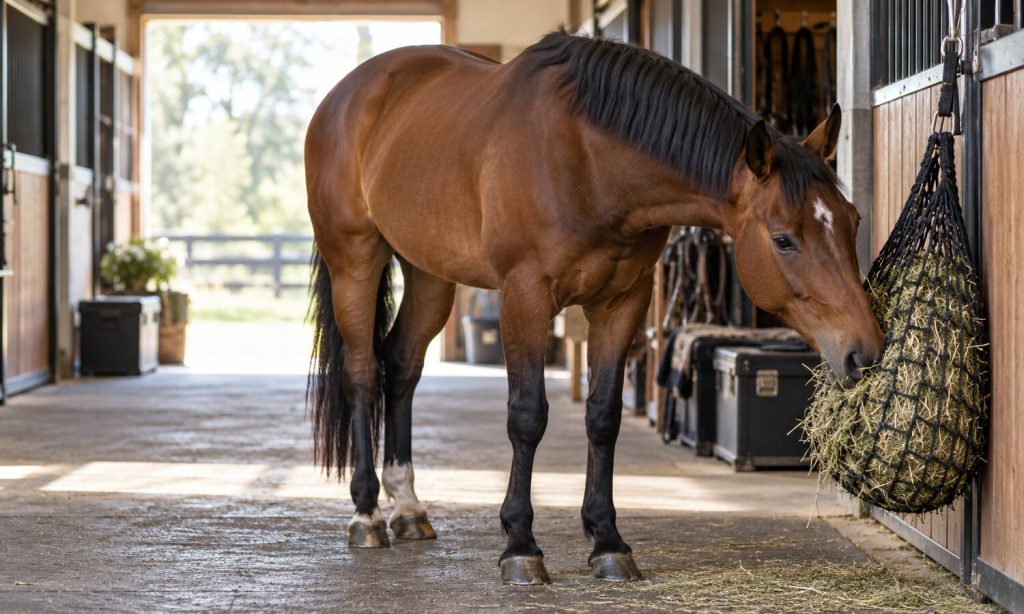
Hay nets can help manage forage waste and extend eating time, but a design that works well in one barn may be unsafe in another. Learning how to compare hay net for horses options by fit and use means examining mesh opening size, capacity, installation, material condition, and the behavior of the horses using them. A net hung too low, a loose cord, or a damaged mesh panel can create a serious entanglement risk.
This guide explains how to assess everyday practicality without ranking specific products. Our best hay net for horses overview provides broader category context. The goal here is to understand what to measure, which hazards to check, and when an alternative feeder may be preferable. A horse's normal feeding behavior and safe access to forage should guide every decision.
Define the Feeding Goal Before Selecting a Net
Some owners want to reduce hay scattered on the ground, while others are trying to lengthen foraging time. Those goals overlap but are not identical. A small-mesh design may make a horse work longer for forage, but extremely restrictive access can frustrate some horses or interfere with appropriate intake. Consider the individual's body condition, dental health, age, and feeding plan. Horses sharing a space may need separate hay stations to reduce competition and bullying.
Think about where the net will be used: stall, paddock, trailer, or a contained feeder. Each environment presents different risks from hooves, hardware, fences, and other equipment. A net suitable for a secure stall fixture may not work in a muddy paddock where it can drag along the ground. How to compare hay net for horses options by fit and use begins with the intended daily routine rather than the largest advertised capacity.
Compare Mesh Opening Size With Horse Behavior
Mesh openings influence how easily a horse can pull out hay. Smaller openings may slow intake, but an opening that is too restrictive can lead to frustration or insufficient access in some horses. Very large openings may allow rapid hay removal or create opportunities for a hoof or other body part to become caught. The ideal arrangement depends on the horse's muzzle, feeding style, forage texture, and safe design guidance. Do not treat one measurement as universally suitable.
Observe the horse using a new net under supervision. Does it pull calmly, paw at the net, chew the mesh, or twist its head awkwardly? Are there loose strands or holes expanding under tension? If the animal becomes distressed, stops eating adequately, or attempts dangerous actions, discontinue use and reassess. Our hay feeder options for horses guide provides related alternatives. A net should support normal forage consumption, not turn every meal into an obstacle course.
Choose Capacity Based on Measured Forage
Net capacity is often described by a rough amount of hay, but bale density and forage type vary. Weigh portions rather than assuming that filling the net to the top supplies a certain number of pounds. Overstuffing can strain seams and make openings difficult to use. An oversized net may hang lower as it empties, changing the entanglement risk. Consider how often the horse needs to be fed and whether the caregiver can fill the net safely without lifting an awkward weight.
For a horse with metabolic disease or a restricted diet, the amount should follow veterinary or nutrition guidance. Do not use a small mesh as a substitute for measuring feed. Our guide to estimating daily hay portions for horses explains why weighing forage is more dependable than counting flakes. How to compare hay net for horses options by fit and use includes the relationship between volume, actual calories, and the horse's feeding schedule.
Evaluate Mounting Height and Entanglement Risk
Install a net according to the manufacturer's directions and evaluate it with the horse's expected head movements. An unsecured loose net can swing, drag, or catch a hoof. Long ties and dangling closures add risk. The safest height and position depend on the design and setting, so avoid generic rules without checking the horse and fixture. Consider whether the net can drop as it empties and whether a horse can paw through the mesh or catch a shoe or rug.
Check the attachment point, wall hardware, and any chain or clip for strength and sharp edges. A net should never be fastened to a weak fixture or block an exit. In a herd situation, place feeding points to reduce crowding, kicking, and competition. Inspect the entire setup from the horse's perspective, including nearby buckets, fencing, and ground conditions. If a net cannot be mounted safely, use another appropriate feeding arrangement rather than improvising with wire or unstable hooks.
Compare Materials, Seams, and Fasteners
Hay nets may use synthetic rope, woven fabric, or reinforced mesh. Materials vary in abrasion resistance, flexibility, moisture retention, and ease of cleaning. Check the thickness and condition of the mesh, stitching, knots, closure cords, and reinforced edges. A small broken strand can enlarge quickly when a horse pulls against it. Stiff or frayed surfaces may also rub the muzzle. Choose a construction that can be inspected easily, not one that hides damage inside complicated folds.
Consider outdoor conditions. Sunlight, rain, mud, and freezing weather may affect materials over time. Follow the care directions and avoid relying on a faded or brittle net simply because it still holds hay. Check whether the closure can be secured without long loose ends and whether hardware has sharp edges. In my view, durability is useful only when it comes with a routine for noticing wear. No material lasts forever under repeated tugging and exposure.
Clean, Dry, and Store Nets Between Uses
Remove leftover hay, saliva residue, dust, and manure contamination regularly. Follow the cleaning instructions for the net material and dry it thoroughly before storing. Do not use harsh chemicals that could leave residues where a horse eats. Inspect mesh holes and tie points while the net is empty. If significant fraying or structural damage appears, retire it instead of creating improvised knots that may change opening size or cause snagging.
Our guide to cleaning and maintaining hay nets covers the process in greater detail. Store clean nets in a dry, secure place out of reach of horses and pests. Loose cords should be contained, and wet nets should not be folded into sealed containers. The daily work required matters when comparing hay net options. A design that is difficult to empty and wash may be impractical in a busy barn, no matter how appealing its appearance.
Observe Feeding, Comfort, and Forage Access
The true test comes after installation. Observe the horse over several meals: its posture, chewing, speed, mood, and total forage consumption. A horse that spends more time eating may benefit from a slower presentation, but a horse that becomes frustrated or fails to meet nutritional needs needs a different approach. Keep water accessible and maintain the full ration under the horse's feeding plan. Check for unusual head carriage, sore muzzle, or attempts to chew the net instead of the hay.
For horses with dental problems, age-related chewing difficulties, or medical dietary restrictions, ask a veterinarian or equine nutritionist whether this setup is appropriate. Consider offering forage through more than one safe station if social dynamics make sharing difficult. How to compare hay net for horses options by fit and use includes monitoring the outcome for the actual horse rather than assuming the package's feeding-time claims apply to everyone.
Know When Another Feeder Is Better
Some environments are simply not good matches for hanging nets. A horse that paws repeatedly, catches its shoes, or aggressively chews mesh may need a safer alternative. Low, secured containers or purpose-built feeders may reduce particular hazards, although each has its own maintenance and placement considerations. No feeder is free from risk. A veterinarian, experienced stable manager, or equine nutritionist may help identify options suitable for a horse with special needs.
Review the whole stable layout: traffic paths, fence corners, turnout groups, drainage, and storage access. Do not install a net where an animal can become trapped between fixtures. Keep sharp hardware covered or replaced and inspect after severe weather. If a design cannot be kept stable and clean, stop using it. The right feeder is the one that reliably supplies suitable forage while minimizing avoidable injury risk and caregiver error.
Frequently Asked Questions
The practical differences between nets often become clear only after they are filled and used. These answers focus on fit, placement, and safety rather than product rankings. Always follow design-specific directions and supervise a horse when introducing a new feeding setup.
Measure actual forage portions, check attachment points, and observe the horse's behavior. A net that slows eating but creates distress, rubbing, or inadequate intake is not a successful choice. Reassessment is part of responsible care.
Is smaller mesh always better?
No. Smaller openings may slow feeding, but they may frustrate some horses or limit intake. Match opening size to the horse, forage, and safe-design guidance.
Can a hay net hang close to the ground?
Only if the particular setup is designed and assessed to minimize hoof entanglement. Loose hanging mesh near feet can be hazardous. Follow the manufacturer's instructions.
How much hay should fit in a net?
Capacity depends on the design and hay density. Weigh the horse's assigned portion and do not overstuff. Use a feeding plan rather than assuming a full net equals one meal.
How do I know whether the horse is comfortable?
Observe calm eating, normal posture, adequate intake, and absence of pawing, rubbing, or dangerous pulling. Discontinue use if the behavior suggests risk or distress.
When should I replace a hay net?
Replace it when mesh, knots, seams, or fittings become frayed, sharp, loose, or unreliable. Cleaning cannot restore structural integrity to a damaged net.
Final Words
How to compare hay net for horses options by fit and use starts with a clear feeding purpose and the horse's normal behavior. Examine mesh openings, measured capacity, secure installation, material condition, and cleaning demands. Watch the horse during early meals and stop using a setup that creates entanglement risk or restricts appropriate forage intake.
For a broader view of the best hay net for horses, use the category overview as context, not as a substitute for individual safety checks. A dependable hay net is one that fits the feeding plan and can be maintained safely, day after day.









