
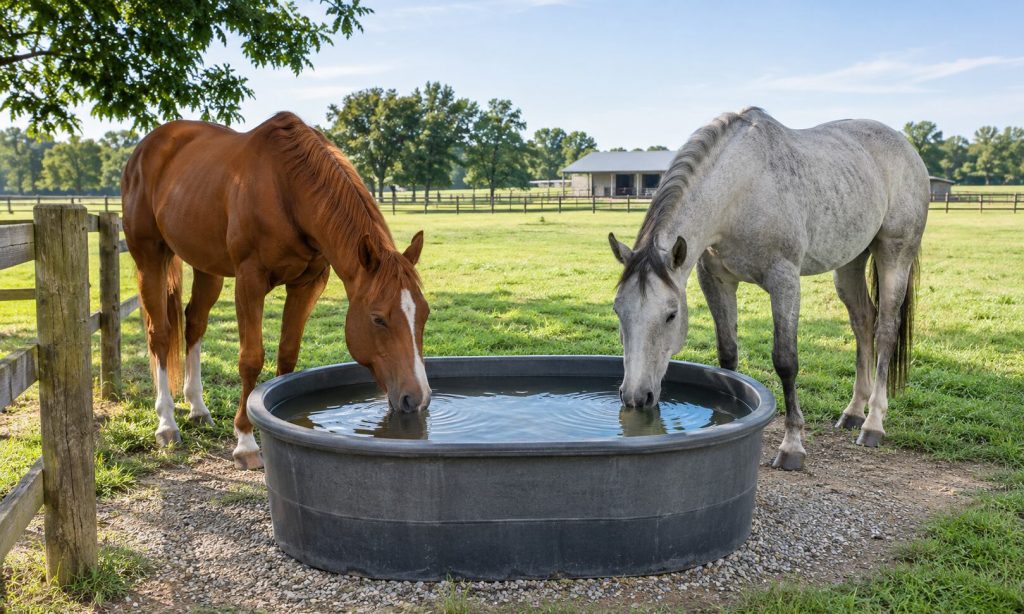
Reliable water access is one of the simplest ways to protect a horse’s daily well-being. Yet choosing a trough involves more than picking the largest tank on the page. Horses need fresh, clean water, and their intake changes with feed, exercise, and weather. The best water trough for horses should fit the number of animals, their drinking access, the refill system, and the owner’s cleaning routine. A tank that holds enough water but cannot be cleaned easily may be a poor choice.
This guide compares seven verified stock tanks from compact poly models to large, shared-pasture containers. We examine stated capacities, construction, drains, placement, and maintenance tradeoffs. No tank can guarantee clean water without regular attention. Use the product list to plan a practical setup, then check dimensions, footing, climate needs, and whether all horses can drink without being displaced by dominant companions.
Quick Picks
These seven stock tanks vary in capacity, materials, and upkeep. Estimate the appropriate volume using daily horse water needs.
| Product | Best For | Key Advantage | Buy | |
|---|---|---|---|---|
| Rubbermaid Commercial 50-Gallon Stock Tank | One-horse paddock setups | Structural foam and ribbed base | View on Amazon | Jump to Review |
| High Country Plastics 40-Gallon Aqua Stock Tank | Compact poly trough | Impact-resistant poly body | View on Amazon | Jump to Review |
| Little Giant 100-Gallon Poly Oval Stock Tank | Mid-size shared turnout | Molded rim and drain-hole provision | View on Amazon | Jump to Review |
| Tuff Stuff KMT99 140-Gallon HD Oval Tank | Larger flexible-material tank | Recycled LDPE and brass drain | View on Amazon | Jump to Review |
| Behlen Country 78-Gallon Galvanized Round Tank | Metal trough preference | Zinc-coated steel body | View on Amazon | Jump to Review |
| Rubbermaid Commercial 300-Gallon Stock Tank | Large shared pasture | Very high-capacity structural foam | View on Amazon | Jump to Review |
| Behlen Country 27-Gallon Rigid Poly Stock Tank | Temporary or small-area watering | Compact one-piece poly interior | View on Amazon | Jump to Review |
Rubbermaid Commercial 50-Gallon Stock Tank

- Verified 50-gallon capacity
- RigidCell structural foam
- Ribbed base construction
- 10-year limited warranty listed
- Livestock watering use
- Emptying 50 gallons takes planning
- Heater compatibility needs checking
Rubbermaid Commercial’s 50-gallon Stock Tank is a useful middle-size candidate for a small paddock or turnout area. Its current listing identifies RigidCell structural-foam construction and a ribbed base. The product is positioned for livestock watering and other outdoor uses. Fifty gallons offers more buffer than a household bucket, but usable capacity depends on actual fill level, weather, and how many horses share the tank. An automatic refill can reduce daily manual labor, although you still need to confirm flow, reliability, and cleanliness.
The manufacturer highlights a ten-year limited warranty and a design intended to withstand outdoor use. Those are features to check, not evidence that the tank cannot crack or become damaged. A horse can bump, paw, or rub a trough, and freezing conditions add separate stresses. Place the tank on firm, level footing away from unstable fences or sharp hardware. Watch how the horse approaches the rim and whether there is enough room to drink without conflict. Clean water access matters more than the nominal number of gallons.
Cleaning is the real ongoing commitment. Even a sturdy 50-gallon container can collect algae, sediment, and feed debris. Drain or empty the tank safely, scrub the surfaces with an appropriate routine, rinse thoroughly, and refill with potable water. Check for cracks and inspect the rim while it is empty. If you use a heater, confirm that both the heater and tank are rated for that setup. Do not let a deep reservoir replace daily water-level checks. This size is sensible only when the refill and cleaning schedule are realistic.
My Recommendation
I would start here for a small horse paddock where fifty gallons provides useful capacity without becoming excessively large. The structural-foam design and ribbed base are practical selling points. The tradeoff is the effort of draining and scrubbing a substantial tank. Check actual daily demand and winter equipment compatibility before choosing it.
High Country Plastics 40-Gallon Aqua Stock Tank

- 40-gallon stated capacity
- Impact-resistant poly design
- Compact capacity class
- Aqua-green tank finish
- Simple open-water access
- No verified drain detail
- May need frequent refills
High Country Plastics offers a 40-gallon Aqua Stock Tank built from impact-resistant poly material. The verified product information emphasizes construction intended to absorb force without readily cracking. This makes it a candidate for smaller turnout spaces where a very large pasture tank would be awkward. Forty gallons can provide a useful water supply, but it may empty quickly with several horses, particularly during warm weather or strenuous work. Before buying, estimate daily consumption and verify the tank’s physical dimensions against the available space.
This product is simple in concept: an open container that a horse can approach and drink from directly. Its appeal lies in the poly construction and manageable capacity. We do not have verified details about a built-in drain, plug, or compatible heater for this exact listing, so those should not be assumed. Ask the manufacturer or inspect the current product specifications if you need those features. Placement on level ground reduces wobbling and the risk of contaminated runoff entering the water. Keep a safe clearance around the drinking edge.
A smaller reservoir can be easier to rinse and reposition when empty, although any tank filled with water becomes heavy. Do not try to drag or lift a partially filled trough without proper equipment. Inspect the surface for damage and scrub it before algae accumulates. Refill daily as needed, and consider a backup water source when winter freezing or water-supply interruptions are possible. A quiet, accessible location helps horses drink without jostling. This is a practical choice for owners who prefer straightforward setup and do not need a huge shared-pasture tank.
My Recommendation
This is worth comparing when space is limited and a 40-gallon poly tank fits your refill schedule. Its impact-resistant construction is the main attraction. The limitation is less reserve capacity and unverified drain details. I would choose it only after confirming easy access, cleanability, and a reliable secondary water plan.
Little Giant 100-Gallon Poly Oval Stock Tank

- 100-gallon stated capacity
- Impact-resistant polyethylene
- Oval stress-reducing shape
- Molded handling rim
- Three-quarter-inch drain hole
- Drain plug sold separately
- Full tank is very heavy
The Little Giant Poly Oval Stock Tank has a stated 100-gallon capacity, making it useful to compare for more than one horse or a paddock needing extra reserve. The manufacturer describes impact-resistant polyethylene, a molded-in rim, and an oval design intended to reduce corner stress. Those features address two practical issues: repeated contact from livestock and handling during cleaning. A large container should still be placed carefully so horses can approach safely. The tank’s size alone does not guarantee access for every animal in a group.
A useful detail in the listing is a drain hole designed for a standard three-quarter-inch fitting. The manufacturer says the drain plug is sold separately. That distinction matters at purchase, because a missing part can turn a planned easy-clean system into a difficult lifting task. Confirm the plug, hose connection, and any required accessories before installing. The design is also sold in several capacities, so do not assume that a photo of another size has identical dimensions. Read the current listing for this exact 100-gallon variation.
One hundred gallons of water is extremely heavy. Keep the tank on firm, level, well-drained ground where a hose or drain line can reach it. Avoid placing it in a spot that turns into deep mud or ice around the drinking edge. Clean the inside routinely even when water looks clear, and check the connection for leaks after every scrub. In a multi-horse field, provide enough total drinking space or additional water sources to prevent a dominant horse from controlling access. This model makes sense when capacity and drain planning matter equally.
My Recommendation
I would compare the Little Giant 100-gallon model for a small group of horses or a paddock with a dependable water supply. The molded rim and drain-hole design are meaningful conveniences. The catch is that the plug is not included in the cited listing. Budget for the complete drain arrangement and a stable installation surface.
Tuff Stuff KMT99 140-Gallon HD Oval Tank

- 140-gallon listed capacity
- Recycled LDPE body
- Flexible impact-tolerant material
- Brass drain plug included
- Large oval open top
- Big footprint to position
- Material flex may affect handling
Tuff Stuff’s KMT99 is an oval stock tank with a listed capacity of 140 gallons. The current product data identifies recycled low-density polyethylene, described as flexible and rubber-like, along with a three-quarter-inch brass drain plug. That combination distinguishes it from rigid structural-foam and galvanized-steel tanks. For a horse owner, flexibility may be useful when the container takes ordinary bumps, while the included drain can make water changes more manageable. However, the exact installation must still prevent tipping and maintain safe, unobstructed access.
The manufacturer calls the material impact resistant, but any large tank should be inspected regularly. Softening, deformation, cracks, and weakened fittings can create leaks or sharp surfaces. In a shared pasture, do not assume a single large trough eliminates bullying at the water source. Watch herd dynamics and provide multiple drinking stations if animals are displaced. A 140-gallon reservoir holds a substantial volume, so position it where cleaning, hose access, and drainage are straightforward. Never rely on gallon capacity alone for a group’s daily water needs.
An included brass drain plug is a practical feature, provided it is installed correctly and kept clear of debris. Plan where the discharged water will flow; dumping a large volume against a fence or into a walkway can cause slippery footing. Empty, scrub, rinse, and refill on a schedule suited to the season. In hot weather, inspect more frequently for algae and contamination. During freezing conditions, check the tank’s suitability for approved heating equipment before use. The main advantage is generous storage with a designed drain, but it demands space and care.
My Recommendation
This model fits a barn or pasture needing more water reserve and a drain that is included rather than purchased separately. I like its stated 140-gallon capacity and recycled flexible material. Its size makes location and runoff management crucial. Before ordering, measure the site and confirm that refilling and routine cleaning will be practical.
Behlen Country 78-Gallon Galvanized Round Tank

- 78-gallon capacity
- Galvanized metal construction
- Zinc coating stated
- Reinforced rolled top rim
- Ribbed, corrugated sidewalls
- Metal can become hot in sun
- Inspect coating and corrosion
Behlen Country’s round stock tank takes a different material approach from the poly models in this roundup. Its listing identifies a 78-gallon galvanized-steel tank with a heavy zinc coating, corrugated sidewalls, a reinforced upper rim, and a galvanized bottom. Owners considering metal often value the familiar farm construction and rigid sides. The coating is intended to resist corrosion, but that does not make the tank immune to wear. Regular checks for rust, sharp edges, and damage remain essential around horses.
A round tank has different placement needs from a long oval trough. Consider whether one or several horses can drink comfortably without being crowded. A rigid metal rim may be sturdy, but you must check height and position relative to the animals using it. Avoid areas where a horse could be trapped between the tank and a fence. In hot, exposed locations, metal surfaces can warm in the sun, so monitor water temperature and consider shade where appropriate. Winter freezing requires its own approved water-heating plan.
At 78 gallons, this is large enough to require thought about drainage and cleaning but smaller than the 140- or 300-gallon choices. The verified listing does not establish a specific drain fitting, so confirm that detail before assuming effortless emptying. Keep the interior free of deposits and inspect the zinc coating as you clean. Do not use a corroded or sharp-edged tank simply because it still holds water. If you prefer metal construction and can maintain it properly, this model offers a distinct alternative to molded plastic.
My Recommendation
Choose this for comparison when you prefer a galvanized metal tank and can inspect the coating regularly. The reinforced rim and 78-gallon capacity are relevant advantages. I would weigh those against heat exposure, corrosion checks, and uncertain drain specifics. For an exposed hot paddock, material and placement deserve particular thought.
Rubbermaid Commercial 300-Gallon Stock Tank
- 300-gallon capacity
- RigidCell foam construction
- Ribbed base design
- Body stiffeners specified
- Livestock-watering application
- Major cleaning and refill workload
- Requires ample level space
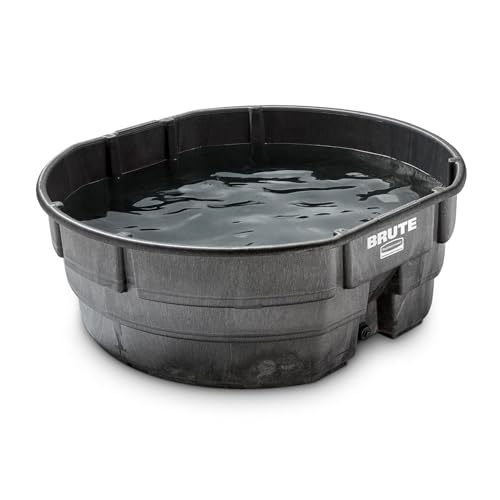
Rubbermaid Commercial’s 300-gallon Stock Tank is the largest option in this selection. The verified listing describes RigidCell structural foam, a ribbed base, and built-in body stiffeners. Those design features are intended to help a large container maintain its shape during ordinary use. A tank this size can provide substantial reserve for a shared pasture, especially when a reliable water line is nearby. The real capacity needed depends on horse count, summer heat, activity, and the time between checks. It is not a substitute for daily observation.
Large tanks create two opposite advantages and risks. They can hold more water between refills, but dirty water may remain in them longer if cleaning is neglected. A green surface film or floating debris should trigger maintenance, not a belief that the sheer volume keeps water safe. Horse groups also need enough separate drinking access. One large trough can still become a contested resource, particularly around feeding times or tight gates. Install it where animals can enter and leave the area without being trapped.
Three hundred gallons weighs thousands of pounds when full. The base and surrounding ground must support that load without shifting. Plan hose routing, drain disposal, winter heating, and safe working space before delivery. Do not attempt to move a tank with water inside. Scrub and rinse routinely, inspect for cracks, and watch for wildlife or manure contamination. A huge capacity can be appropriate for a well-managed pasture, but it becomes burdensome if the barn lacks the tools and water supply to empty and refill it safely.
My Recommendation
I would consider the 300-gallon Rubbermaid only for a large turnout with enough horses and a practical refill-and-cleaning system. The structural-foam construction and large reserve are clear advantages. The tradeoff is scale: installation, drainage, winter management, and water hygiene become major tasks. Smaller groups may find a modest tank easier to maintain.
Behlen Country 27-Gallon Rigid Poly Stock Tank

- 27-gallon stated capacity
- Rigid polyethylene body
- Reinforced core design
- Smooth one-piece interior
- Easy-to-move size when empty
- Small reserve for multiple horses
- Frequent checking is essential
Behlen Country’s 27-gallon Rigid Poly Stock Tank is the compact choice in this comparison. The product information describes polyethylene construction, a reinforced interior design, and a smooth one-piece surface. Those features are suited to simple watering tasks where a giant pasture container is unnecessary. A small tank can also be helpful as an additional drinking station, provided its location is safe. But 27 gallons is not much reserve for a group of horses during summer heat. Estimate daily consumption carefully before relying on it as the only source.
The smooth interior may make rinsing more straightforward than cleaning a tank with many crevices. The maker also positions the tub as portable when empty. Neither detail means you should lift it while full. Water is heavy, and awkward handling can injure people or damage the tank. Set the trough on stable ground and inspect for any exposed rough edges after wear. For a horse that paws or pushes containers, observe whether the setup remains secure. A backup source may be especially important with smaller-capacity tanks.
A 27-gallon model can fit a stall-side arrangement, temporary pen, or an extra paddock station, but refill frequency is the deciding factor. Check levels during the day and never assume a full tank in the morning will meet every horse’s needs through evening. Scrub away sediment and algae, then rinse thoroughly before refilling. In freezing weather, verify that any heater is approved for the tank material and volume. Compared with larger options, this one sacrifices reserve capacity for easier handling and a smaller footprint.
My Recommendation
I would consider this for a temporary setup, extra drinking point, or small area with frequent monitoring. The smooth interior and manageable empty-tank size are useful. It is not my pick as the sole source for several horses. Confirm refill frequency and provide a backup water plan before relying on its limited volume.
How to choose best water trough for horses
Start with daily demand, then work backward to tank size, material, access, cleaning, and climate. The right trough is one your horses can reach and your barn can refill and maintain reliably.
Choose capacity for the herd and refill reliability
Adult horses often drink several gallons of water per day, and needs increase with heat, exercise, dry forage, and lactation. A trough should have enough practical reserve for every horse plus a safe margin when refilling is delayed. Consider peak summer conditions rather than average cool-day use. A forty- or fifty-gallon tank may be adequate for one animal under close supervision, while larger groups usually need more total capacity and more drinking locations. If horses share a field, observe whether dominant animals block others at the trough. One enormous tank is not necessarily better than multiple well-spaced sources. Count actual drinkers, available water pressure, refill times, and emergency backup options before buying. Check the precise dimensions because large oval tanks require substantial floor space.
Match materials and drains to your cleaning routine
Polyethylene, structural foam, flexible LDPE, and galvanized steel each have different maintenance demands. Rigid plastic may be easy to position when empty; flexible materials may tolerate ordinary knocks; metal requires attention to coating and corrosion. None stays sanitary automatically. Check for rounded edges, cracks, sharp damage, or rust at every cleaning. A drain plug can make emptying easier, but verify whether it is included and how water will be directed away from walkways. Avoid creating mud, ice, or erosion beside the tank. Scrub algae and sediment at suitable intervals and more often during hot weather. Always rinse cleaning materials thoroughly. Keep the tank accessible to people as well as horses so regular hygiene does not become a difficult chore. For more context, see winter conditions affecting horse care.
Plan safe placement, weather protection, and horse access
Install the trough on level, stable, well-drained footing where horses can approach and leave without getting trapped against fencing. Keep power cords and heating devices inaccessible to curious animals. When temperatures fall below freezing, use only equipment rated for the tank and follow electrical safety advice. Check water levels, temperature, and cleanliness every day. In summer, consider shade and monitor algae growth, insects, and contamination. A tank holding hundreds of gallons still requires water-quality attention. If a horse suddenly drinks much less or shows signs of illness, contact the veterinarian. In a group, place additional water sources to reduce competition, and consider how the location affects manure accumulation and mud. A sustainable water system is built around access and maintenance, not nominal gallon capacity alone.
Frequently Asked Questions
These questions cover everyday use and safety considerations. Get individual veterinary guidance for a diagnosed medical condition.
How large should a horse water trough be?
Capacity depends on horse count, daily consumption, heat, work, and refill reliability. A veterinarian or extension specialist can help estimate needs; always provide a safety margin.
Is plastic or galvanized steel better?
Both can be suitable when correctly installed and maintained. Check cleaning access, damage, corrosion, climate exposure, and the horse’s behavior rather than relying on material alone.
How often should I clean a stock tank?
Inspect daily and clean when dirt or algae appears. Many farms clean on a regular weekly schedule and more often in hot weather. Follow local water-quality guidance.
Can a regular trough stay outside in winter?
Only if water remains accessible and safe. If using a heater, confirm tank compatibility, electrical safety, protected cables, and daily checks.
Can several horses share one large tank?
They can, but social behavior matters. Provide enough accessible drinking space or separate water points so a dominant horse cannot prevent others from drinking.
Final Verdict
For a modest turnout, the 40-gallon High Country and 50-gallon Rubbermaid offer manageable capacities. The Little Giant 100-gallon model adds a drain-hole option, while Tuff Stuff’s 140-gallon tank includes a brass drain plug. Behlen offers metal and compact poly alternatives. The giant 300-gallon Rubbermaid belongs in a setup that can manage its weight and cleaning needs. The best water trough for horses is ultimately one that keeps clean drinking water accessible every day without creating maintenance or safety problems. Related guidance: horse safety during hot weather.
Affiliate disclosure: This article contains Amazon affiliate links. If you purchase through them, PetAdvisorPro may earn a commission. As an Amazon Associate I earn from qualifying purchases.









