
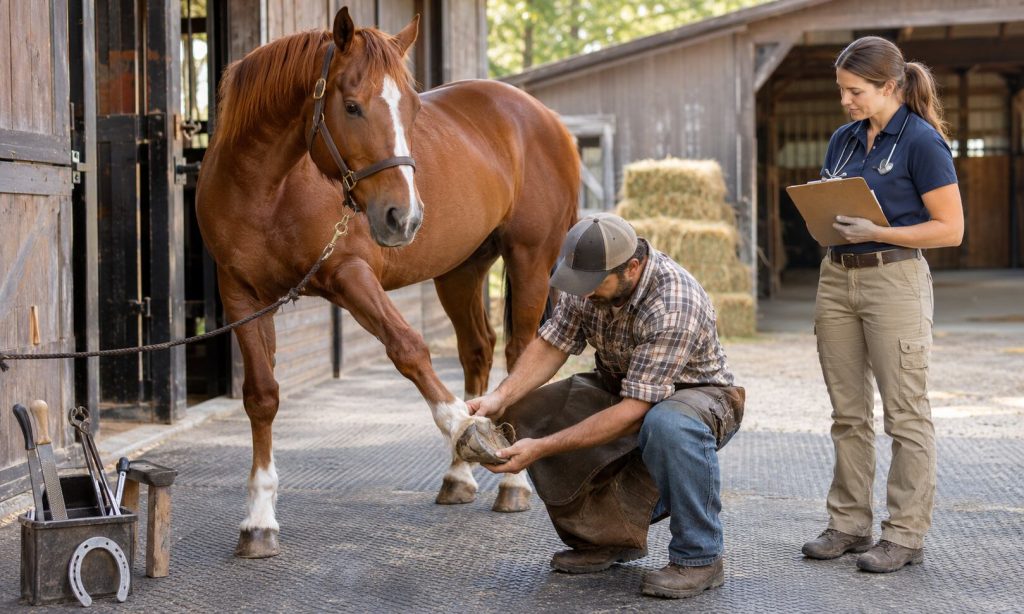
Founder is a serious hoof condition requiring prompt veterinary assessment and coordinated farrier care. A supplement cannot reverse coffin-bone rotation, cure laminitis, or replace a suitable forage plan. Long-term hoof quality may benefit if a nutrition professional identifies nutrient gaps. Examples include biotin, amino acids, zinc, and copper. The best supplement for foundered horse care addresses a confirmed feeding need. A dramatic treatment promise is not evidence.
We compare seven Amazon-verified products marketed for normal hoof nutrition, including a low-sugar mineral option. Each has different ingredients, serving formats, and costs. This is a buyer’s comparison for an established veterinary care plan, not an acute-founder treatment guide. If your horse shows sudden foot pain, a rocked-back stance, or reluctance to walk, contact a veterinarian immediately. Consult your farrier about hoof support and your veterinarian before changing a metabolic horse’s ration.
Quick Picks
These seven supplements support different hoof-nutrition needs; none treats founder. For warning signs, see signs of laminitis in horses.
| Product | Best For | Key Advantage | Buy | |
|---|---|---|---|---|
| Mad Barn AminoTrace+ Low-NSC Vitamin and Mineral Supplement | Metabolic horses needing trace minerals | Low-NSC and no added sugar or iron | View on Amazon | Jump to Review |
| Life Data Labs Farrier’s Formula 2X Strength | Broad-spectrum hoof nutrient blend | Amino acids, fats and minerals in one formula | View on Amazon | Jump to Review |
| Formula 707 Hoof Health Equine Supplement | Pelleted multi-nutrient hoof support | Biotin with lysine and methionine | View on Amazon | Jump to Review |
| Farnam Horseshoer’s Secret Pelleted Hoof Supplement | Long-term large-bag supply | 100-day listed bag and multi-nutrient mix | View on Amazon | Jump to Review |
| SmartPak Horse Biotin Powder | Focused biotin, zinc and methionine | Compact powder with named hoof nutrients | View on Amazon | Jump to Review |
| Horse Guard Biotin Hoof Blast | High-concentration biotin comparison | 100 mg biotin per listed serving | View on Amazon | Jump to Review |
| Horse Health Vita Biotin Crumbles | Lower-cost daily biotin option | Crumbles with stated 48-day supply | View on Amazon | Jump to Review |
Mad Barn AminoTrace+ Low-NSC Vitamin and Mineral Supplement

- Low-NSC formulation
- No added sugars stated
- Zinc and copper included
- Biotin and amino acids
- Pelleted concentrated format
- Nutrient balance needs review
- Not a laminitis treatment
Mad Barn AminoTrace+ is particularly relevant when a foundered horse also needs careful management of sugar and starch intake. The verified product listing describes a low-NSC concentrated vitamin-and-mineral supplement for easy keepers, with no added sugars or iron. It lists biotin, copper, zinc, lysine, methionine, and threonine as components supporting ordinary hoof horn development. That makes it a useful product to discuss with an equine nutritionist if the horse’s forage-based ration lacks essential micronutrients. None of those ingredients can correct active hoof inflammation or a displaced coffin bone.
The choice of a trace-mineral formula, rather than a sweetened treat, can matter when insulin dysregulation is present. However, low-NSC labeling does not establish that the entire ration is suitable. Hay, pasture, concentrates, and body condition still need assessment. Mineral duplication is another concern. A complete fortified feed or balancer may already cover copper, zinc, and selenium. Another product could duplicate those nutrients. Compare full guaranteed analyses and daily feeding rates, not just the supplement’s front-label claims.
Before using AminoTrace+, have the veterinarian and nutrition professional review forage testing, the horse’s diagnosis, and all existing supplements. Introduce the measured amount according to the current label. Track hoof growth with your farrier over time instead of expecting rapid pain relief. In an acute flare, veterinary treatment and immediate management take priority over shopping for supplements. This is a targeted nutrition-balancing option for a stable long-term plan, with particular attention to carbohydrate-sensitive horses.
My Recommendation
Mad Barn AminoTrace+ is my first option to discuss when a foundered horse needs low-NSC trace-mineral support and the existing ration has a documented gap. Its no-added-sugar positioning is useful for metabolic feeding. Still, ask a veterinarian or nutritionist to check total mineral intake and remember it cannot treat the active disease.
Life Data Labs Farrier’s Formula 2X Strength

- Established hoof-nutrition formula
- Amino acid building blocks
- Includes fats and minerals
- Large bag format
- Suitable for ration review
- Premium initial cost
- Check starch and overlapping minerals
Life Data Labs Farrier’s Formula 2X Strength provides several nutrient groups. They relate to normal hoof horn production. The Amazon listing identifies amino acid building blocks, vitamins, minerals, phospholipids, and fatty acids, rather than focusing on one ingredient alone. For brittle or slow-growing hoof wall, this all-in-one approach may simplify feeding. Continue farrier guidance and avoid overlapping supplements. However, providing more ingredients does not mean the product can treat founder or speed recovery from a laminitic emergency.
A horse with laminitis may have underlying insulin dysregulation, excess body condition, or another medical trigger. Those causes require direct management. A broad-spectrum hoof supplement is only worth adding when the total ration suggests nutrients are insufficient. Check the product’s current ingredient panel, carbohydrate contribution, and mineral amounts, especially if other feeds already deliver vitamin and trace-mineral premixes. The 2X formulation also differs from the brand’s original formula, so do not copy serving amounts between products.
Gradual hoof quality changes are possible only as new horn grows, which takes time and consistent trimming. Record farrier visits and photograph the hoof wall in the same lighting instead of judging after a few days. Keep forage as the foundation of the feeding plan and follow veterinary directions about turnout or activity. A supplement can support a normal growth process; it cannot mechanically stabilize damaged laminae. This product is best evaluated as broad nutritional coverage for stable horses already receiving appropriate medical and farrier care.
My Recommendation
Choose Farrier’s Formula 2X for a discussion about broad hoof nutrition when the horse’s feed analysis shows multiple possible gaps. Its blended nutrient approach may be convenient, but its cost and overlap with existing fortified feeds deserve attention. Prioritize veterinary follow-up and appropriate trimming; there is no evidence that this formula reverses founder.
Formula 707 Hoof Health Equine Supplement

- Biotin included
- Amino acid blend
- Pellet feeding format
- Mineral ingredients
- Eighty stated servings
- Check sugar or starch content
- Does not address laminitis pain
Formula 707 Hoof Health is a pelleted product intended to nourish ordinary hoof tissue. The verified listing identifies D-biotin, DL-methionine, L-lysine, calcium, and other ingredients. Those nutrients are part of normal tissue growth, which is why they commonly appear in hoof products. The five-pound bag provides about eighty listed servings. That helps estimate the daily cost using the manufacturer’s current feeding rate. That serving count is a packaging description, not proof that all horses need the same dose.
For a horse recovering under veterinary supervision, the practical question is whether its forage and concentrate ration already supply adequate hoof-related nutrients. Biotin may help some horses with poor hoof quality. It cannot cure laminitis, reposition a displaced bone, or replace supportive shoeing. Read the full label before adding pellets to the bucket, particularly if the horse must follow a low-sugar plan because of equine metabolic syndrome. Do not assume a product labeled hoof health is automatically low in nonstructural carbohydrates.
Introduce the supplement only after discussing it with the veterinary team. Use the supplied measure rather than adding extra scoops in hopes of faster results. Keep a regular farrier schedule and focus on the horse’s comfort, body condition, and diet over weeks and months. If lameness returns, stop treating it as a nutrition issue and contact the veterinarian. Formula 707 is most relevant as a convenient multi-ingredient supplement when a professional identifies a need for additional hoof-building nutrients.
My Recommendation
Formula 707 is worth comparing if you want a pelleted biotin-and-amino-acid blend and can verify that its carbohydrate and mineral profile fits the horse’s ration. The clear serving format is convenient. Do not choose it as a substitute for pain assessment, radiographs when advised, or the long-term forage and farrier plan.
Farnam Horseshoer’s Secret Pelleted Hoof Supplement

- Long supply format
- Biotin with amino acids
- Copper and zinc listed
- Fatty acids included
- Pellets suit feed mixing
- Large up-front purchase
- May overlap other feed minerals
Farnam Horseshoer’s Secret pelleted hoof supplement combines several nutrients that are commonly used to support normal hoof wall growth. The Amazon product information describes biotin, lysine, methionine, copper, zinc, and fatty acids. This particular listing is a large thirty-eight-pound bag marketed as roughly a hundred-day supply, so it appeals to owners who already know the supplement agrees with their horse. It is not an appropriate first purchase merely because a horse has developed sudden foot pain, since founder is an urgent medical issue.
The pelleted form can be easier for some horses to eat than loose powder, but acceptance varies. Review the ingredient list and daily feeding instructions with the veterinarian, especially when the horse is overweight or insulin resistant. A substantial bag can become wasteful if the horse refuses it or a clinician changes the ration. Also check storage conditions and expiration dates, since long-term hoof improvement requires a steady routine rather than irregular high doses. The product’s marketing about hoof strength should not be interpreted as evidence that it heals damaged laminae.
If your horse has a stable treatment plan and a documented nutritional need, compare the daily cost of this bulk bag with smaller hoof formulas. Keep it dry, protect it from pests, and measure servings consistently. Photograph hoof horn quality at farrier appointments to track slow changes. The most important outcome after founder remains veterinary recovery, soundness, and appropriate hoof mechanics. This formula may fill a nutritional role alongside those measures, but it cannot replace any of them.
My Recommendation
Consider Horseshoer’s Secret when a professional has already approved its ingredients and you want a long-term pelleted supply. The large bag can be practical for steady use, but buy cautiously until you know the horse accepts it. Compare the mineral totals, serving cost, and any metabolic feeding restrictions before committing.
SmartPak Horse Biotin Powder

- Biotin-focused formula
- Zinc included
- Methionine included
- Smaller powder container
- Straightforward ration addition
- Powder acceptance varies
- Check need for added biotin
SmartPak Horse Biotin Powder offers a narrower ingredient emphasis than some broad mineral blends. According to its listing, biotin is paired with zinc and methionine, nutrients often discussed in relation to ordinary hoof horn production. The eighteen-ounce container may be less of a financial commitment than a very large bulk bag. A focused powder may suit a veterinarian-approved forage program. First, a nutrition professional must identify a specific remaining hoof-related deficiency.
The narrower approach has tradeoffs. The product may not cover other deficiencies, and more biotin is not automatically better if the feed already supplies sufficient amounts. Review the guaranteed analysis and calculate the actual dose. Container weight alone does not reveal how many days it lasts. Check for sweeteners, carriers, and carbohydrate implications when the horse is managed for insulin dysregulation. Powder also needs proper mixing, and some picky eaters will sort feed or leave dusty residues behind.
Start by confirming that a supplement is appropriate at all. If approved, measure consistently and monitor feed acceptance rather than increasing amounts when the horse ignores it. Keep the container sealed and away from humidity. A farrier can help assess new horn quality as the hoof grows; noticeable changes are generally slow. If the horse is shifting weight, unwilling to turn, or lying down because of pain, that is a veterinary concern, not a reason to increase powder. SmartPak’s role here is targeted nutrition support only.
My Recommendation
SmartPak Biotin Powder suits owners who need a compact, ingredient-focused option after a nutrition review. I like the combination of biotin, zinc, and methionine for comparing hoof formulas. It is not a founder remedy, and its usefulness depends on the existing ration, carbohydrate limits, and whether the horse reliably eats the powder.
Horse Guard Biotin Hoof Blast

- Clearly stated biotin level
- Methionine and zinc
- MSM included
- Concentrated feeding format
- Hoof-wall nutrition focus
- High dose may be unnecessary
- Needs mineral total review
Horse Guard Biotin Hoof Blast advertises one hundred milligrams of biotin per serving. The verified listing also names methionine, zinc, and MSM. That makes it easy to identify as a concentrated hoof supplement. Concentration, however, is not a proxy for treatment quality. The University of Minnesota notes that some hoof problems may improve with balanced nutrition. Extra biotin cannot repair founder or hasten recovery from laminar damage.
A high-potency formula especially deserves a review of everything else in the feed bucket. Check zinc and other mineral totals from forage, balancers, fortified concentrates, and additional supplements. A founder-prone horse may already receive a targeted low-NSC mineral product, leaving no clear reason to add another. The manufacturer’s serving information should be followed only after a veterinarian or equine nutritionist confirms it is appropriate. Do not interpret prominent claims about hoof resilience as evidence that the product treats pain, rotation, or insulin resistance.
The concentrated format may be convenient if a legitimate gap is identified, but careful measurement is important. Record the exact product and dose in the horse’s health notes so the veterinarian can account for it during follow-up visits. Farrier care and hoof balance remain central, while controlled grazing and weight management may be critical for metabolic laminitis. If your horse is actively lame, prioritize examination and a treatment plan immediately. This product offers a distinct high-biotin nutrition option for professional review, not an automatic upgrade over lower-dose products.
My Recommendation
I would only consider Horse Guard Hoof Blast after a full ration check shows that a concentrated biotin product is justified. Its published dose makes comparison easy, but more is not necessarily better. For foundered horses, correct veterinary management, appropriate carbohydrate intake, and farrier care are far more important than a high label number.
Horse Health Vita Biotin Crumbles
- Budget-friendly listing
- Crumbled feed format
- Biotin hoof support
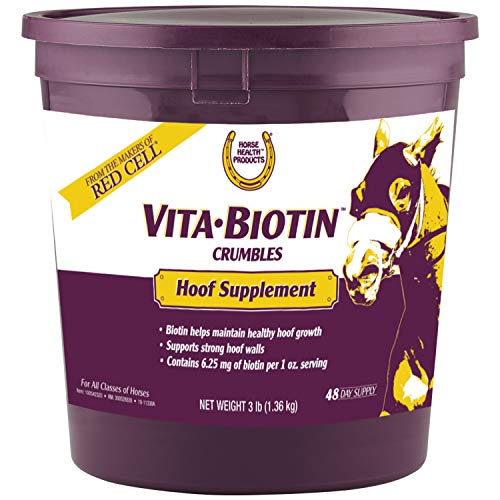
- Forty-eight-day stated supply
- Simple storage size
- Less broad than a balancer
- Check carriers with EMS
Horse Health Vita Biotin Crumbles are marketed as a straightforward daily hoof supplement. The verified three-pound product listing identifies biotin as the key ingredient and describes an approximately forty-eight-day supply. Its lower entry price may appeal to owners seeking a basic supplement rather than a premium multi-nutrient bag. Still, a foundered horse does not automatically need extra biotin. The first priorities are veterinary diagnosis, appropriate hoof support, and the management of any metabolic cause, including obesity or insulin dysregulation.
The crumbly format can be easier to disperse through a small feed portion than some large pellets, although every horse has individual preferences. Check the current guaranteed analysis and the ingredient list, including carriers and carbohydrate sources. A supplement that is economical but incompatible with a low-NSC ration is not good value. Compare the cost per serving rather than package price. This product cannot replace a complete balancer when forage lacks several trace minerals.
After a veterinarian or nutrition professional agrees that extra biotin could help, introduce the stated amount gradually and watch how consistently the horse consumes it. Keep farrier appointments and monitor new hoof horn over multiple trims rather than expecting an instant improvement. Store the crumbles in a dry, closed container. If the horse becomes reluctant to move or shows renewed hoof pain, request veterinary reassessment immediately. Vita Biotin is an accessible feed supplement to discuss for long-term hoof quality, not an intervention for active founder.
My Recommendation
Horse Health Vita Biotin Crumbles are a practical budget comparison if the vet confirms a need for supplementary biotin and the ingredient list fits the feeding plan. The compact forty-eight-day format is convenient. Do not assume affordability makes it suitable for every founder case; test the full ration for sugar, starch, and overlapping nutrients.
How to choose best supplement for foundered horse
Buying the best supplement for foundered horse care starts with a medical and nutrition review, not an Amazon ranking. Laminitis and founder can be emergencies, while nutritional hoof support works, when useful, over the much slower timescale of new horn growth.
Separate urgent laminitis care from long-term hoof nutrition
A horse standing rocked back, reluctant to turn, or acutely sore on its feet needs veterinary attention promptly. The veterinarian may recommend examination, imaging, pain management, and changes to movement or foot support. A farrier helps manage hoof mechanics under that plan. None of the supplements in this article treat active laminitis or return a rotated coffin bone to its original position. Once the horse is stable, ask whether the existing diet provides sufficient nutrients for ordinary hoof growth. Some poor-quality hooves improve when actual deficiencies are corrected, but many foundered horses have good underlying hoof nutrition and do not benefit from extra products. Do not delay diagnostic care while waiting for a supplement delivery or misread a reduction in discomfort as proof of healing.
Check sugar, starch, and the entire mineral balance
Many cases of recurrent laminitis involve insulin dysregulation or equine metabolic syndrome. In those situations, pasture access, hay nonstructural carbohydrates, body condition, and the amount of concentrate are major management questions. A product advertised as hoof healthy is not necessarily compatible with a carbohydrate-controlled ration. Review labels for added sugars and carriers and ask for a clear NSC figure when relevant. Evaluate zinc, copper, selenium, and iron in the complete ration, because excessive or unbalanced supplementation can create new problems. Biotin, methionine, and other nutrients are components of normal hoof growth, but a high dose on a label does not prove superior results. A forage analysis and qualified nutrition review can show whether a narrow biotin product or broader low-NSC balancer makes sense. The linked feeding resource explains questions to raise with your veterinarian. For more context, see feeding horses with laminitis.
Measure value by appropriate dosing and patient follow-up
Compare the size of each container with its actual daily feeding rate, not merely the bag price. Pellets and crumbles may be convenient, but they sometimes use carriers that matter for metabolically sensitive horses; powders can be difficult for picky eaters. Introduce only one approved dietary change at a time and document the date, quantity, and acceptance. New hoof horn grows slowly, so discuss a realistic monitoring period with the farrier and veterinary team. Record hoof photographs at comparable angles and note trimming intervals, body condition, soreness, and any recurrence of lameness. Stop treating unexpected pain as a supplement-selection problem. A sensible budget reserves enough for veterinary care, hoof trimming, tested hay, and management supplies before optional hoof products. The best purchase fills a specific nutritional gap without complicating the medically necessary ration.
Frequently Asked Questions
These questions cover everyday use and safety considerations. Get individual veterinary guidance for a diagnosed medical condition.
Can a supplement cure founder in a horse?
No. Founder and laminitis require veterinary assessment and appropriate hoof management. Nutrition products may correct deficiencies affecting ordinary hoof growth. They cannot treat acute laminar inflammation or reposition a displaced coffin bone.
Is biotin useful for a horse that has foundered?
Some horses with poor hoof horn may benefit when their ration lacks particular nutrients, including biotin. Whether your horse needs additional biotin depends on the complete diet and hoof assessment; it is not a specific treatment for laminitis.
Are sweetened hoof supplements safe for insulin-resistant horses?
Not automatically. Ask the veterinarian or equine nutritionist to review the product’s nonstructural carbohydrate contribution and all feed carriers. No-added-sugar products may fit a controlled ration more easily. The entire diet still requires monitoring.
How quickly should a hoof supplement work?
New hoof horn takes time to grow. Do not expect a change in lameness or pain within days, and do not use short-term comfort as a measure of supplement success. Follow veterinary timelines and farrier observations.
What matters more than a supplement after founder?
Appropriate veterinary treatment, farrier coordination, a safe forage and pasture plan, body-condition management when needed, and follow-up examinations are central. A supplement is optional unless a professional identifies a nutritional gap.
Final Verdict
For foundered horses with an identified nutritional gap, Mad Barn AminoTrace+ is worth discussing when a low-NSC mineral approach is needed. Farrier’s Formula 2X and Formula 707 provide broader hoof-nutrient blends, while SmartPak and Vita Biotin offer narrower comparisons. None is a laminitis remedy. Choose only after your veterinarian and equine nutritionist consider the forage, metabolic status, and existing supplements. If your horse has new or worsening foot pain, seek urgent veterinary care rather than starting a hoof product. Related guidance: how veterinarians assess insulin resistance.
Affiliate disclosure: This article contains Amazon affiliate links. If you purchase through them, PetAdvisorPro may earn a commission. As an Amazon Associate I earn from qualifying purchases.









