
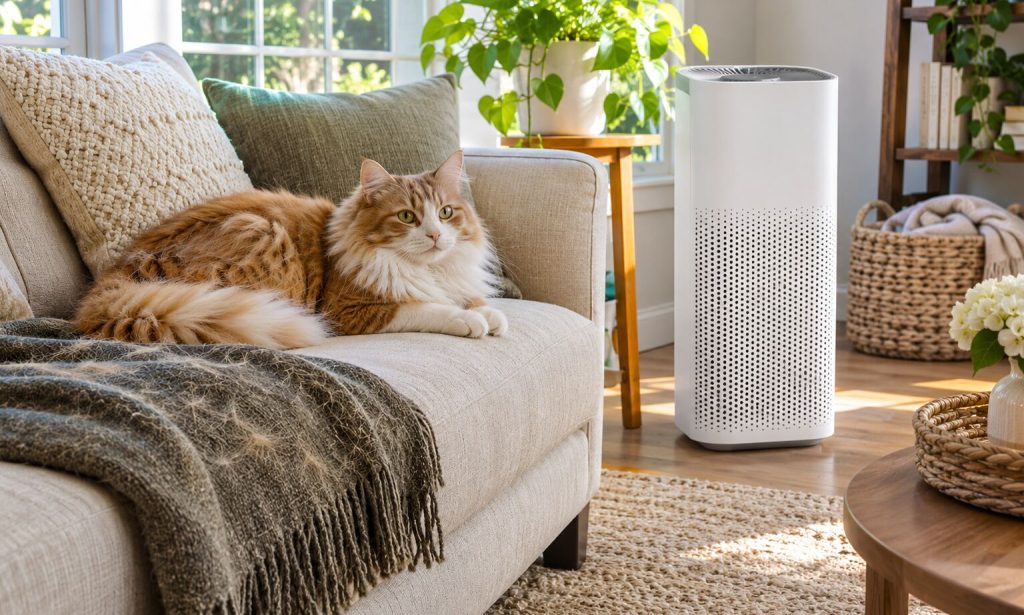
A HEPA air purifier can help capture airborne particles in a cat household, but it does not last forever. The useful question is whether the filter needs replacement, the machine needs repair, or the whole unit has reached the end of its service life. Those are different decisions. A change in airflow, repeated warning lights, unusual noise, visible damage, and a model’s age can each offer clues, but none should be read alone.
If you are asking when should you replace a HEPA air purifier for cat dander, start with the manual and the condition of both filter and appliance. A HEPA air purifier for cat dander is one part of indoor allergen management. This guide explains how to separate routine filter changes from whole-unit replacement, what to inspect safely, and when repairs or professional advice make more sense.
A filter and the whole purifier are different decisions
Most portable air purifiers use replaceable filter media inside a reusable appliance. A loaded filter can reduce airflow, yet that does not automatically mean the fan, controls, or housing have failed. Many manufacturers recommend filter replacement on a schedule that depends on the model, usage, and indoor conditions. Cat hair, litter dust, cooking particles, smoke, and how many hours the unit runs can all affect how quickly a prefilter or main filter collects debris.
The whole air purifier is a larger investment and should usually be considered only after the correct maintenance steps have been followed. Check whether the unit still has a compatible filter available, whether it can run safely, and whether its airflow suits the room. A purifier may be old but functional; another may be relatively new and still be unsafe because of damaged wiring. Replace the filter when the manufacturer says to do so, and evaluate the appliance separately.
Know which part is due
Identify every filter stage by its name in the user manual. A washable prefilter may catch larger fur and lint, while a fine-particle HEPA filter typically is not washable unless the manufacturer explicitly says otherwise. Carbon media may have its own replacement interval. Resetting a filter timer without replacing the relevant part can hide a reminder, but it does not restore filtration. Note the filter model number and purchase date so you can match the correct replacement.
Use a schedule as a starting point, not a guess
Follow the exact replacement interval in the appliance manual. Some units use a timer; others provide a visual check or recommend a service interval. EPA guidance also advises following the manufacturer’s replacement recommendations. The interval is not universal across all HEPA purifiers. A prefilter in a multi-cat home may need more frequent cleaning than a filter in a low-dust room, but the main filter should not be washed, vacuumed, or exposed to moisture unless the maker explicitly permits it.
Signs that the purifier may need attention
Noticeable loss of airflow is a useful reason to inspect the intake, prefilter, and main filter. First turn the unit off and unplug it. Look for a clogged screen, dust buildup on the housing, a filter installed backward, or an intake blocked by furniture. If airflow remains weak after manufacturer-approved cleaning and a correct new filter, the fan or internal air path may need professional service. Do not open sealed electrical components or attempt an improvised repair.
Persistent rattling, grinding, burning smells, repeated shutdowns, an overheating housing, or a frayed power cord are more serious warning signs. Stop using the appliance if it shows signs of electrical damage or overheating. Do not keep operating a unit that trips a breaker or emits smoke. A filter indicator by itself is not proof that the whole device has failed; it may only mean that a maintenance interval has elapsed. For cat dander, visible fur around the intake is also not a precise measure of HEPA performance.
Check whether the problem follows the filter
If a compatible replacement filter restores expected airflow and the unit runs quietly and safely, replacing the whole appliance may not be necessary. If a new filter changes nothing, check the manual’s troubleshooting steps and confirm that every cover and seal is fitted properly. A damaged gasket can let air bypass the filter. Avoid running the purifier with a missing filter or a loose panel. If the manual directs you to customer service, follow that route rather than guessing about internal parts.
Treat changes in allergy symptoms cautiously
A purifier is not a medical device that can diagnose the cause of symptoms or guarantee relief. Dander and other allergens settle on bedding, upholstery, clothing, and floors, so a clean filter does not make a room allergen-free. If a person’s breathing or allergy symptoms change, consider the full environment and consult a qualified healthcare professional. For ongoing or severe symptoms, do not delay medical care while waiting for a new appliance to solve the problem.
Troubleshoot before replacing the whole device
Begin with simple, safe checks. Verify that the purifier is plugged into a suitable outlet, its air openings are clear, and the filter door is fully closed. Check the filter’s orientation and inspect the washable prefilter only as directed. Dust the exterior with a dry or slightly damp cloth if the manual allows it, keeping liquid away from vents and controls. Move the machine away from curtains, walls, or shelves that obstruct intake or exhaust.
Next, compare what you observe with the manufacturer’s troubleshooting instructions. A room may feel less comfortable because a door stays open, the purifier is undersized, or the fan is being used only on a very quiet setting. Those conditions can make a working appliance seem ineffective. The EPA recommends choosing an air cleaner sized for its intended area and replacing filters according to the manufacturer’s schedule. A larger unit is not automatically better if its operating noise means it remains switched off.
Keep the cat and household safe during maintenance
Unplug the purifier before opening its filter compartment. Keep curious cats away from loose dust and used filter media while you work. Avoid shaking a loaded filter indoors, which can redistribute collected debris. Put a discarded filter in a bag for disposal according to local requirements and the product instructions. Do not spray disinfectant, fragrance, or essential oils into the purifier. Use only the cleaning products and methods approved by its manufacturer.
Check the ongoing cost and support options
Before deciding whether to replace an older appliance, confirm that its replacement filters are still available and reasonably priced. Also check whether the manufacturer still offers troubleshooting or repair support. A device can become impractical when essential filters are discontinued, the fan is unreliable, or safe use is in doubt. In contrast, a simple unit with available parts may remain useful for years when maintained as instructed. The best decision depends on reliable operation, not the calendar alone.
Use a practical replacement framework
Consider replacing the whole purifier when it has electrical or structural damage, cannot operate safely, repeatedly fails after approved troubleshooting, or has a broken fan or control that cannot be repaired. Also reassess it if compatible filters are no longer made or its clean-air delivery is no longer appropriate for the room. If the model is simply old, compare its current condition, parts availability, noise, and energy use before deciding. Age alone does not prove that its filtration has stopped working.
When choosing a replacement, measure the room and look for clear performance information rather than relying only on a broad coverage claim. A purifier needs enough airflow for the space and a filter that can be maintained. Place it where air can enter and leave freely, then run it consistently at a setting that fits the room and household. Before discarding an older unit, review these common air-purifier mistakes in cat homes to separate maintenance issues from appliance failure. Combine filtration with laundering washable fabrics and regular surface cleaning. A guide to cleaning and maintaining an air purifier around cats can help with routine upkeep.
Keep a basic maintenance record
Write down the date a filter is installed, the model number, and any cleaning allowed by the manual. A simple note near the appliance helps prevent both missed replacements and premature disposal. Record unusual noises or repeated alerts too. That history can help customer support distinguish a filter issue from a recurring appliance fault. Do not ignore warning indicators, but do not assume that one indicator means the machine must be discarded.
Frequently Asked Questions
People often use “replace the purifier” when they mean “change its HEPA filter.” The distinction matters because a filter change is routine maintenance, while a whole-unit replacement addresses safety, reliability, or discontinued parts.
The safest timeline depends on the specific model and how it is used. Use the user manual as the primary guide and treat changes in sound, airflow, or electrical behavior as reasons to inspect the appliance carefully.
How often should a HEPA filter be replaced in a cat home?
There is no single interval for every model. Follow the manufacturer’s instructions and consider the unit’s usage and household conditions. Clean only parts the manual identifies as washable.
Does cat dander mean I need to replace the whole purifier sooner?
Not by itself. Dander may load a filter over time, but that normally calls for maintenance or a filter change. Replace the appliance if it is unsafe, unreliable, or no longer serviceable.
Can I vacuum a HEPA filter to extend its life?
Only if the manufacturer explicitly permits it. Many fine filters can be damaged by vacuuming or washing. Check the product manual before cleaning any filter media.
What if the filter reminder stays on after replacement?
Check whether the manual requires a reset sequence and confirm the filter is compatible and installed correctly. Contact the manufacturer if the indicator remains on or the unit behaves abnormally.
Will a new purifier remove all cat allergens?
No. A purifier can capture some airborne particles that pass through it, but allergens also settle on surfaces. It cannot guarantee an allergen-free home or replace medical advice.
Final Words
When should you replace a HEPA air purifier for cat dander? Replace a filter when its model-specific schedule or condition calls for it. Replace the complete unit when it is damaged, unsafe, repeatedly unreliable, or impossible to maintain with compatible parts. First check airflow, installation, and the manual’s troubleshooting steps. A warning light alone does not establish that the appliance has failed.
A well-maintained HEPA air purifier for cat dander can support a cleaner indoor environment, but surface cleaning remains important. Keep a maintenance record, give the unit clear airflow, and avoid unsafe cleaning shortcuts. If allergies or breathing problems persist, seek qualified medical guidance rather than relying on a purifier alone.









