
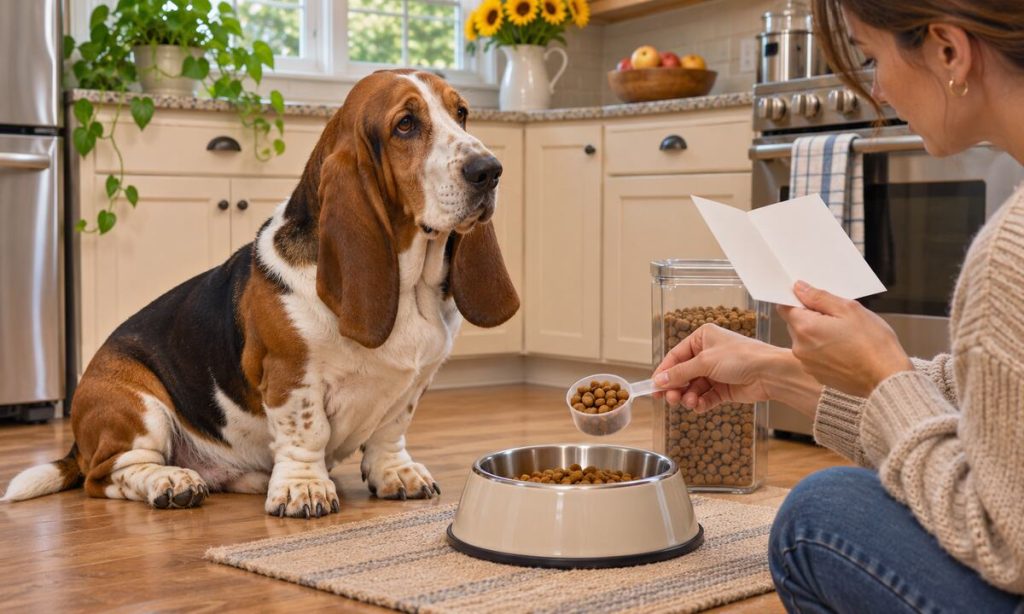
Basset Hounds are recognizable for their low bodies and long ears, but food selection should begin with nutrition, not appearance. A Basset needs a complete diet suited to its age, body condition, activity, and health. Portion size matters because extra weight can add difficulty to everyday movement, while underfeeding can reduce energy and condition. The best label for one Basset may be inappropriate for a growing puppy or a dog with a medical diagnosis.
When considering dog food for Basset Hounds, look beyond a breed photograph on the bag. Read the nutritional adequacy statement, calorie content, feeding directions, and the manufacturer’s nutritional information. This guide explains what to check and how to monitor the diet over time. It does not rank commercial formulas or replace veterinary advice for disease-related feeding.
Check Life Stage and Nutritional Adequacy
Start with the complete-and-balanced statement. The FDA explains that a valid nutritional adequacy claim is supported by AAFCO nutrient profiles or appropriate feeding trials. Match the food to growth, adult maintenance, or another indicated life stage. A puppy needs different nutrition than a mature adult, while a pregnant or nursing dog can require a specialized plan. A treat or supplemental food should not become the entire diet by mistake.
Look for clear feeding instructions and a nutrition contact from the manufacturer. Ask who formulates the diet and what quality checks support consistency. Ingredient names do not tell you everything about digestibility or adequacy. Avoid switching to a food simply because the first ingredient sounds impressive. What matters is whether the complete formulation meets the dog’s requirements and is practical to feed.
Pay Attention to Body Condition
A Basset Hound’s compact shape can make weight change less obvious at a glance. Learn to assess the waist and rib coverage using a veterinary body condition score chart. Check the dog’s weight on a consistent scale and compare changes over time. Cornell’s veterinary nutrition guidance identifies excess calories, free feeding, and generous treats as common contributors to canine obesity. A practical feeding plan controls portions without making food a constant struggle.
Do not set calories solely from the breed average or a friend’s dog. Age, neuter status, exercise, illness, and individual metabolism all influence needs. If your Basset is gaining weight, ask a veterinary team for a target and safe rate of change. Rapid or severe food restriction can be counterproductive. Use measured meals, monitor treats, and reassess after several weeks rather than guessing.
Compare Calories, Not Scoop Size Alone
Two foods may look similar but provide very different calories per cup or can. Check the energy statement and compare the actual serving that meets the dog’s daily target. A compact calorie-dense kibble may require a smaller scoop than a lighter formulation. Measuring with a kitchen scale can help when package guidance provides weight information. Remember to count training treats, chews, and table scraps in the daily total.
Consider meal frequency and family routines. Multiple household members can unintentionally feed duplicate meals or rewards. Write down the planned portion and use one container for the day’s allowance if this is a problem. Avoid leaving a filled bowl available all day when you need precise intake records. Fresh water should always be accessible, and changes in drinking or appetite can signal a health issue.
Consider Digestion and Ingredient Tolerance
Stool consistency, appetite, and energy provide useful feedback when feeding a new diet. A food allergy, however, cannot be diagnosed from one episode of loose stool or an itchy day. Many gastrointestinal symptoms have other causes. If your dog has recurrent vomiting, diarrhea, skin problems, or weight loss, seek veterinary assessment instead of repeatedly switching formulas. Medical problems may require targeted testing or a prescribed nutrition plan. When digestive tolerance is the priority, gut-health food comparisons can help organize ingredient questions.
Food marketing may emphasize grain-free or limited-ingredient recipes, but these terms do not prove that a diet is medically necessary. The FDA has investigated reports of diet-associated heart disease in dogs, and the relationship remains complex. Discuss nonstandard diets and suspected allergies with your veterinarian. Avoid self-prescribing an elimination diet without professional planning, since nutritional completeness and diagnostic accuracy matter.
Plan for Puppy, Adult, and Senior Needs
A growing Basset puppy needs an age-appropriate food and monitoring of steady growth. Feeding to maximize growth speed is not a goal. As dogs mature, energy needs may change with activity and body condition. Older Bassets sometimes need adjustments due to weight, muscle loss, dental disease, or other diagnoses. There is no universal age when every dog must switch to a product labeled senior.
Review life-stage choices with the veterinary team, particularly if the dog has mobility problems or a chronic condition. Do not treat food as a cure for joint pain. Nutrition can support health, but persistent stiffness, limping, or reluctance to climb should be evaluated. A suitable diet is part of a wider care plan that includes exercise, weight management, and regular examinations.
Introduce a New Food Gradually
Even a well-chosen formula can cause digestive upset if changed abruptly. Begin with mostly the familiar diet and add a small amount of the new food, increasing it over several days or longer as tolerated. Dogs with sensitive digestion may need a slower change. Keep treats consistent while observing stool, appetite, and energy. If the dog rejects the new food, do not immediately add rich toppings that complicate the picture.
Contact the veterinarian for repeated vomiting, blood in stool, severe diarrhea, lethargy, or poor intake. A medical diet may have special transition instructions. Keep the old and new labels so you can compare ingredients, calories, and feeding directions if a concern arises. Planning the change helps identify which adjustment caused a problem.
Make Feeding Practical and Hygienic
A Basset’s long ears can brush the edge of a food or water bowl. Check that the feeding area stays clean and dry, and gently keep ears out of food without restrictive accessories. Use a stable bowl and non-slip mat if the dog pushes dishes around. Wash dishes regularly and store dry food away from heat, moisture, and pests. Food freshness is an important part of the routine. For meal routine ideas, mealtime management guidance complements portion planning.
Observe whether your dog eats at a comfortable height and pace. An elevated bowl is not automatically necessary or safer for every breed; discuss special feeding setups with a veterinarian when there is a medical concern. A quiet location can reduce competition in a multi-dog home. Monitor your Basset’s weight and behavior over time to ensure the chosen diet still fits.
Frequently Asked Questions
These questions help clarify common feeding decisions after reviewing a label. Individual medical conditions and veterinary recommendations may override a general approach.
The most useful evidence comes from nutritional adequacy, an appropriate portion, and your dog’s ongoing health. A breed-specific name on packaging is not a substitute for those checks.
Does a Basset Hound need food labeled for its breed?
Not necessarily. A complete, balanced diet suited to life stage, health, and calorie needs matters more than a breed-specific marketing label.
How do I know whether my Basset is overweight?
Use a veterinary body condition scoring method and monitor weight. Ask the veterinary team for a target and portion plan.
Is a grain-free diet better for Bassets?
There is no general evidence that grain-free is superior for every Basset. Discuss unusual diets and suspected food allergies with a veterinarian.
Should seniors automatically switch to senior food?
No. Age alone does not determine the right diet. Body condition, appetite, muscle, and diagnosed conditions guide the decision.
How quickly can I change my Basset’s food?
Many dogs benefit from a gradual transition over several days or longer. Slow the process if mild digestive upset occurs and seek care for significant symptoms.
Final Words
Look for complete and balanced nutrition, the correct life stage, clear calorie information, manageable portions, and consistent manufacturing standards when evaluating dog food for Basset Hounds. Monitor weight, body condition, stool, and appetite. Make diet changes gradually and involve a veterinarian when digestive or other health problems persist.
For general category background, the site has a dog food for Basset Hounds overview. Choose a routine that keeps your dog comfortable and maintains a healthy body condition, rather than relying on the appearance of a bag or the popularity of one ingredient.









