
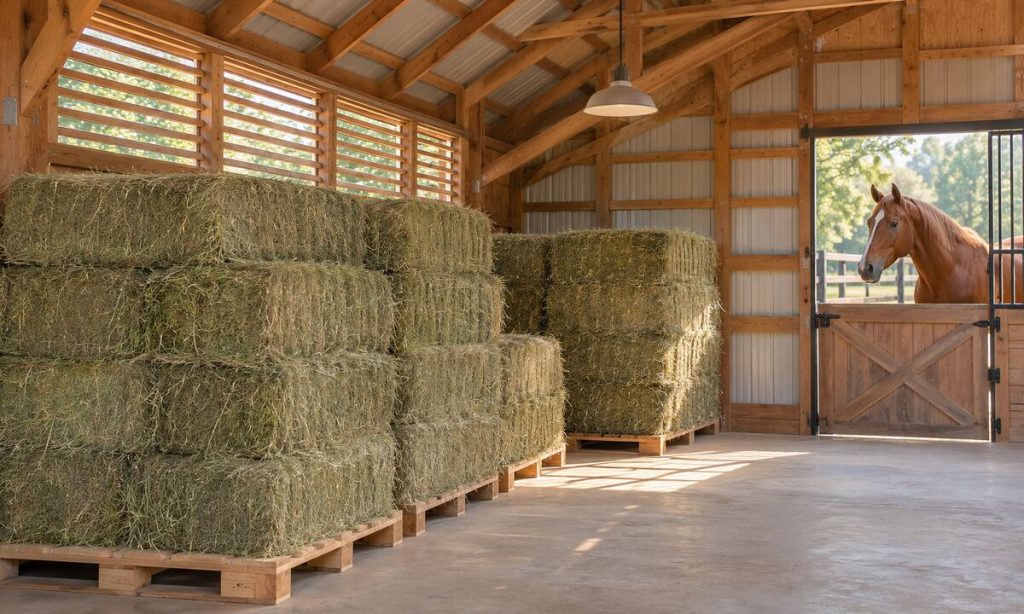
Storing hay for senior horses safely protects more than the value of a bale. Older horses may have dental wear, reduced ability to chew coarse forage, or an underlying condition that makes consistently good feed especially important. Hay that becomes damp, moldy, contaminated, or mixed with another lot can undermine a carefully planned ration. A well-organized storage space should make both safe handling and identification of the correct forage straightforward.
The fundamentals are simple: begin with properly dried hay, keep bales off wet surfaces, allow air circulation, stop rain and condensation, control pests, and inspect each lot regularly. Senior-specific considerations add another step: the hay must remain suitable for the individual animal’s teeth, digestion, and nutritional needs. This guide explains how to arrange a storage area, handle opened bales, monitor spoilage, protect soaked or chopped forage, and know when to discard questionable feed.
Start With Suitable, Properly Dried Hay
Buy forage from a supplier who can explain its cutting, storage conditions, and available feed analysis. University of Minnesota Extension describes horse-quality hay as commonly baled at approximately 10 to 15 percent moisture, with the aim of avoiding spoilage. Ask how the hay was stored before delivery, inspect several bales, and reject wet, musty, unusually hot, or visibly moldy material rather than hoping it will dry out later.
Senior horses do not all need the same hay. Some maintain condition on quality long-stem forage; others with worn teeth may require an alternative form selected with veterinary advice. A soft appearance does not confirm that hay is safe, digestible, or nutritionally balanced. Record the supplier, lot, harvest description, and any analysis so that staff can distinguish this forage from hay intended for other horses.
Choose a Dry, Ventilated Storage Location
Use a weather-tight roof, sound walls, and a dry floor with protection against wind-driven rain. Raise bales on clean pallets or another appropriate platform to reduce contact with ground moisture. Leave sensible gaps for air movement and inspection instead of packing stacks tightly against damp walls. Keep water hoses, wash racks, leaking gutters, and wet bedding away from the hay area.
Ventilation helps limit moisture buildup, but a drafty opening that lets rain soak bales is not useful. Inspect after storms and during humid weather, including the back and base of stacks that are easy to forget. If a structure develops condensation, fix the moisture source promptly. Never assume that a protective tarp alone makes wet or excessively moist hay safe for long storage.
Stack for Access, Rotation, and Fire Safety
Stack bales securely so they cannot topple onto workers or animals, and leave clear paths for moving feed without climbing unstable piles. Keep hay away from electrical hazards, machinery that produces heat, smoking areas, and other ignition sources. Newly baled or damp hay can self-heat, so follow local agricultural safety guidance and seek immediate qualified help for a stack that is unusually hot or steaming.
Label each stack with arrival date and lot information. Use a first-in, first-out system only for forage that continues to pass safety checks; rotation never justifies feeding moldy hay. Separate batches that have different nutrient profiles so an older horse does not receive an unplanned switch. A small, accessible day-use supply often reduces the need to rummage through the main stack repeatedly.
Keep Rodents, Dust, and Contaminants Out
Sweep storage areas, control nearby spilled grain, and avoid attracting rodents with open feed containers. Check for droppings, chewed twine, insect damage, bird nesting, and debris. Keep chemicals, fertilizers, fuels, and pesticides out of feed storage. Hay should not touch dirty equipment or be dragged across manure-contaminated ground before it reaches the feeding area.
Do not spray insecticides onto stored hay or place toxic pest baits where horses and stable animals can access them. Work with a suitable pest-control plan that protects feed and non-target animals. During routine checks, smell and examine bales from different parts of the stack; damage is sometimes localized near a wall or roof leak and may not be visible from the entrance.
Handle Opened Bales and Daily Portions Carefully
Open only what the routine requires, keeping the remaining dry forage protected and clearly assigned to its batch. Use clean feed carts, hay nets, and bins. Do not mix damp leftovers back into a fresh bale or sweep floor hay into the feed pile. Twine, plastic wrapping, and other packaging must be removed completely before feeding because they can create physical hazards. A hay-bag introduction guide can help plan suitable daily delivery after storage.
A senior with dental problems may drop wads of poorly chewed hay, eat slowly, or lose condition even when the bale is excellent. Those signs should lead to dental and veterinary assessment, not to dampening stored hay indefinitely. Monitoring weight and condition helps determine whether the chosen forage remains workable.
Treat Soaked Hay and Rehydrated Feeds Differently
Dry storage advice does not apply after forage has been soaked. Wet hay should generally be fed promptly under the veterinarian’s plan, because prolonged standing increases microbial concerns. Discard unused soaked portions instead of returning them to the hay stack. Use clean containers and prepare only the amount needed for the next feeding, especially in warm or humid weather.
If a senior horse needs soaked hay cubes, pellets, or another forage substitute due to dental limitations, follow the product directions for water, preparation, safe consistency, and serving time. These feeds are not interchangeable with loose dry hay on a volume basis. An equine nutritionist can make sure the replacement supplies appropriate fiber, calories, vitamins, and minerals without overfeeding.
Inspect Frequently and Know When to Discard
Make quick visual, smell, and touch checks whenever hay is moved. Damp patches, musty odors, unusual heat, visible fungal growth, and animal contamination are reasons to remove the affected supply and assess adjacent bales. Do not feed moldy hay or rely on shaking out dust, sun-drying, or soaking to make it safe. A questionable bale is not worth the risk to a vulnerable horse.
Keep a simple log of storage checks and the lots in use. When discarding forage, mark it clearly and move it beyond animal access. If the older horse develops coughing, poor appetite, weight loss, or digestive signs after a feed change, contact the veterinarian. A storage problem can coincide with dental or medical concerns, so look beyond the bale when symptoms persist.
Frequently Asked Questions
The questions below address everyday decisions about dry bales, open stacks, soaking, and storage duration. Suitability depends on both the forage condition and the horse’s individual health.
Use cautious judgment when a bale is suspect; no calendar-based shelf life can replace inspection. An equine veterinarian can advise on forage substitutes if safe long-stem hay is temporarily unavailable.
Can I keep senior-horse hay on the barn floor?
Avoid direct contact with soil or damp concrete. Use a dry raised surface and allow inspection and airflow around the stack.
How long can a dry hay bale stay stored?
There is no universally safe number of weeks. Drying, weather protection, pest control, and ongoing condition checks matter more than the calendar alone.
Can I feed hay with a musty smell if I shake it out?
No. Suspected mold or spoilage is a reason to discard hay, not to hide the odor or dust. Ask a veterinarian about safe alternatives if supplies run short.
Is soaked hay safe to save for tomorrow?
Wet forage should generally be fed promptly and leftovers discarded. Follow the individualized soaking plan and do not return soaked material to the dry stack.
Does storing hay differently help a senior horse chew it?
Storage maintains quality but cannot solve dental problems. Quidding, slow eating, or unexplained weight loss should prompt an equine dental and veterinary review.
Final Words
The safest way to store hay for senior horses is in a clean, elevated, dry, ventilated, pest-resistant space with identifiable lots and regular checks. Proper storage preserves the forage you bought, but it does not correct a poor nutrient profile or make a coarse bale chewable for a horse with dental disease.
Keep wet preparations separate from the dry hay supply, discard questionable feed promptly, and review weight and chewing behavior as part of the senior horse’s overall care. For choice of forage types, the senior-hay comparison guide provides a useful starting point; a veterinary nutrition plan should determine the final ration.









