
Choosing horse boots for laminitis should begin with an equine veterinarian and farrier, not a footwear catalog. Laminitis is a painful disease affecting the tissues supporting the hoof, and a suspected acute episode requires prompt medical attention. Some hoof boots and padding systems may be used as part of an individualized support plan, but the correct device depends on the stage of disease, hoof shape, pain, and professional assessment. The wrong fit or pressure can create another problem.
This guide explains how to evaluate boot purpose, measurement, attachment, padding, hygiene, and monitoring after a veterinary team has advised that a boot is appropriate. It also identifies warning signs that mean the boot should be checked immediately. It is not a protocol for treating active laminitis at home. Do not make a painful horse walk around simply to test a product, and do not change therapeutic support without veterinary guidance.
Treat Suspected Laminitis as an Emergency First
A horse that shifts weight repeatedly, resists turning, develops a painful stance, or is reluctant to move may have laminitis. Contact the veterinarian immediately and follow their advice about movement, bedding, support, and examination. The condition can involve underlying metabolic or systemic disease and may require radiographs. A boot purchased without diagnosis is not a substitute for urgent assessment.
The veterinary plan may include pain management, dietary changes, appropriate support, and carefully coordinated farriery. Hoof protection is only one aspect of care. If a horse is acutely painful, leave movement decisions to the clinician; even routine measuring should be deferred or adapted if picking up a foot worsens discomfort. Laminitis warning signs can help owners recognize when to call.
Clarify Whether the Boot Is for Support or Protection
Not every hoof boot is a therapeutic laminitis device. Some designs protect soles during controlled turnout or travel; others accommodate pads that alter the distribution of load. The veterinarian and farrier should specify whether a boot is being considered for temporary protection, ongoing rehabilitation, or a carefully designed support system. Each objective affects sole depth, padding, closure, and the acceptable fit.
A thick pad is not automatically better. Placement and firmness can change pressure on sensitive structures, and a horse’s radiographic findings may affect decisions about breakover and loading. Owners should not cut, stack, or improvise pads to treat pain without professional direction. Also check whether the boot is suitable for the specific hoof conformation and any bandaging that the clinician wants maintained.
Measure After the Professional Hoof Assessment
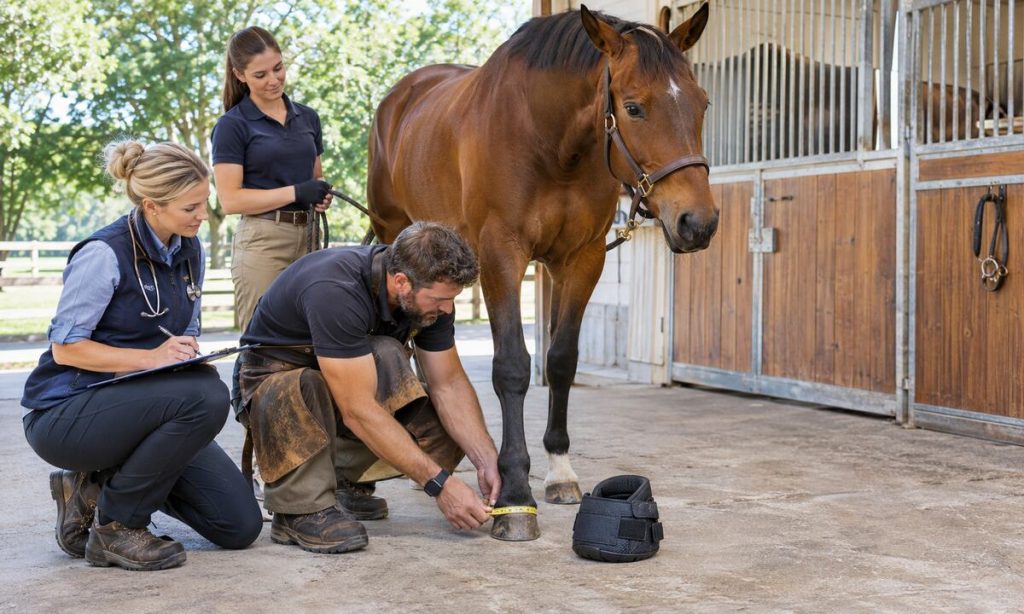
When safe to do so, measure each relevant hoof separately according to the chosen manufacturer’s instructions, usually recording width at the broadest point and length from the toe to the correct heel reference. Recent trimming, hoof distortion, and uneven growth can change dimensions. Measuring over a dirty sole, including heel bulbs incorrectly, or assuming both front feet are identical can lead to the wrong size.
Use a ruler or caliper on a clean foot, record dimensions with dates, and have the farrier review them. A shape that falls between sizes may require a different model rather than a tighter closure. During an acute episode, avoid repeatedly lifting the horse’s foot merely for a shopping comparison. The clinical team can determine how and when measurements are practical.
Check Shape, Retention, and Pressure Points
A boot should match hoof width, length, heel configuration, and the intended pad without squeezing the coronary band, heel bulbs, or pastern. Straps should stay secure at rest while leaving appropriate room and avoiding friction. Examine the inside for hard seams, sharp edges, trapped stones, or a sole shape that creates localized loading. A loose boot may twist; an overly snug one can rub or restrict comfort.
Ask the farrier to assess the fit with the approved support material installed, not just on an empty shell. A boot that appears acceptable on the shelf can change its shape when padding or bandages are added. Owners should be shown how to fasten and remove it safely, when it may be worn, and what to do if it shifts. Never tighten a strap to compensate for a fundamentally wrong size.
Prioritize Inspection and a Clear Wear Schedule
A therapeutic boot is not automatically suitable for continuous wear. Moisture, grit, friction, and pressure can accumulate, and the safe inspection interval depends on the horse and treatment plan. Obtain written or clearly recorded instructions from the veterinary team for use at rest, supervised movement, and any removal or cleaning schedule. Keep the horse on the footing the clinician recommends.
During approved checks, look for heat, swelling, new sensitivity, skin rubs, unusual odor, wetness, and a change in stance. If the horse becomes more uncomfortable, the boot rotates, or rubbing develops, contact the clinician or farrier instead of letting the horse work through it. A new problem can reflect the underlying disease as well as equipment fit.
Clean Boots and Pads Without Changing the Support
Remove grit, manure, and bedding from approved boot components using the manufacturer’s recommended method. Wash washable shells, rinse away detergent, and dry fully when the care team authorizes removal. Replace pads only on the prescribed schedule and with the specified type; changing thickness or material can alter support mechanics. Keep a spare clean set if the professional plan requires one.
Do not apply harsh chemicals to a device that will touch irritated skin, and avoid sealing moisture inside. Document how a boot was assembled so staff can replace it consistently. If disinfection is necessary after a skin infection, follow veterinary guidance about the material and contact time. Store the clean item in a dry marked bag or container separate from contaminated barn gear.
Plan Reassessment as the Hoof Changes
Hoof dimensions and weight distribution can change through trimming cycles, healing, and disease progression. A boot that fit last month may no longer fit after professional farriery or an adjustment to the support plan. Regular veterinarian-farrier communication is essential, particularly if radiographs indicate structural change. The owner should keep notes on dimensions, wear time, cleaning, and observed comfort.
Evaluate progress using clinical examination and the agreed rehabilitation plan, not a product promise or a single comfortable day. General hoof-boot comparisons may explain styles, but therapeutic laminitis selection remains individual. Do not assume that the same model suits all four feet or every stage of recovery.
Frequently Asked Questions
These questions address common concerns about boots, padding, sizing, and signs of trouble. They are not instructions for self-treating an acute hoof emergency.
If a horse is reluctant to walk, has sudden hoof pain, or cannot bear weight comfortably, call a veterinarian rather than adjusting boots repeatedly. Medical assessment determines the next safe step.
Can hoof boots cure laminitis?
No. Boots may have a supportive role in a veterinarian-directed plan, but diagnosis, management of underlying disease, hoof care, and pain assessment remain essential.
Should I walk a laminitic horse to test boot fit?
No, not without veterinary permission. Forced movement may worsen pain and is not a safe fitting method during an acute episode.
Can I use ordinary trail boots for laminitis?
Not automatically. Protection boots and therapeutic support devices can differ. The veterinarian and farrier should specify the required design and pad characteristics.
Should both front hooves use the same size?
Not necessarily. Measure each hoof individually when safely possible, and have a professional account for changes due to trim, hoof shape, and prescribed padding.
What if the boot rubs or the horse seems worse?
Stop the planned use and contact the veterinary or farrier team promptly. New pressure sores, swelling, boot twisting, or worsening lameness needs reassessment.
Final Words
The right choice of horse boots for laminitis depends on a veterinary diagnosis, professional farrier input, measured hoof shape, appropriate padding, secure retention, and a written inspection plan. A boot is a support tool within treatment, not a cure for laminitis or a reason to delay care.
Prioritize the horse’s comfort and clinical condition over brand claims. Have the veterinarian and farrier check the fit, monitor for rubbing and moisture, and reassess after hoof changes. When acute signs appear, seek immediate professional help and follow instructions about movement and support.
Reference
The sources below describe laminitis urgency, hoof pathology, and professional decisions about therapeutic support. Their purpose is to guide informed questions, not to prescribe a device or padding configuration.
Boot dimensions and support needs depend on the individual hoof and stage of disease. Veterinary radiographs and farrier assessment may be required to select or modify treatment safely.









