
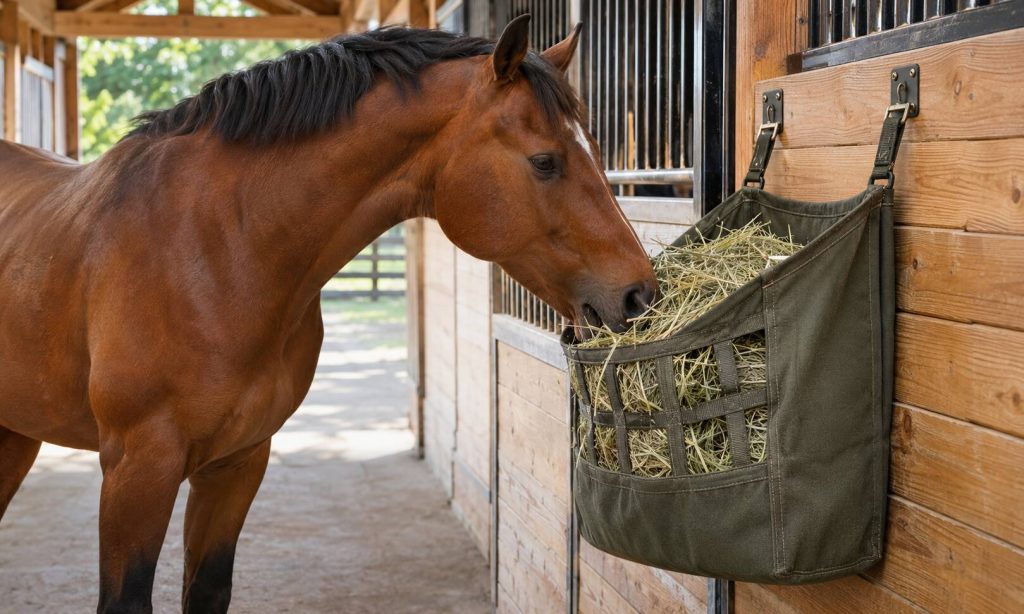
Introducing a hay bag should make feeding calmer and more practical, not leave a horse struggling to reach dinner. If you are considering hay bags for horses, start by checking whether the bag suits your horse, its stall or paddock, and the kind of forage you feed. Some horses adapt quickly. Others paw, tug at the fabric, or ignore an unfamiliar feeding point. A slow introduction helps you notice these reactions before the bag becomes part of the daily routine.
A hay bag holds loose hay inside a fabric or mesh container, often with a feeding opening or netted face. It is different from a floor manger or an open hay rack. This guide explains how to introduce a hay bag to your horse, secure it, protect normal forage intake, and recognize when to stop. For broader context, compare the feeding formats in our horse hay-net overview.
Decide What the Hay Bag Should Accomplish
Begin with one clear goal. Perhaps loose hay is being trampled in the stall, a travel feeding station needs better organization, or you want to spread a forage ration over more time. A bag may reduce spillage, but it cannot replace the need for enough suitable hay. Hay remains the foundation of most adult horses’ diets. A new bag that makes eating too difficult is not an improvement, even if the floor looks cleaner. Think about comfort, nutrition, and behavior together.
Distinguish a conventional hay bag with a generous opening from a small-mesh slow feeder. The latter can lengthen eating time in some adult horses. That does not mean every horse benefits. Dental problems, advanced age, neck pain, frustration, or particular management needs can make restricted access inappropriate. You may also need more feeding stations when horses share a space. For turnout groups, check competition and ensure that a subordinate horse can eat without being driven away. A feeding change should be judged by how the horse responds, not by the bag’s advertised claims.
Choose a Safe Bag and Feeding Location
Inspect the entire bag before introducing it. Look for sound seams, strong attachment points, smooth openings, and hardware that cannot snag lips, halters, hooves, or shoes. Reject fraying mesh, torn fabric, exposed sharp edges, dangling cords, and large loose loops. Test the mounting point and determine where the bag will hang when nearly empty, not just when full. That last detail matters because a sagging bag can become a catching hazard as hay disappears. The site should be easy to reach for filling and daily checks.
Place the bag where the horse can approach naturally, away from gate swings, water spills, protruding latches, and traffic between horses. Use a manufacturer-approved attachment method compatible with the stall or trailer. Do not guess at a universal mounting height; the safe position depends on bag design, the horse’s size, hoof and shoe risks, and the feeding area. Make sure the bag and its ties cannot drop within hoof reach. For a closer look at mesh, mounting, and horse behavior, consult our hay-net fit and use guide.
Prepare the Hay and Preserve Normal Intake
Use clean, appropriate forage. Shake out debris if necessary and discard hay that is moldy, visibly spoiled, or contaminated. Do not use a bag to disguise poor-quality forage. Review your horse’s usual hay portion and feeding schedule before moving any of it. A bag changes access, not nutritional requirements. If you need to check the existing ration, see our guide to estimating daily hay portions. A horse should have suitable forage and drinking water available according to its individualized care plan.
For the first session, loosely fill the bag with familiar hay rather than packing it tight. Choose an opening the horse can use without excessive effort. If the bag is specifically a slow feeder, keep another accessible forage source during the transition so the horse is not forced to solve an unfamiliar puzzle while hungry. Avoid combining the bag with a sudden change in forage type or amount. When both the feed and the feeding device change together, it becomes harder to identify why appetite or manure patterns change.
Introduce the Bag in Short, Supervised Sessions
Let the horse inspect the empty bag while you remain nearby and maintain a safe escape route. Do not wave it near the face or force contact. Fill it with a small amount of familiar hay, then allow the horse to sniff and take an easy mouthful. Rewarding calm behavior with time and space often works better than coaxing. At first, the horse may choose the familiar feeding spot. That is acceptable. The goal is a voluntary, relaxed first encounter, not a timed performance.
Observe how the horse pulls hay. Can it grasp strands and chew normally? Does the bag swing sharply, twist, fold over the opening, or begin to loosen? If it paws, bites fabric, tosses its head, or catches its teeth, stop and adjust the arrangement or choose another feeder. Keep the first practice short and under direct supervision. Across later sessions, increase reliance on the bag only when the horse remains comfortable and still consumes its appropriate forage. Introducing a hay bag to your horse is a process, not a single installation step.
Monitor Eating Behavior, Safety, and Body Condition
Watch the horse at several points during feeding, including when the bag is almost empty. Check for tugging at straps, rubbing on the muzzle, repeated pawing, frustration, and uneven access when other horses are nearby. Be alert to a change in appetite, dropped feed, or unusual chewing. These signs can reflect a poorly matched opening or a health issue that needs attention. After each use, inspect attachment points and seams. FYI, a bag can look perfectly tidy at breakfast and become a floppy hazard by evening.
Record how much hay goes in, what remains, and whether the horse maintains its usual intake and body condition. If you suspect reduced intake, dental discomfort, colic signs, choking, weight loss, or unusual behavior, stop relying on the bag and contact your veterinarian. A slow feeder can extend meal duration without proving that the horse ate enough. Reassess during changes in workload, dental status, pregnancy, illness, or group hierarchy. Feeding equipment should adapt to the animal’s needs, not dictate them.
Clean, Maintain, and Know When to Retire the Bag
Empty loose stems and shake out accumulated dust after use. Follow the manufacturer’s cleaning directions for the material. Where washing is allowed, use a suitable mild cleaning method, rinse thoroughly, and let the bag dry completely before filling it again. Store it away from moisture, rodents, and chemicals. A damp bag can compromise forage hygiene. Give the attachment clips and mounting points their own inspection rather than assuming the fabric is the only part that wears.
Replace or stop using the bag when stitching tears, mesh enlarges, fabric becomes stiff or rough, clips bend, or ties fray. Do not improvise repairs that leave exposed wire, knots, or trailing straps. Check that the feeder still suits the horse as its size, shoeing, mobility, or dental needs change. If the horse persists in pawing or pulling dangerously, a well-positioned manger or other feeding arrangement may be safer. IMO, the right hay setup is the one the horse uses calmly and reliably, not the one that makes the neatest photograph.
Frequently Asked Questions
These practical questions arise most often during the first few days with a new hay bag. They help you separate normal curiosity from signs that the setup or feeding plan needs attention.
The answers are general management guidance for adult horses. Individual needs vary with health, footwear, housing, and feeding behavior; a veterinarian or experienced equine professional can help assess higher-risk situations.
Should I remove the horse’s usual hay source immediately?
No. Introduce the new bag while familiar forage remains accessible. This lets you see whether your horse understands and accepts the new presentation. For restrictive slow feeders, a gradual transition is especially important. Maintain appropriate daily intake throughout.
What if my horse paws at the bag?
Treat pawing as a warning to reassess, not as disobedience. Check whether the bag hangs too low, the opening is difficult to use, or the mounting point allows excessive swinging. Remove it if a hoof could become caught. A different feeder may be more appropriate.
Is a small-mesh bag always better?
No. Smaller openings can increase feeding time, but they may frustrate some horses and limit access for animals with dental or mobility problems. Start with accessible forage and choose mesh only after considering behavior, intake, and safety.
Can I use a hay bag for a foal or senior horse?
Extra caution is warranted. Foals may face entanglement risks, and some older horses struggle with restricted openings or dental disease. Ask an equine veterinarian for individualized advice. Accessible forage in a safer feeder may be the better choice.
How often should I inspect a hay bag?
Inspect it before each filling and again after the horse has used it, particularly when the bag is nearly empty. Check seams, holes, clips, straps, hanging height, and contact areas. Remove damaged equipment immediately.
Final Words
A good introduction to hay bags for horses protects normal eating while allowing the horse to learn a new routine. Choose an appropriate location, use familiar clean hay, supervise short first sessions, and assess the nearly empty bag for snagging risks. There is no prize for switching everything overnight. If the horse cannot eat comfortably or the setup creates entanglement hazards, use another feeding method.
Keep monitoring forage amounts and equipment condition as the routine settles. Our horse hay and feed-label guide can help with the bigger nutrition picture. The simple rule is to prioritize safe access, adequate forage, and calm behavior. Those outcomes matter more than saving a handful of loose hay.









