
Vaccines are one of the most important tools we have for protecting dogs from serious and potentially life-threatening diseases. Still, if your dog comes home from the veterinarian feeling tired, develops a sore spot, or refuses dinner for a few hours, it is natural to wonder whether something has gone wrong.
The good news is that common dog vaccine side effects are usually mild and temporary. A little soreness or extra sleep after a vaccination can be part of the body’s normal immune response. However, some reactions are more serious and require prompt veterinary attention.
Understanding the difference can make the hours after a vaccination much less stressful—for both you and your dog.
What Are Common Dog Vaccine Side Effects?
A vaccine stimulates the immune system so the dog’s body can recognize and respond to a particular infectious disease. That immune activity can occasionally produce temporary symptoms.
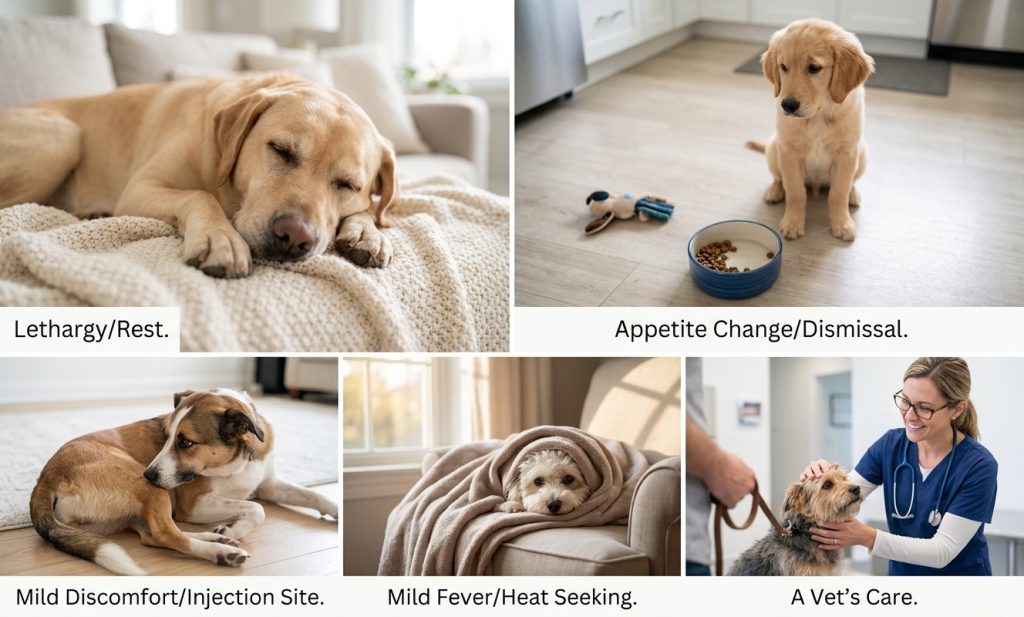
The common dog vaccine side effects pet owners notice most often include:
- Soreness or tenderness where the injection was given
- Mild swelling at the injection site
- Temporary tiredness or reduced activity
- Mild fever
- Decreased appetite
- General discomfort
These reactions generally do not mean the vaccine has harmed your dog. They can simply indicate that the immune system is responding to the vaccination.
The American Veterinary Medical Association notes that mild reactions can begin within hours of vaccination, while some respiratory signs can occur after intranasal vaccines.
As a pet owner, I think the easiest approach is to treat vaccination day as a quieter-than-usual day. Your dog does not need to win an Olympic medal that afternoon. A comfortable place to rest, fresh water, and normal observation are usually more useful than trying to keep them unusually active.
Mild Dog Vaccine Side Effects That Are Usually Temporary
1. Soreness at the Injection Site
Your dog may be tender where the vaccine was administered. Some dogs may flinch slightly if you touch that area.
This is one of the more ordinary common dog vaccine side effects and often improves without treatment.
Avoid repeatedly pressing or rubbing the injection site. Give your dog some space and follow any specific instructions provided by your veterinarian.
2. Small Amount of Swelling
A small bump or localized swelling can occasionally appear where the vaccine was injected.
The AVMA states that a small, firm swelling may develop at a recent vaccination site and should generally begin disappearing within a couple of weeks. If it remains for more than three weeks or continues getting larger, contact your veterinarian.
That distinction matters. A small bump that gradually settles is different from swelling that keeps growing or is accompanied by other concerning symptoms.
3. Tiredness or Lower Activity
Some dogs are quieter or sleepier than usual after vaccination.
If your normally energetic Labrador suddenly decides the couch is the only acceptable destination for the rest of the afternoon, that can be unsettling. Mild temporary tiredness is nevertheless among the common dog vaccine side effects.
Give your dog an opportunity to rest. Continue monitoring behavior, appetite, water intake, and other symptoms.
4. Mild Fever
A temporary mild fever can occur following vaccination as the immune system responds.
Your veterinarian can tell you what to watch for based on the vaccine your dog received and your dog’s health history. Do not give human medications such as acetaminophen or ibuprofen unless a veterinarian specifically instructs you to do so. Some human medications can be dangerous or toxic to dogs.
5. Reduced Appetite
Some dogs eat less for a short period after vaccination.
A temporary decrease in appetite can accompany other mild dog vaccination side effects, particularly if the dog is also tired or sore.
However, prolonged refusal to eat, repeated vomiting, severe lethargy, or other significant changes should not simply be blamed on the vaccine. Contact your veterinarian for guidance.
More Serious Vaccine Reactions in Dogs
Most vaccination reactions are not emergencies. Serious reactions are uncommon, but pet owners should know what they look like.
AAHA explains that licensed canine vaccines have a high degree of safety and efficacy, while acknowledging that adverse reactions can occasionally occur. Serious allergic reactions, including anaphylaxis, are rare but potentially life-threatening.
Potential warning signs include:
- Facial, muzzle, neck, or eye swelling
- Hives or widespread itching
- Repeated vomiting or diarrhea
- Severe coughing
- Difficulty breathing
- Weakness or collapse
- Other rapidly developing signs that appear severe
The AVMA specifically recommends immediate veterinary care for serious symptoms such as persistent vomiting or diarrhea, hives, facial swelling, severe coughing or breathing difficulty, and collapse.
Why Are Severe Reactions Different?
A mild sore injection site is one thing. Difficulty breathing is another.
Severe allergic reactions can develop relatively quickly after vaccination and can become life-threatening. If your dog develops breathing difficulty, collapses, or has significant facial swelling or other signs of a severe allergic reaction, contact an emergency veterinary service immediately.
Do not wait until the next morning simply to see whether things improve.
What Causes Vaccine Reactions in Dogs?
There is no single explanation for every vaccine reaction. AAHA identifies several possible mechanisms, including normal immune responses, reactions to vaccine components, and individual genetic susceptibility. The risk of an adverse event is influenced by the individual patient rather than simply by breed.
Age and size can also matter when veterinarians assess vaccination risk. AAHA notes that smaller and younger dogs can have a higher risk of adverse reactions, which is one reason veterinarians may carefully consider the number of vaccines administered during a visit.
Importantly, experiencing a reaction once does not automatically mean your dog can never be vaccinated again. Instead, tell your veterinarian exactly what happened. The veterinary team can then consider the dog’s previous reaction, health status, vaccine needs, and appropriate precautions.
How Long Do Dog Vaccine Side Effects Last?
There is no single timeline that applies to every dog or every vaccine. Mild soreness, tiredness, reduced appetite, or other minor symptoms are generally temporary. The AVMA advises contacting your veterinarian if mild effects last more than a day or two or cause significant discomfort. A small injection-site lump can take longer to disappear and may gradually shrink over a couple of weeks. A lump that persists beyond three weeks or gets larger deserves veterinary attention.
The important point is not to focus only on the clock. Consider the severity, progression, and combination of symptoms. A slightly sleepy dog who is comfortable and improving is very different from a dog who is becoming progressively weaker or developing breathing problems.
What Should You Do After Your Dog Gets Vaccinated?
After vaccination, keep the rest of the day relatively calm.
Give Your Dog a Comfortable Place to Rest
Your dog may want to sleep more than usual. Let them rest somewhere comfortable and familiar.
Keep Water Available
Make sure clean drinking water is accessible. Monitor normal drinking and bathroom habits without becoming overly obsessive.
Watch for Changes
Pay attention to:
- Energy level
- Appetite
- Injection-site swelling
- Vomiting or diarrhea
- Facial swelling
- Breathing
- General behavior
This simple observation can help you distinguish a mild reaction from something requiring professional attention.
Follow Your Veterinarian’s Instructions
Your veterinarian knows which vaccines were administered and your dog’s medical history. If they provide specific post-vaccination instructions, follow those recommendations.
If your dog has previously experienced a vaccine reaction, mention it before every future vaccination appointment. AAHA recommends individualized planning for dogs with previous adverse reactions.
When Should You Call a Vet?
Knowing when to call is one of the most valuable things you can take away from this article.
Contact your veterinarian if:
- Mild symptoms are lasting longer than expected
- Your dog appears significantly uncomfortable
- Appetite remains poor
- A vaccination-site lump persists or becomes larger
- Your dog develops persistent vomiting or diarrhea
- You notice unusual or worsening behavior
Seek immediate emergency veterinary care if your dog has:
- Difficulty breathing
- Collapse
- Severe facial or throat swelling
- Signs of a severe allergic reaction
- Rapidly worsening symptoms
When it comes to potentially life-threatening symptoms, it is better to make the phone call than to spend an hour searching the internet at midnight. FYI, “wait and see” is not a great strategy when breathing is affected.
Common Dog Vaccine Side Effects and DHLPP Vaccination
DHLPP is a commonly used term for a combination canine vaccine, although exact formulations and terminology can vary by product and veterinary practice. The letters generally refer to protection against several important canine diseases, including distemper, hepatitis/adenovirus, leptospirosis, and parvovirus, with some formulations also involving parainfluenza.
AAHA’s current canine vaccination guidance identifies distemper, adenovirus, parvovirus, and leptospirosis as core vaccines for dogs, with parainfluenza included in some combination vaccine recommendations. Because combination vaccines can differ, dog owners should check the actual vaccine recorded in their dog’s medical record rather than relying solely on the shorthand name.
DHLPP Vaccine Side Effects
The possible common dog vaccine side effects after a DHLPP-type combination vaccination are broadly similar to reactions associated with other canine vaccines.
Your dog may experience:
- Temporary tiredness
- Mild soreness
- Reduced appetite
- Mild fever
- Localized swelling
More concerning signs, such as facial swelling, hives, repeated vomiting, breathing difficulty, or collapse, require prompt veterinary attention.
How Often Do Dogs Need DHLPP?
If you’re searching how often do dogs need DHLPP, the answer is not simply “once every year.”
Vaccination schedules depend on the individual vaccine product, the dog’s age, previous vaccination history, risk of exposure, and veterinary recommendations.
AAHA’s vaccination guidelines recommend a combination vaccine covering distemper, adenovirus, parvovirus, with or without parainfluenza, as part of the puppy series, followed by a dose within one year after the initial series and subsequent boosters at three-year intervals for those components under the guideline. Leptospirosis follows a different schedule, with annual boosters recommended after the initial series.
That is why it is misleading to assume that every component of a “DHLPP” label automatically follows exactly the same booster interval.
Your veterinarian should determine the schedule based on the actual product and your dog’s circumstances.
Adult Dog DHLPP Booster: What Owners Should Know
An adult dog DHLPP booster may be recommended depending on the dog’s previous vaccination history and the components included in the vaccine.
If you have adopted an adult dog with an incomplete or unknown vaccination history, do not try to create a catch-up schedule yourself. Your veterinarian can review the available records and determine what vaccinations are appropriate.
AAHA recommends individualized vaccination protocols based on patient history and disease-exposure risk.
This is also a good reason to keep vaccination records organized. A photo or digital copy of your dog’s vaccine record can save considerable confusion when changing veterinary practices, traveling, boarding, or adopting another pet.
Can You Prevent or Reduce Vaccine Reactions?
You cannot guarantee that a dog will never experience a vaccine reaction. However, veterinarians can consider a dog’s history and individual risk.
Tell your veterinarian about:
- Previous vaccine reactions
- Medication reactions
- Current illnesses
- Chronic health conditions
- Current medications
- Previous vaccination records
For dogs with previous reactions, AAHA discusses strategies such as limiting the number of vaccines administered at one visit when medically appropriate and using individualized precautions.
Do not reduce vaccine doses yourself or ask someone to administer a smaller amount simply because your dog is small. AAHA specifically states that reducing the volume below the manufacturer’s recommended dose is not advised and does not have evidence showing that it prevents adverse events.
Frequently Asked Questions
What are the most common side effects of dog vaccines?
The most common reactions include temporary soreness, mild swelling at the injection site, tiredness, mild fever, and reduced appetite. These common dog vaccine side effects are generally temporary, but significant or worsening symptoms should be discussed with a veterinarian.
How long do dog vaccine side effects usually last?
Mild symptoms often resolve within a day or two. The exact duration varies by dog and vaccine. Contact your veterinarian if symptoms persist, become severe, or cause significant discomfort. A small injection-site lump may take longer to disappear.
Is it normal for a dog to be tired after vaccines?
Yes. Temporary tiredness or reduced activity can occur after vaccination. Allow your dog to rest and monitor them. If the tiredness is severe, prolonged, or accompanied by concerning symptoms, contact your veterinarian.
When should I worry about a vaccine reaction?
Facial swelling, hives, repeated vomiting or diarrhea, difficulty breathing, or collapse are warning signs that require immediate veterinary attention. Serious allergic reactions are uncommon but can be life-threatening.
How often does an adult dog need a DHLPP booster?
There is no single schedule that applies to every adult dog or every DHLPP-labeled product. Booster timing depends on the vaccine components, product labeling, previous vaccination history, age, health, lifestyle, and veterinary recommendations. AAHA’s current guidance uses different intervals for different vaccine components, so your veterinarian should determine the appropriate schedule.
Final Words
Knowing about common dog vaccine side effects does not mean you should fear vaccination. It means you can make better decisions and recognize when your dog needs help.
Most post-vaccination reactions are mild and temporary. A little soreness, tiredness, mild fever, or reduced appetite can occur as the immune system responds. More serious reactions are uncommon, but symptoms such as facial swelling, breathing difficulty, collapse, or severe gastrointestinal distress should never be ignored.
Vaccination remains a cornerstone of preventive canine healthcare, and current AAHA guidance emphasizes that the benefits of recommended vaccines generally outweigh their risks.
The best approach is simple: keep accurate vaccination records, tell your veterinarian about previous reactions, follow the recommended schedule, and pay attention to your dog’s behavior after each vaccination.
And remember, your veterinarian is the right person to help determine which vaccines your dog needs and when. Internet searches can explain a lot, but they cannot examine your dog—and unfortunately, your dog still refuses to fill out a medical history form. 🙂
Medical disclaimer: This article is for general educational purposes only. It is not a substitute for veterinary examination, diagnosis, or individualized medical advice. If your dog develops severe or rapidly worsening symptoms after vaccination, contact a veterinarian or emergency veterinary hospital immediately.









