
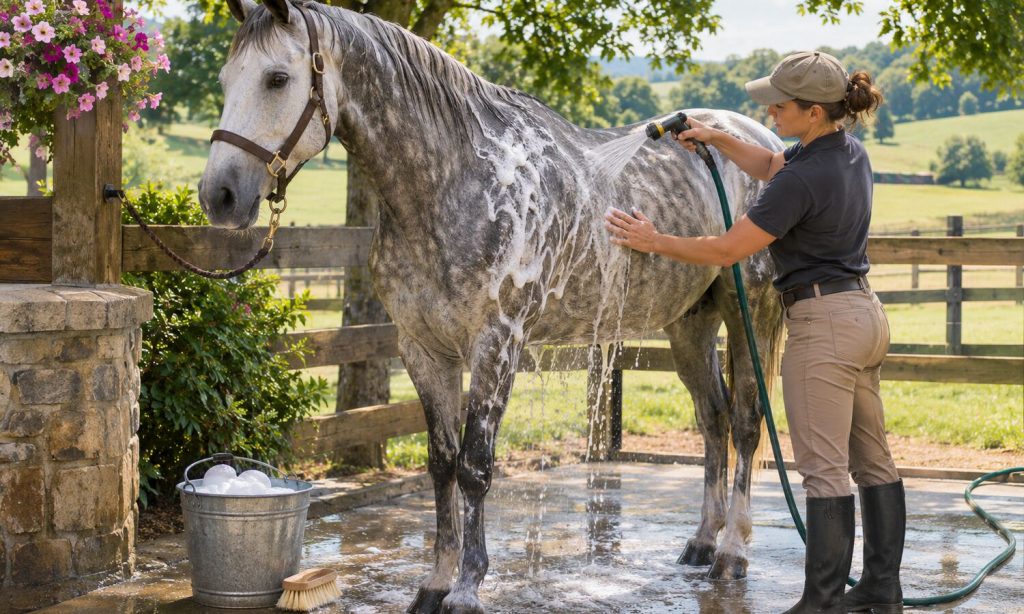
A shiny coat can make a horse look wonderful, but the wrong bath routine may leave the skin dry or irritated. Common mistakes when choosing a shampoo for horses include relying on strong fragrance, selecting a formula without checking its intended use, and assuming more washing creates a healthier coat. Horses have individual skin sensitivities, coat types, and management routines, so a single bathing rule rarely fits every animal.
Start by asking what needs cleaning: ordinary sweat and dirt, staining, or a veterinary-diagnosed skin condition. The site’s shampoo for horses overview offers category context, while this guide focuses on safer selection and application habits. You will learn how to read directions, avoid irritating skin, rinse thoroughly, and protect a horse from getting chilled after washing. The goal is a clean, comfortable animal, not a scented showpiece with unhappy skin.
Mistake One: Choosing by Fragrance or Foam
A strong scent is not proof of cleaning quality, and abundant foam does not establish gentleness. Horses may react to fragrance or ingredients differently, especially when skin is already dry or inflamed. Read the intended species and use instructions, noting any warnings about sensitive skin. Avoid applying concentrated shampoo directly to the coat when the label requires dilution. Do not mix cleaning products in a bucket because the combination smells appealing or seems more powerful.
Look for clear guidance on dilution, contact time, rinsing, and use around the head. A simple well-tolerated routine is often more valuable than a complicated assortment of additives. If the horse has previously reacted to grooming products, keep a record of ingredients and symptoms and discuss them with a veterinarian. The site’s horse shampoo for sensitive skin guide offers related criteria, but it cannot diagnose the reason for irritation.
Mistake Two: Treating Shampoo as a Cure
Itching, hair loss, scabs, crusting, and unusual odor can reflect parasites, allergies, infections, or other skin conditions. Changing shampoo alone may hide symptoms while the underlying problem continues. Do not assume a medicated label makes a product appropriate for a horse without veterinary assessment. Drug-containing shampoos may require a specific diagnosis, contact time, safety precautions, and treatment plan. Applying them casually can make proper evaluation more difficult.
Inspect the coat and skin during grooming. Note where lesions occur, whether multiple horses are affected, and how quickly the problem developed. Contact a veterinarian for persistent itching, spreading sores, pain, fever, or significant hair loss. The site’s article on veterinary diagnosis of itchy skin in horses explains why different causes require different responses. Ordinary grooming shampoo is for cleaning, not a substitute for medical treatment.
Mistake Three: Bathing Too Often
More baths are not automatically better. Frequent washing with harsh cleansers can strip natural oils and leave a coat feeling dry. The right frequency depends on climate, work, sweat, mud, and individual skin tolerance. Many horses need targeted cleaning more often than a full-body shampoo bath. During cold months, a complete wash may be inappropriate without facilities to keep the horse warm and dry. Consider brushing, removing sweat, and spot-cleaning between full baths.
Watch for dryness, flaking, rubbing, and a change in coat texture after bathing. If the skin becomes uncomfortable, pause and reassess the product and frequency with veterinary advice. FYI, a horse has no interest in meeting a human weekly spa schedule. Comfort and skin integrity matter more than a perfectly perfumed mane. For a very dirty horse, cleaning one area well may be preferable to repeated whole-body washing.
Mistake Four: Poor Dilution and Incomplete Rinsing
Follow the label’s dilution instructions exactly. A concentrated product can be difficult to distribute evenly and may leave residue. Use clean containers and tools that have not held pesticides or other chemicals. Wet the coat appropriately, apply only the recommended amount, and work gently rather than scrubbing skin aggressively. Avoid getting shampoo in eyes, nostrils, mouth, and ear canals. If the horse is anxious, use slow handling and ask for help instead of forcing a risky wash.
Rinse until the water runs clear and the coat no longer feels slippery or soapy, taking extra care around the mane, tail, and lower legs where residue can linger. Remaining cleanser may contribute to irritation. Use clean water and check that the hose temperature is comfortable. If a reaction occurs, stop using the product, rinse appropriately when safe, and contact a veterinarian for guidance. Keep the original container available so the ingredients can be identified.
Mistake Five: Ignoring Weather and Drying Time
A horse that has been soaked needs a safe drying plan. Cold air, wind, and inadequate shelter can make bathing uncomfortable, especially for clipped, thin, elderly, or sick animals. Choose suitable weather or a protected wash area and ensure there is enough time to dry before turnout or travel. Remove excess water with a clean scraper where appropriate, then towel or manage the coat according to the conditions.
Do not trap persistent moisture beneath an unsuitable blanket or leave a damp horse standing in a draft. Pay attention to skin folds, lower legs, and the base of a thick mane. The site’s sweat scraper guide for horses covers useful grooming context. Proper drying is part of hygiene, not a separate cosmetic step. If conditions make a full wash impractical, postpone it and use a safer limited-cleaning option.
Mistake Six: Forgetting Skin Type and Personal Tolerance
Horses vary in how they tolerate touch, water, pressure, and ingredients. A thick winter coat may hold soap longer than a short summer coat. A horse recovering from skin disease might need a different routine specified by its veterinarian. Do not assume that a product tolerated by one horse will suit every horse in the barn. A small cautious test of a nonmedicated grooming product may help identify obvious sensitivity, but it does not rule out delayed reactions.
Check the mane, tail, dock, belly, and lower legs during each grooming session. Note unusual scratching or sensitivity. Use only grooming products with directions appropriate to horses and avoid unverified household mixtures containing strong essential oils or cleaners. Keep equipment clean to reduce transfer of dirt and irritants between animals. A consistent grooming log can make it easier to recognize whether a new product correlates with a skin change.
Frequently Asked Questions
Shampoo selection should support skin comfort and safe grooming. These answers address frequent practical concerns.
An itchy or painful horse may need a veterinary examination before another wash. Product changes alone cannot diagnose skin disease.
Is a heavily scented shampoo better?
No. Fragrance does not prove effectiveness and may bother sensitive animals. Follow equine-use directions and monitor tolerance.
Can I use human shampoo on a horse?
Do not assume it is suitable. Use only products appropriate to equine care and seek veterinary guidance for special skin needs.
How often should I shampoo a horse?
It depends on coat, climate, work, and skin condition. Avoid unnecessary full washes and monitor for drying or irritation.
What if shampoo causes itching?
Stop using it, rinse as appropriate, and contact a veterinarian if discomfort persists or other symptoms appear.
Should I use medicated shampoo for dandruff?
Not without a diagnosis and veterinary directions. Flaking may have several causes that need different treatment.
Final Words
Common mistakes when choosing a shampoo for horses are surprisingly practical: overvaluing scent, ignoring intended use, bathing too often, failing to rinse, and forgetting the drying plan. A gentle, well-managed routine helps preserve skin comfort and lets you notice changes that deserve medical attention.
Review the site’s horse shampoo guide for broader context, but choose grooming practices around your horse’s actual needs. If skin disease is suspected, involve the veterinarian before trying medicated products. A comfortable horse with healthy skin is the real measure of a successful bath, even when the mane is not salon-perfect.









