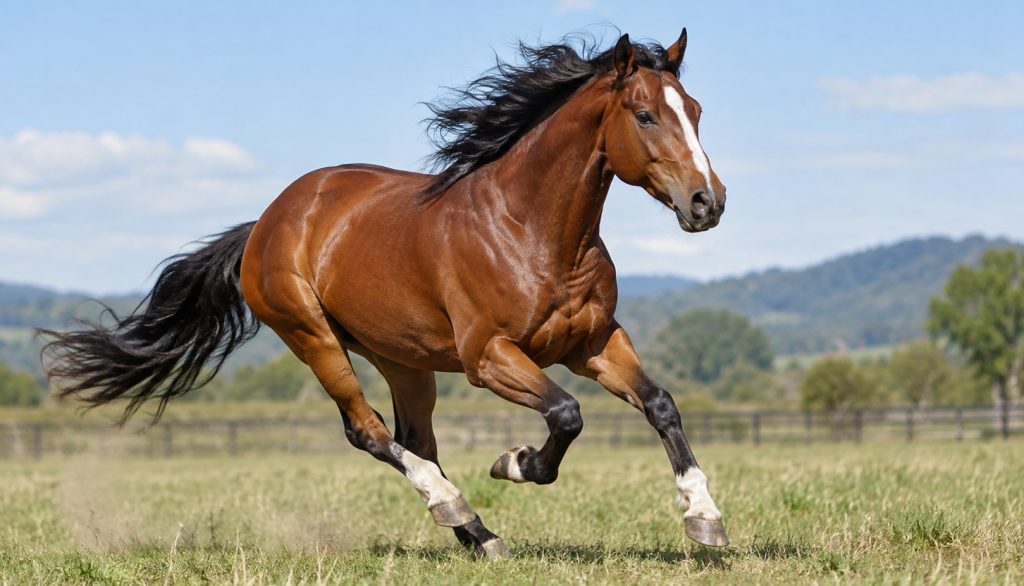
Whether you are watching a Quarter Horse explode out of a starting gate or pacing a trail ride across the rolling hills of Kentucky, speed is one of the first things that captures our imagination about horses. But if you drop the race track dramatics and look at real-world conditions, how fast can a horse travel when moving from point A to point B?
The answer isn’t a single number. A horse’s travel speed depends entirely on whether it’s sauntering along a dusty pine trail, trotting along an open dirt road, or pushing into an all-out gallop across a flat pasture. Having spent decades around barns, trailheads, and backyard paddocks, I can tell you that what looks fast on paper feels very different when you are sitting in the saddle.
Understanding equine movement, gaits, and stamina helps you appreciate these animals even more—and keeps your horse safe and comfortable on long journeys.
Understanding Gaits: How Fast Can a Horse Travel at Each Pace?
To understand how fast a horse can travel, you first have to look at their four natural gaits. Each gait serves a specific purpose, balancing speed against energy consumption.
| Gait | Average Speed (MPH) | Movement Pattern | Best Used For |
| Walk | 3 – 4 mph | 4-beat sequence | Long-distance conservation, warming up |
| Trot | 8 – 12 mph | 2-beat diagonal sequence | Efficient, steady travel over distance |
| Canter | 10 – 17 mph | 3-beat rhythm | Moderate speed with controlled energy |
| Gallop | 25 – 30+ mph | 4-beat full-out sprint | Maximum speed in short bursts |
The Walk (3 to 4 mph)
The walk is a relaxed, four-beat gait. It may feel slow when you’re eager to reach a scenic overlook, but it’s the bedrock of all long-distance travel. At a walk, a horse can cover ground for hours without building up substantial muscle fatigue.
The Trot (8 to 12 mph)
The trot is a two-beat diagonal gait and the absolute sweet spot for covering real ground. When asking how fast a horse can travel over sustained distances without collapsing from exhaustion, the trot is your answer. It offers the ideal balance of velocity and metabolic efficiency.
The Canter (10 to 17 mph)
Smooth, rhythmic, and comfortable, the three-beat canter feels like riding a rocking horse. While faster than a trot, it burns through glycogen reserves much quicker. Most trail horses can sustain a comfortable canter for short stretches before needing to break back down to a trot or walk.
The Gallop (25 to 30+ mph)
The gallop is the ultimate expression of power. Average horses gallop between 25 and 30 mph. Elite racehorses pushed to their absolute limits can exceed 40 mph over short distances (Winning Brew holds the official record at 43.97 mph). However, a horse can only maintain a full gallop for a few furlongs—usually less than a mile—before lactic acid forces a slowdown.
Breed Variations: How Fast Can a Horse Travel Based on Genetics?
Genetics play a massive role in answering how fast a horse can travel. Just as a Greyhound outpaces a Mastiff, different horse breeds are engineered by nature and selective breeding for distinct movement profiles.
American Quarter Horse
-
Top Speed: 45 to 55 mph (in short 1/4-mile sprints)
-
Best For: Explosive acceleration and short distances
If you want pure, jaw-dropping acceleration, look no further. Quarter Horses are the sprinters of the equine world. They can reach 55 mph over a quarter-mile straightaway, making them unbeatable out of the gate. But don’t expect them to maintain that furious pace on an all-day trail ride.
Thoroughbred
-
Top Speed: 35 to 44 mph
-
Best For: Middle-distance racing (1 to 2 miles)
Bred for endurance at high speeds, Thoroughbreds are built like elite track athletes. They possess massive hearts and lung capacities, allowing them to sustain speeds near 40 mph for over a mile.
Arabian
-
Top Speed: 30 to 35 mph
-
Best For: Long-distance marathon travel
Arabians might not beat a Quarter Horse in a 400-yard dash, but when evaluating how fast a horse can travel over 50 to 100 miles, Arabians reign supreme. Their unique muscle fiber composition and high heat tolerance allow them to trot and canter continuously where other breeds would exhaust themselves.
Draft Breeds (Clydesdales, Percherons)
-
Top Speed: 15 to 20 mph
-
Best For: Heavy pulling power
Draft horses were built to pull heavy plows and wagons, not set land-speed records. They travel at a steady, deliberate 3 to 8 mph pace. Pushing a heavy draft horse into a gallop generates tremendous joint stress, so slow and steady is the rule here.
Key Factors Influencing How Fast a Horse Can Travel
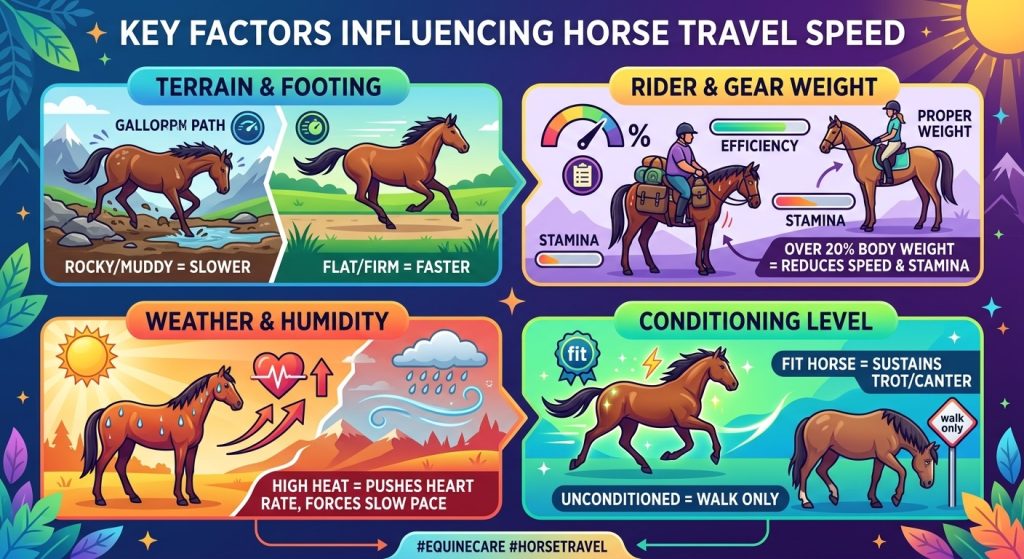
Put two identical horses on two different trails, and you’ll get vastly different speed readouts. several environmental and physical factors dictate how fast can a horse travel on any given day:
-
Terrain and Footing: Deep sand, loose gravel, or heavy mud reduces travel speed by 50% or more. Rocky mountain switchbacks require a slow, careful walk to prevent tendon strain or trips.
-
Rider Weight and Equipment: A horse comfortably carries about 15% to 20% of its total body weight (including saddle, saddlebags, and rider). Pack heavy gear or an unbalanced load, and you’ll notice a swift drop in your horse’s willingness to trot.
-
Weather and Humidity: High heat and humidity force a horse’s body to redirect blood flow to the skin for cooling, leaving less oxygen for muscles. In hot summers across the American Southwest or Southeast, trotting speed must be reduced to prevent heatstroke.
-
Physical Conditioning: Just like human runners, an unconditioned barn horse suddenly asked to trot 10 miles will tire quickly and risk fatigue injuries. Horse endurance must be built gradually over months of conditioning.
Distance Limits: How Far Can a Horse Travel vs. How Fast Can a Horse Travel?
When planning long trail trips or backcountry rides, speed becomes secondary to stamina. The core question shifts from velocity to endurance: how far can a horse travel in a single 24-hour period?
Average Trail Horse (Casual Day Ride)
For a healthy, average trail horse carrying a standard rider, a safe daily travel distance is 15 to 20 miles. This is typically accomplished at a mixed walk and trot pace over 4 to 6 hours, including rest stops for water and grazing.
Conditioning for High Distance
When managing distance, the distribution of gaits determines total travel time:
-
At a pure walk (3.5 mph): 15 miles takes roughly 4.5 hours of moving time.
-
At a mixed walk/trot (7 mph average): 20 miles takes just under 3 hours.
IMO, pushing a casual riding horse beyond 25 miles in a single day without targeted conditioning is a recipe for sore backs, bowed tendons, and metabolic distress.
Elite Endurance Horses
In the world of competitive long-distance riding—such as the famous Tevis Cup in California—specially conditioned horses cover 50 to 100 miles in a single day. These horses average around 7 to 10 mph over rugged terrain, maintaining a steady trot for hours while undergoing rigorous veterinary checks at designated stops.
Historically, systems like the Pony Express relied on fresh horse rotations every 10 to 15 miles, allowing riders to maintain a continuous, fast gallop or canter across hundreds of miles. But for a single horse, sustained speed must always yield to distance.
Horse Endurance, Care, and Essential Trail Gear
Maintaining speed and stamina requires proactive care. If you want your horse to travel efficiently and safely, attention to hydration, gear, and recovery is paramount.
Electrolytes and Hydration
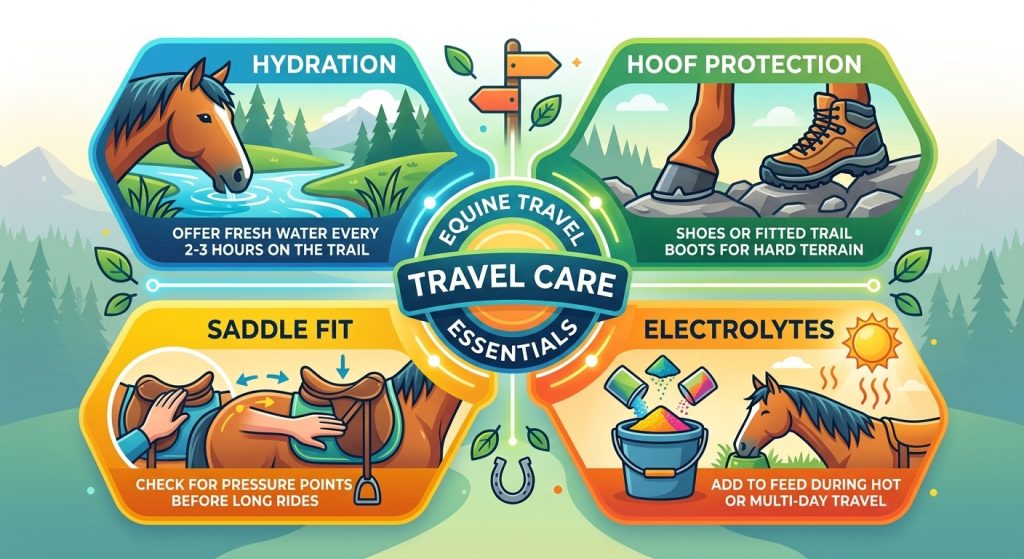
A horse working at a trot or canter loses gallons of sweat per hour. Dehydration slows gut motility and leads to colic. Always allow your horse to drink fresh water whenever crossing clear streams or stopping at trailheads. For long trips, adding equine electrolyte supplements to their feed helps replenish lost sodium, potassium, and chloride.
Hoof Protection
Unshod hooves on rocky ground will chip and wear down quickly, bringing travel to an abrupt halt. Quality horseshoes or fitted rubber hoof boots absorb impact and protect the sole, allowing the horse to hold a confident trot on hard dirt or gravel.
Tack Ergonomics
An ill-fitting saddle creates painful pressure points that alter a horse’s gait. Before setting out on longer rides, check that your saddle pad provides proper clearance over the withers and spreads rider weight evenly across the back muscles. FYI, even a minor pressure rub can turn a smooth trot into an uncomfortable limping walk.
Signs of Fatigue: When to Slow Down or Stop
Knowing how fast a horse can travel is useless if you don’t know when to call time-out. Pushing a tired horse past its limit leads to severe heat illness, thumps (diaphragmatic flutter), or mechanical lameness.
Watch for these clear indicators of fatigue:
-
Heavy, Flared Nostrils: Breathing that remains rapid and shallow long after stopping.
-
Loss of Impulsion: The horse refuses to pick up a trot or continually drops back to a sluggish walk.
-
Excessive Sweating (or Lack of Sweating): Profuse, foamy sweat between the hind legs and under the saddle—or worse, dry, hot skin on a hot day (anhydrosis).
-
Tripping and Stumbling: Weakness in the fetlocks and knees causing frequent loss of footing.
-
Delayed Capillary Refill Time: Press your thumb firmly against the upper gum above the teeth. The pink color should return in less than 2 seconds. If it stays pale white for 3 to 4 seconds, your horse is dehydrated or in distress.
When to Visit a Vet: If your horse displays dark red or brown urine, an elevated heart rate above 60 beats per minute that fails to drop after 30 minutes of rest, or signs of abdominal pain (pawing, rolling, looking at the flank), seek immediate veterinary care.
Frequently Asked Questions
How fast can a horse travel while pulling a wagon or cart?
A horse pulling a light carriage or cart typically travels at 5 to 8 mph at a steady trot. When pulling heavy loads or multi-passenger wagons, travel speed drops to a walking pace of 3 to 4 mph to conserve strength and prevent joint injury.
Can a horse travel all day without stopping?
No. Horses require periodic rest, water, and grazing breaks every 2 to 3 hours during travel. Continuous riding without breaks causes muscle breakdown, dehydration, and dangerous exhaustion.
How fast can a horse travel in snow or mud?
In deep mud or heavy snow, a horse’s travel speed drops dramatically to 1 to 3 mph. Navigating soft, shifting footing requires double the energy output, making trotting or cantering dangerous due to the risk of tendon tears.
Does carrying a heavier rider make a horse travel slower?
Yes. Studies show that when total carried weight (rider plus saddle and gear) exceeds 20% of the horse’s weight, heart rates rise faster and fatigue sets in significantly earlier. To maintain higher speeds over distance, keeping the load light is critical.
What is the fastest speed ever officially recorded for a horse?
The highest officially recorded speed for a horse is 43.97 mph, set by the Thoroughbred racehorse Winning Brew over a quarter-mile distance in 2008. Quarter Horses have been clocked informally in short sprint bursts at up to 55 mph.
Final Words
At the end of the day, asking how fast a horse can travel opens up a fascinating look into equine physiology, history, and athleticism. While sprint breeds can flash past at 45+ mph for a few breathless seconds, true travel capability lies in the steady, rhythmic trot that covers 15 to 20 miles of open country with ease.
Whether you are conditioning a horse for long trail rides or simply marveling at their natural gaits from the fence line, respecting their physical limits ensures every journey is safe and enjoyable. Listen to your horse, pace your rides, bring plenty of fresh water, and enjoy every mile :).