
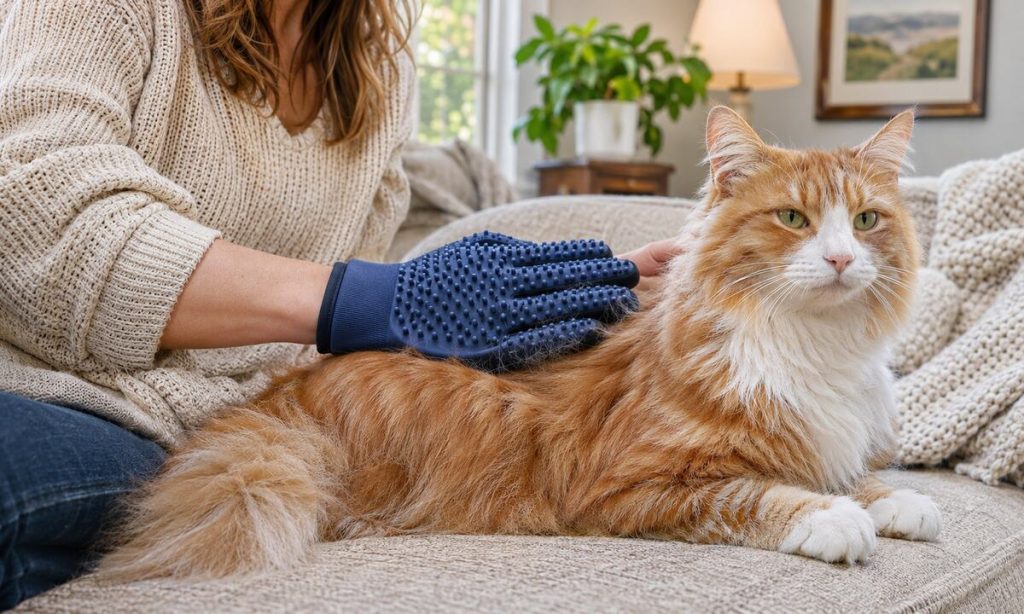
Grooming gloves for cats can make brushing feel more like petting, but two similar-looking gloves may behave very differently. The important differences are hand fit, flexibility, size and spacing of the nubs, ease of cleaning, and how gently each glove moves across your cat’s coat. A glove that works beautifully on short fur may leave hidden tangles in a thick, long coat. Comfort should come before the amount of loose hair collected.
If you are comparing grooming gloves for cats, start with the person wearing the glove and the cat receiving care. Try an unhurried introduction before planning longer sessions. The aim is to remove loose fur, notice coat changes, and build positive handling habits. This guide explains fit checks, coat-specific use, cleaning routines, and warning signs that a glove is not the right tool.
Decide What the Glove Needs to Do
A grooming glove is best understood as a gentle surface tool. Flexible silicone or rubber nubs can pick up some loose hair and distribute pressure over a wider area than a narrow comb. That makes gloves appealing for cats who accept stroking but resist unfamiliar grooming equipment. They are not designed to cut through serious mats, diagnose skin conditions, or replace detailed combing in every coat.
Define success for your own cat. A short-haired cat with moderate shedding may need a few gentle passes. A long-haired cat may need a glove for comfort followed by a suitable comb to find tangles. Seniors and cats with limited mobility can benefit from assistance because self-grooming may become difficult. If brushing is painful, stop and seek veterinary or professional grooming advice rather than pressing harder.
Compare Hand Size and Secure Fit
Put the glove on before judging the grooming surface. Fingers should reach their intended positions without bunching, and the cuff should stay stable through a light stroking motion. Too much loose material reduces control. A tight wrist closure can feel uncomfortable, especially during repetitive movements. Check whether the glove can be secured with one hand and removed without dragging hair across your clothing.
Consider which hand you will use and how easily you can switch sides. Some styles are designed for one hand, while others have paired gloves or a symmetrical fit. A person with a small hand may struggle to apply consistent gentle pressure with a bulky glove. A larger hand may stretch the material and flatten the nubs. Fit matters because the cat feels every jerky, uneven motion transmitted through your hand.
Match the Nubs to Coat Texture
Look beyond how many teeth or dots appear on the palm. Soft, low-profile nubs may suit cats with fine short hair or sensitive skin, while a flexible, slightly longer profile can sometimes reach further into loose topcoat. Firm or sharp projections can scratch skin when used with pressure. The glove should glide across the coat rather than snag or tug. Test lightly on your forearm to understand its feel, while remembering that a cat’s skin differs from yours.
Long coats deserve extra attention. Even when the outer fur looks smooth, mats can develop near the armpits, belly, behind the ears, and under collars. A glove may smooth the visible layer while missing a knot underneath. The ASPCA advises careful detangling with an appropriate comb for long-haired cats. Never pull a tight mat apart with repeated glove strokes. A veterinarian or qualified cat groomer can help when tangles are close to the skin.
Introduce the Glove Without Stress
Let the cat sniff the glove when it is not moving. Offer a choice to approach or leave. Begin with one or two soft strokes on an area the cat usually enjoys, then pause. Reward a relaxed response with quiet praise, a favorite activity, or a suitable treat. If your cat walks away, respect that choice. The first session can last only seconds and still count as useful practice.
Watch the whole animal instead of focusing solely on the collected fur. Flattened ears, a twitching tail, sudden skin ripples, turning to bite, hiding, or tense stillness can signal discomfort. Stop before a small concern becomes a struggle. Avoid forcing grooming on a frightened cat, and never use a glove as a restraint. If your cat repeatedly becomes distressed during touch, ask a veterinarian to rule out pain or skin disease.
Use Different Strokes for Different Areas
Work in the direction of hair growth using slow, light passes. Start along the back or shoulder, away from the face. Do not drag dense nubs over eyes, ears, whiskers, genitals, or injured skin. When removing loose hair from the sides, hold your hand flat enough to spread the pressure. Use short sessions to avoid friction and static buildup. FYI, a bigger fur pile is not a scorecard for better grooming.
The belly, legs, and base of the tail may be sensitive. Many cats prefer these areas left alone or handled only after gradual training. Check the coat in good light between passes. If you encounter a lump, scab, thinning patch, parasites, or unexpected tenderness, stop and arrange veterinary guidance. For broader coat care, the site’s gentle cat bathing guide explains when and how washing should be approached without unnecessary stress.
Clean the Glove and Check for Wear
After each session, peel loose hair away before it becomes embedded among the nubs. Follow the item’s care instructions for washing: some materials tolerate soap and warm water, while others have fabric backing or closures that need different handling. Rinse away residue thoroughly and let the glove dry completely before storing. A damp fabric cuff left in a closed container may develop an unpleasant odor or stay wet against your hand next time.
Inspect seams, wrist straps, fabric backing, and the nub surface. Torn material or broken projections can scratch a cat or be swallowed if detached. Keep a dedicated glove for animal grooming, especially when one pet has a suspected infection. Wash your hands after grooming and use separate equipment when a veterinarian advises infection control. Replace a glove that has deteriorated rather than trying to repair loose parts with household adhesive.
Know When a Comb or Vet Visit Is Better
No grooming glove handles every hair type or medical condition. If a cat has tightly matted fur, a fine-toothed tool may be painful or unsafe without professional help. Frequent hairballs, excessive scratching, sudden hair loss, sores, or greasy skin can indicate a problem that grooming cannot solve. A veterinarian can assess the underlying cause. Grooming should reveal changes, not conceal them under repeated brushing.
Household goals also affect tool choice. A glove removes hair from the animal, while a lint tool removes hair from furniture; they serve different purposes. The site’s cat hair removal guide for furniture addresses that separate task. IMO, the most useful grooming routine is the one your cat accepts calmly and your household can maintain consistently.
Frequently Asked Questions
The questions below help resolve common concerns about everyday use and fitting. Individual cats vary, so use behavior and coat condition as your feedback rather than a fixed brushing quota. If you are unsure whether a change is normal, a veterinarian can advise.
A glove is just one part of coat care. A stable routine also includes observation, gentle handling, clean equipment, and time to adapt. These short answers can help you decide when to continue, pause, or try a different approach.
Can a glove replace a brush for a long-haired cat?
Usually not completely. A glove may collect surface hair, but long coats often need careful combing to detect and prevent tangles. Ask a groomer for help with mats.
Should I groom against the direction of fur growth?
Start with the direction of growth and use gentle strokes. Reversing direction can irritate sensitive cats. If a technique causes pulling or discomfort, stop.
How many minutes should a session last?
There is no ideal universal duration. Begin with a few comfortable strokes, reward calm behavior, and build slowly. Stop if your cat becomes tense or wants to leave.
Can several cats share one glove?
Separate equipment is prudent when one pet has a skin concern, infection, or parasites. Even for healthy cats, clean and dry the glove between animals.
When should I seek help for shedding?
Seek veterinary advice for bald patches, sores, marked itching, painful skin, sudden heavy shedding, or changes in grooming behavior. A glove cannot diagnose the cause.
Final Words
Compare grooming gloves for cats by hand fit, nub softness, coat reach, ease of cleaning, and your cat’s response. A comfortable glove should move smoothly without pulling fur or causing skin irritation. It can be a practical option for loose-hair removal and bonding, but it should not be asked to remove painful mats or solve medical problems.
Revisit the site’s guide to grooming gloves for cats if you want to understand the broader tool category. Introduce one new technique at a time, keep sessions short, and check the coat regularly. Your cat’s comfort is the most reliable measure of whether the fit and use are appropriate.









