
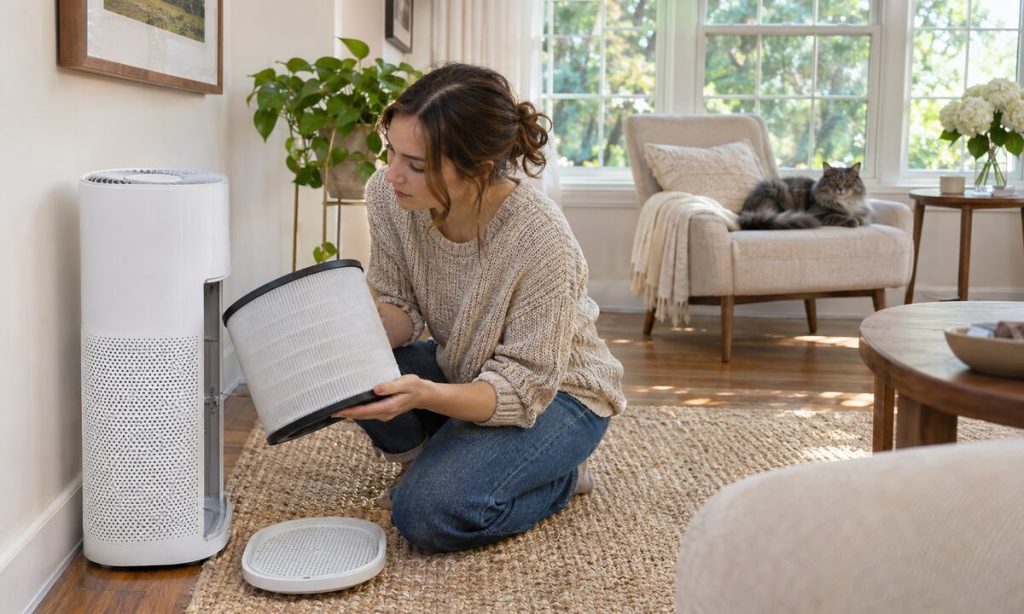
A HEPA air purifier can reduce airborne particles carrying cat allergens, but it works only when sized, positioned, and maintained correctly. It cannot remove allergens already settled in bedding or upholstery, and it does not cure cat allergies. Understanding what the filter can and cannot do helps you create a sensible cleaning routine without expecting a machine to replace medical advice. In a home with cats, steady operation and filter care usually matter more than flashy features.
If you use a HEPA air purifier for cat allergies, begin with the room where exposure matters most. Bedrooms and rooms used for long periods are common priorities. Check the appliance’s room rating, airflow, filter design, and cleaning instructions before the first use. This article covers practical setup, safe maintenance, replacement decisions, and the broader ways to manage allergens in a shared household.
What HEPA Filtration Can and Cannot Do
HEPA filters capture particles passing through dense filter material. Cat allergens often travel on particles from skin flakes, dried saliva, and household dust. An air cleaner may reduce the airborne fraction, especially while the fan is running. However, allergens also remain on furniture, carpets, curtains, clothes, and other surfaces. Air cleaning is one layer of exposure reduction, not a complete removal method. The EPA cautions that some larger settled allergens cannot be removed unless disturbed and drawn into the unit.
Do not assume lower measured particles mean symptoms will disappear. Responses to air cleaning can vary among allergic people, and the device cannot diagnose or treat a reaction. If someone has recurrent wheezing, breathing difficulty, or persistent nasal and eye symptoms, an allergy specialist can assess triggers and treatment options. For equipment selection context, the site explains air purifier features relevant to cat allergies.
Select a Useful Room and Setting
Start with the clean air delivery rate, or CADR, for the room’s actual size. The EPA recommends choosing adequate CADR for the area being cleaned. A unit rated for a very small space may struggle in an open living area. Note whether the rating assumes a particular fan speed. An air purifier that is too loud at its effective setting may be switched off whenever people are home. Consistent use matters.
Place the unit where its air intake and outlet can circulate freely. Avoid pushing it against furniture, blocking vents with curtains, or setting it where a cat can tip it. Put cords beyond chewing reach and keep the unit away from litter splashes and water bowls. A stable surface and a clear air path are better than hiding the cleaner behind a sofa. Follow clearance recommendations on the appliance itself.
Build a Daily Operating Routine
Once installed, run the purifier at a tolerable fan speed for regular background filtration. Some households use a higher setting for a limited period after vacuuming, brushing, or cleaning, when more dust may become airborne. Keep the machine’s operating sound and airflow comfortable for both people and pets. Watch whether a cat avoids the area, paws at the cord, or tries to sleep across the outlet. Make physical safety adjustments before leaving the unit unattended.
Check the display and power connection at the same time each day for the first week. Confirm that any automatic mode has an understandable sensor behavior and does not repeatedly cycle off. A low indicated particle level is not proof that allergen exposure has stopped. Many consumer sensors respond to particles generally rather than a specific cat allergen. Take symptoms seriously even when a display seems reassuring.
Clean the Housing and Pre-Filter
Power down and unplug the device before opening its filter compartment. Use the manufacturer’s method for removing pet hair from intake grilles, vents, and a washable or vacuumable pre-filter. A pre-filter may catch larger lint and fur before air reaches the HEPA material. That does not mean every filter layer can be rinsed. Many HEPA cartridges are designed to be replaced rather than washed; moisture or aggressive vacuuming can damage them.
Wipe external surfaces with a lightly damp cloth if the instructions permit it, keeping moisture away from electrics and motors. Let any approved washable component dry fully before reassembly. Avoid strongly scented sprays, harsh disinfectants, or essential oils around the air outlet; these may introduce irritating vapors into a space used by cats. Our guide on cleaning air purifiers in homes with cats provides related maintenance details.
Plan Filter Replacement by Condition
Use the manufacturer’s stated service interval as a starting point. Real-world life varies with operating hours, dust loading, pet hair, wildfire smoke, and whether a pre-filter is maintained. Check indicators, visible loading where the design permits inspection, and reduced airflow. Do not wait for a filter to produce unpleasant odors or for allergy symptoms to become severe before evaluating the unit. Record the replacement date and the hours used if available.
Replace damaged, water-soaked, or visibly deteriorating filter material according to the instructions. Do not repair a torn gasket or modify a cartridge to force it to fit. Ensure the replacement seats properly so air cannot bypass the filter. A new filter will not help much if the housing is left open or misaligned. Dispose of spent filters gently to avoid releasing trapped dust, and wash your hands afterward.
Reduce Cat Allergens Beyond the Purifier
Air cleaning cannot substitute for surface cleaning. Wash household bedding on an appropriate schedule, dust with methods that capture particles, and vacuum using effective filtration. Keep a sleeping room as allergen-controlled as feasible if symptoms are troublesome. When brushing the cat, consider having a non-allergic household member perform the task, and clean the grooming area afterward. Plan ventilation based on outdoor air quality rather than opening windows automatically.
Reducing exposure should not involve unsafe or stressful treatment of the cat. Bathing more often than needed may upset skin and may not solve the underlying allergy. The CDC recommends several complementary measures for asthma control, including attention to triggers and filtration where appropriate. If symptoms persist, discuss medicines or allergy testing with a clinician. Lifestyle steps and medical care often work together.
Spot Problems That Need Professional Attention
A purifier that becomes unusually hot, rattles, smells of burning, or has damaged electrical parts should be unplugged. Do not continue operating a unit with a frayed cord or an unstable fan. An allergen-control plan also deserves review when symptoms worsen despite careful cleaning. Asthma flare-ups and persistent breathing symptoms require medical attention; filtration must never delay urgent care.
For cats, watch for stress around noise or airflow and relocate the device if needed. Avoid ozone-generating settings and any cleaning method contrary to appliance guidance. Make a note of when symptoms occur, where the person was, and what cleaning activities happened nearby. That information may help a medical professional identify relevant triggers. The goal is a safer shared environment, not a promise of an allergen-free home.
Frequently Asked Questions
These answers address common maintenance and household-use decisions. They do not replace the guidance on a particular appliance’s filter or electrical components. Always consult the current manual before cleaning or replacing a part.
If an allergic household member has significant symptoms, seek individualized medical advice. A HEPA purifier may complement an exposure-management plan, but the right plan depends on confirmed triggers and the person’s health.
Does a HEPA purifier remove all cat allergens?
No. It captures some particles moving through it, but allergens remain on fabric, furniture, and other surfaces. Cleaning and source controls remain important.
Can I wash a HEPA cartridge?
Only if the manufacturer explicitly calls that particular component washable. Many HEPA cartridges are replace-only. Washing an unsuitable cartridge can damage filtration and seals.
Should I run the purifier only when guests visit?
Continuous or regular use is generally more useful for steady particle control than occasional brief operation. Choose a setting that the household can tolerate safely.
Where should I place it in a bedroom?
Give the inlet and outlet unobstructed space, use a stable location, and protect the cord. Follow the clearances specified for the unit and room.
Can an air purifier replace allergy medicine?
No. It is an environmental tool, not a medical treatment. People with symptoms should discuss diagnosis and medication choices with a qualified healthcare professional.
Final Words
A well-maintained HEPA air purifier for cat allergies can be one useful tool for limiting airborne particles. Prioritize adequate room coverage, clear airflow, consistent use, a clean pre-filter, and timely replacement of the correct HEPA element. Keep the unit stable and pet-safe. Remember that allergens also accumulate on fabrics and surfaces that no room purifier can clean on its own.
For broader selection context, revisit the site’s HEPA air purifier for cat allergies guidance. Combine filtration with thoughtful cleaning and medical support when needed. The most effective routine is the one your family can follow safely and consistently, while respecting your cat’s comfort.
Reference
The following public-health sources inform the discussion of air cleaning, allergen exposure, and asthma triggers. Their guidance provides a foundation for understanding filtration limits, maintenance, and broader environmental controls.
Medical symptoms and treatment decisions require individual assessment by a qualified clinician. Equipment guidance should be read alongside the current instructions for the actual device in use.
- U.S. Environmental Protection Agency — Guide to Air Cleaners in the Home (EPA).
- U.S. Environmental Protection Agency — Will Air Cleaners Reduce Health Risks?
- Centers for Disease Control and Prevention — Controlling Asthma.









