A joint supplement for cats should never be sized by guesswork or by copying a dose printed for dogs. Cats differ in body weight, underlying conditions, medications, and tolerance. The phrase “how to size a joint supplement for cats” is best understood as how to determine whether a veterinarian recommends one, then verify the appropriate cat-specific serving. A label alone cannot diagnose joint pain or establish that a supplement will work.
This guide explains how to review a cat’s weight, ingredient quantities, dosing units, formulation, and changes over time. It also covers the limited evidence for some supplements and why veterinary assessment comes first. If your cat hesitates to jump, avoids stairs, or stops grooming normally, the useful first step is to discuss possible pain with a veterinarian. Do not treat an uncertain serving size as a home arithmetic exercise.
First Ask Whether the Cat Needs One
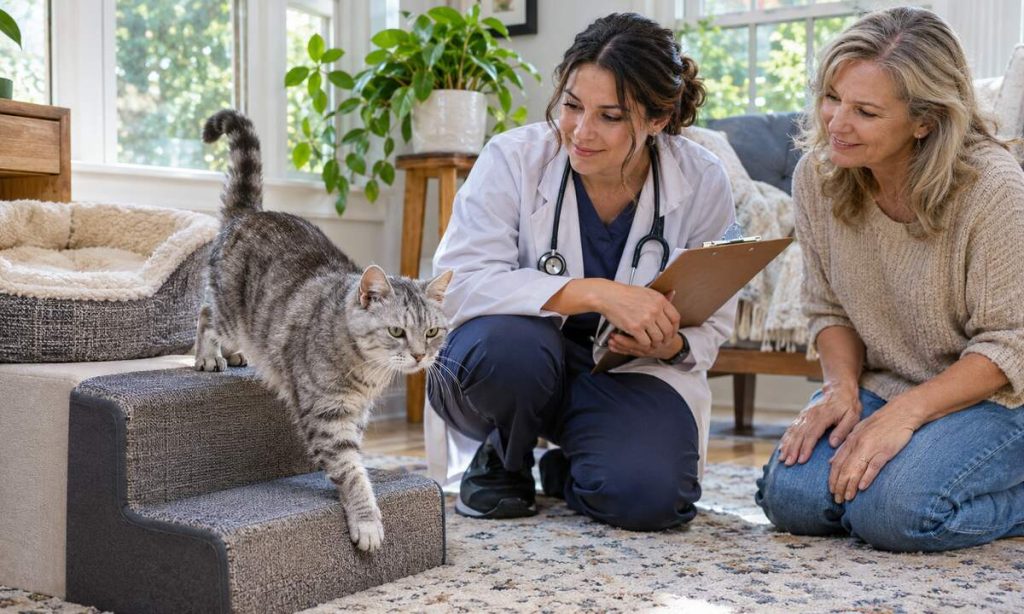
Osteoarthritis is a common cause of chronic discomfort in cats, but it can be hard to recognize. A cat may jump to lower surfaces, hesitate at stairs, sleep more, avoid handling, or groom less. These changes can also arise from other illnesses, so a veterinary examination is essential. The FDA notes that observations about activity at home are particularly valuable because cats may move very little during a clinic appointment.
Before discussing a joint supplement for cats, record what has changed, when it began, and whether pain appears in specific tasks. Take short videos of everyday movements if the cat tolerates it. Do not force jumping to demonstrate symptoms. The veterinarian may examine the cat, assess body condition, and recommend appropriate testing or treatment. Supplements should never delay an effective pain-management plan for a cat that is uncomfortable.
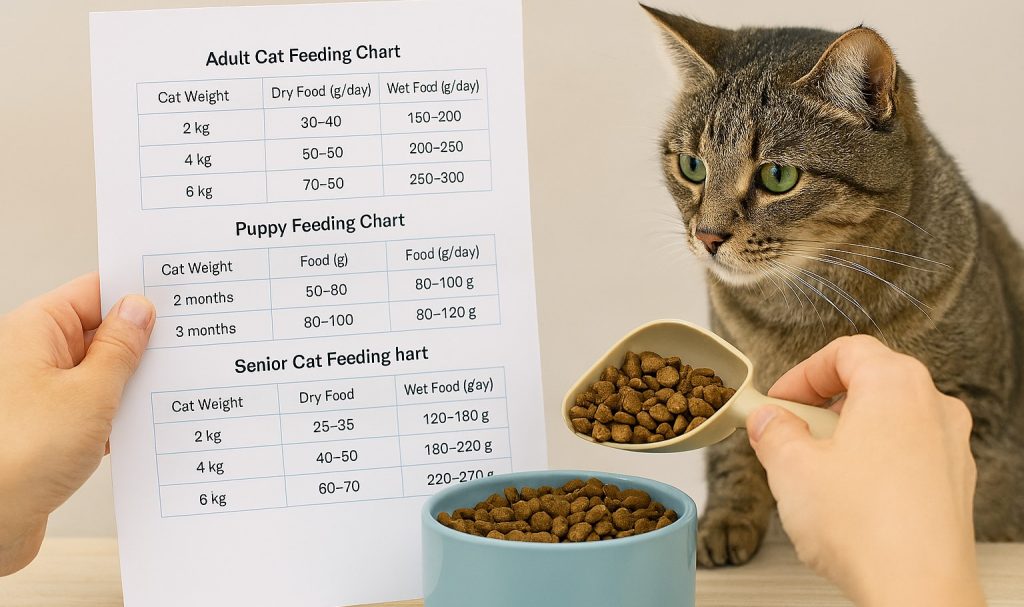
Use Current Weight, Not a Visual Guess
Long fur or an overweight body can conceal a cat’s true size. A current body weight is often needed to interpret veterinary instructions and product labels. Ideally, use a scale measured at the clinic and record the date. A weight obtained months ago may no longer describe a kitten, a senior cat, or a pet with changing appetite. Body condition and muscle condition are also important.
Weight alone is not a dosing instruction. Some preparations give a fixed serving by cat size, while others specify a volume or mass to be interpreted by a veterinarian. Never use a dosage chart intended for another species. If a cat is overweight, ask whether weight management and environmental changes would provide greater benefit. The FDA highlights controlled weight and comfortable home access as part of osteoarthritis care.
Understand the Label’s Units and Concentration
A label may describe an ingredient in milligrams per tablet, a liquid concentration in milligrams per milliliter, or the number of soft chews in a serving. These are different quantities. An owner can record exactly what is printed but should not assume that one scoop, half a tablet, or a human capsule equals a safe feline dose. The formulation and active ingredients must be considered together.
Ask the veterinarian to specify the exact preparation, route, daily amount, and whether it should be given with food. Clarify what to do after a missed serving and whether the tablet or capsule can be divided. Never improvise splitting if the formulation is not designed for it. When two products contain overlapping ingredients, their combined amounts may be important. Good sizing of a joint supplement for cats begins with accurate identification, not a guessed conversion.
Do Not Extrapolate From Dogs or Humans
A popular ingredient may appear in products meant for people, dogs, or cats. That does not make the formulations interchangeable. Cats process some substances differently from dogs and humans, and they may be more vulnerable to certain additives or medication interactions. Human pain relievers such as acetaminophen are especially dangerous to cats and must never be substituted for veterinary treatment.
If you already have a supplement at home, photograph both sides of its packaging for the veterinarian. Include the inactive ingredients, flavorings, sweeteners, and the full instructions. Do not assume an ingredient is safe simply because it is sold without a prescription. Cornell’s feline nutrition guidance cautions that supplements can harm cats and should not be given without veterinary approval. This is a stronger safeguard than relying on an internet dosing calculator.
Check Evidence and Set Realistic Expectations
Joint-support products are often described as nutraceuticals. Evidence for individual ingredients, especially in cats, varies and may be limited. A compound studied in dogs is not automatically proven to relieve feline arthritis. Veterinary chronic-pain guidance discusses nutritional approaches as possible components of broader management, but no supplement should be presented as a certain substitute for clinically indicated pain treatment.
Ask what outcome to expect and how long to monitor it before reassessment. Look for meaningful changes such as easier use of the litter box, more confident walking, or improved grooming. Remember that daily behavior naturally varies. The veterinarian should evaluate whether the current approach is helping, whether side effects are possible, and whether more effective treatments are appropriate. Pain management is not a contest between supplements and medicine.
Keep a Safe Giving and Monitoring Routine
Cats may reject a new taste, lick a liquid unevenly, or spit out part of a tablet. Do not silently increase a serving to compensate for uncertainty about what was swallowed. Discuss acceptable ways to give the formulation, including whether it may be mixed with a small portion of food. Avoid causing prolonged feeding struggles that make regular meals stressful.
Keep a dated log of the agreed serving, any missed doses, appetite, vomiting, stool changes, and activity. Our guide to calmer cat mealtimes offers useful ideas for making feeding more predictable. Stop and contact the veterinarian if your cat develops worrying symptoms after starting a new supplement. Record the product details and amount given. Seek urgent care for severe reactions, breathing difficulty, collapse, or suspected overdose.
Make the Home Easier to Navigate
While the veterinarian assesses discomfort, practical changes may reduce unnecessary strain. Consider ramps or small steps to favored resting areas, non-slip walking surfaces, soft beds, accessible food and water, and litter boxes with suitable entrances. Do not force high jumps or exercises that cause pain. Environmental support complements, but does not replace, diagnosis and effective treatment.
The guide to making vertical space accessible to an older cat explains how to plan routes to elevated areas. For resting spaces, see creating easier access to resting spots. Cats also benefit from litter boxes that are easy to reach without crossing stressful territory; the related guide to safer litter box locations can help with layout. These low-risk adjustments may offer daily comfort without introducing uncertain ingredients or extra dosing decisions.
When to Recheck the Plan
If the cat remains reluctant to jump, hides more, loses weight, stops grooming, or seems painful, book veterinary reassessment. Do not assume the issue is inadequate supplement dosage. A worsening condition may need a different diagnosis, imaging, or pain treatment. Cats with kidney disease, other chronic conditions, or multiple medications require especially careful discussion of any new substance.
If your veterinarian changes the plan, update the written instructions and dispose of outdated dose notes. Keep containers and ingredient lists until the treatment course or review period is complete. Store supplements beyond the reach of children and animals. A joint supplement for cats is only one potential part of care, and its place should be reviewed alongside appetite, mobility, body condition, and welfare.
Frequently Asked Questions
The important point about supplement sizing is that a cat-specific plan needs veterinary input. General online charts cannot account for all formulations, illnesses, or interactions. The following answers clarify practical questions without giving a potentially unsafe universal dose.
Contact a veterinarian if your cat is painful or develops new signs after a supplement. Seek prompt help after an accidental overdose or suspected exposure to a human medication. Never wait for a supplement to treat severe or rapidly worsening symptoms.
Can I calculate a joint supplement dose only from my cat’s weight?
No. Weight may be relevant, but formulation, health, medications, and veterinary instructions also matter.
Can I give my cat half a dog joint chew?
Do not assume it is safe. The ingredients and dosage may be inappropriate for cats; ask a veterinarian first.
How can I tell whether the supplement helps?
Track specific daily movements and comfort, then review the pattern with the veterinarian. Do not rely on a single good day.
What if my cat refuses the supplement?
Ask the veterinarian about safe administration alternatives. Do not force-feed or increase the amount without guidance.
Do supplements replace arthritis pain medication?
No. Supplements have variable evidence and do not replace a veterinarian’s diagnosis or indicated pain-management treatment.
Final Words
Knowing how to size a joint supplement for cats means confirming the cat’s current weight, understanding the exact formulation, and following a veterinarian’s instructions. A joint supplement for cats should never be chosen by splitting a human dose or applying dog directions. The key questions concern safety, evidence, and measurable welfare.
Keep the focus on your cat’s comfort. Monitor daily movement, make the home easier to navigate, and arrange veterinary reassessment when symptoms persist. A careful plan can include nutrition, home adjustments, and appropriate medical treatment, but dosing should never rest on guesswork.
Reference
The following official veterinary and university resources support the discussion of feline joint disease, nutritional supplements, and treatment safety. They are background reading for a medical topic rather than a source of personalized dose instructions.
Clinical advice should come from a veterinarian who has examined the cat and knows its medical history. Research and generalized guidance cannot define an appropriate dose for every formulation.