
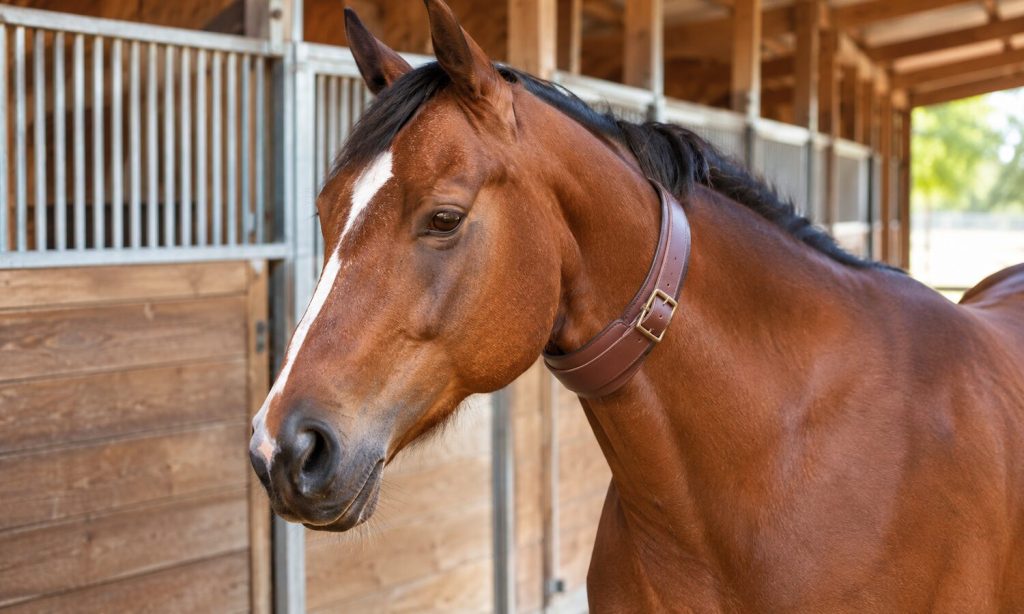
Cribbing occurs when a horse grasps a fixed surface with its incisors, pulls back, and contracts neck muscles, often making a characteristic sound. Owners sometimes consider a neck collar to interrupt this repetitive behavior. What to look for in a cribbing collar for horses involves far more than strap strength. A collar can restrict the behavior without addressing stress, forage access, physical discomfort, or other possible contributors. Poor fit may also cause skin damage or interfere with normal movement.
This guide explains what cribbing is, what a collar can and cannot accomplish, how to assess fit safely, and why a broader welfare plan matters. If you are searching for the best cribbing collar for horses, discuss the idea with your veterinarian first. A device should never become a substitute for investigating underlying health and management needs or for providing a humane environment.
Understand the Behavior Before Choosing a Collar
Cribbing is a stereotypic repetitive behavior rather than a simple refusal to obey. Research suggests multiple factors may be involved, including management and the horse's individual history. Once established, the behavior can be difficult to eliminate completely. Punishment and isolation are not evidence-based solutions. The University of California, Davis Center for Equine Health notes that cribbing collars and other physical restraints may block the action without addressing its cause and can raise welfare concerns.
Observe when and where the horse cribs. Does it occur around meals, after long stall confinement, or when social contact is limited? Record the location and frequency without trying to provoke the behavior. Ask a veterinarian to examine dental condition, weight, digestive signs, and possible discomfort. Our guide to signs of ulcers in horses provides related clinical context, though cribbing alone does not diagnose ulcers. What to look for in a cribbing collar for horses starts with understanding the horse, not measuring a strap.
Ask Whether a Collar Is Appropriate at All
Talk with a veterinarian experienced in equine behavior before trying a restrictive device. Discuss what problem you hope to solve, what other changes have been attempted, and how the horse will be monitored. A collar may reduce visible cribbing in some cases, but stopping the action does not necessarily resolve frustration or stress. The horse may resume when the device is removed. A veterinarian can help weigh potential benefits against discomfort, skin injuries, and behavior-related welfare concerns.
Consider alternatives that improve the environment: adequate forage, social contact, turnout, predictable routines, and opportunities for natural foraging. These do not guarantee that an established behavior will disappear, but they address broader needs. Our guide to using hay feeders for horses explains feeder designs, while an equine nutritionist can assess the overall ration. A collar should be one carefully evaluated element of a plan, not the plan itself.
Check Anatomical Fit and Freedom of Movement
Collars differ in strap layout, padding, adjustment points, and where pressure is applied around the neck and throat area. Because the collar acts near sensitive structures, fitting deserves veterinary or qualified professional guidance. Follow the specific design's instructions and assess the horse's normal breathing, swallowing, grazing, and head movement. Do not tighten a device beyond its instructions to suppress behavior more strongly. A collar that appears stable while the horse stands may shift when it lowers its head.
Watch the horse move, eat, and drink under supervision during any professional-approved trial. The collar should not create visible distress, coughing, gagging, or difficulty swallowing. Remove it and seek veterinary assistance if such signs occur. Look for pinching near buckles or the throatlatch, pressure marks, and slippage. What to look for in a cribbing collar for horses includes whether it can be adjusted to the individual without compromising comfort. If a humane, stable fit cannot be established, do not use it.
Inspect Materials, Edges, and Hardware
Material should be sturdy enough for its intended task without abrasive edges or rough stitching against skin. Check buckles, padding, and adjustment holes for damage. Corrosion, sharp hardware, stiff seams, or an unstable strap may cause injury. A thick pad is not automatically more comfortable if it creates a localized pressure area. Examine surfaces that contact the horse after ordinary head movement. Dirt and sweat can collect beneath collars, especially in warm or humid conditions.
Keep hardware free from loose ends that might catch on fences, buckets, or stable fixtures. Never attach a lead rope to a cribbing collar unless the product is explicitly designed and labeled for that purpose. Follow the manufacturer's care and inspection directions, and retire damaged equipment. It is better to stop using a suspect collar than to improvise a repair near the throat. Structural simplicity can help with checks, but no construction feature removes the need for horse-specific oversight.
Observe Skin and Behavior During a Trial
If the veterinarian supports a trial, make it time-limited and supervised with clear criteria for stopping. Examine the skin before fitting, after brief use, and regularly as directed. Look for rubbing, hair loss, swelling, heat, sores, or tenderness. Note whether the horse becomes restless, reluctant to lower its head, or unusually defensive when approached. Do not interpret the absence of cribbing as proof that the animal is relaxed or comfortable.
Record behavior before and after the trial, including eating, turnout, interaction, and any increase in other repetitive behavior. Discuss findings with the veterinarian rather than tightening the collar to improve apparent control. The evaluation should ask whether the horse's welfare has improved, stayed the same, or worsened. What to look for in a cribbing collar for horses includes the plan for monitoring and withdrawal, not just the adjustment range on the day of fitting.
Improve Forage, Turnout, and Social Opportunities
Horses are adapted to spend much of their time foraging and interacting with other horses. Long periods without forage or social contact can contribute to frustration and abnormal behavior in some animals. Review meal intervals, turnout time, companionship, and opportunities to graze or chew appropriate forage. A nutritionist can help balance feed while increasing suitable foraging time. Avoid abrupt feed changes and take account of conditions requiring special diet management.
Consider safe enrichment activities that do not introduce entanglement or ingestion hazards. Our guide to horse enrichment toys offers category context, but simple access to appropriate forage and social contact may matter more. The University of California, Davis recommends management changes tailored to the horse, including turnout and social contact. Improvement may be gradual, and entrenched cribbing may persist. The aim should be a healthier life, not merely a quieter stall.
Identify Medical and Dental Concerns Early
Cribbing can be associated with tooth wear, changes in neck musculature, and other problems. A horse that loses weight, displays colic signs, performs poorly, or becomes reluctant to eat needs a veterinary examination. Gastric ulcers are among the medical issues a veterinarian may consider, but the behavior does not prove that ulcers are present. Ask about dental care, body condition, digestive health, and pain assessment as appropriate. Avoid treating a suspected disease with a neck device.
Work with the veterinarian to set follow-up dates and determine whether additional management changes are necessary. Our guide to discussing feeding for horses with ulcers offers related nutrition questions. Never delay medical attention because a collar appears to reduce cribbing. If skin wounds or breathing or swallowing difficulty develop while any collar is in place, remove it safely and obtain veterinary guidance promptly.
Frequently Asked Questions
Cribbing collars raise questions about both mechanical fit and animal welfare. These answers provide background for discussions with a veterinarian, not permission to restrain a horse without professional guidance. The horse's comfort, health, and environment should lead every decision.
An apparent drop in cribbing is only one observation. Look at feeding, movement, skin condition, stress behaviors, and the overall daily routine. A humane plan should be reviewed periodically and changed if it is not helping the horse.
Does a collar cure cribbing?
No. It may interrupt the physical action, but established cribbing can persist when the collar is removed. Environmental and medical concerns need separate attention.
Can I tighten a collar until the horse stops?
No. Excessive pressure may cause injury or interfere with normal functions. Follow professional fitting advice and stop if the horse shows distress or discomfort.
Should a cribbing horse be isolated from others?
Not as a routine response. There is no established basis for isolating horses to prevent cribbing imitation, and social contact is important for welfare.
What if the collar leaves a rubbed patch?
Stop using it and inspect the skin. Seek veterinary guidance for pain, swelling, broken skin, or repeated rubbing. Do not simply tighten or pad over the problem.
Can more turnout or forage help?
These management changes may support welfare and reduce triggers for some horses. They do not guarantee that an established stereotypy will disappear. Discuss an individualized plan with your veterinarian.
Final Words
What to look for in a cribbing collar for horses begins with a decision about whether the device is appropriate. If a veterinarian supports its use, prioritize correct fit, normal breathing and swallowing, clean materials, close skin checks, and a clear stopping rule. Never equate suppressed behavior with a solved underlying problem.
The best cribbing collar for horses is not a universal answer because comfort, behavior, medical history, and management differ. The most responsible approach combines professional assessment with adequate forage, turnout, social contact, and ongoing welfare monitoring. Protect the horse first; evaluate equipment only within that wider plan.
Reference
The following veterinary and university sources describe cribbing, the uncertain causes of stereotypic behavior, and the importance of management. They provide a basis for cautious evaluation of restrictive devices but do not establish that any particular collar is safe or necessary for an individual horse.
Use the published guidance to inform a discussion with an equine veterinarian who can assess the horse directly. Repetitive behavior may coexist with medical problems, and any device near the neck deserves careful fit assessment and frequent checks for discomfort or skin damage.









