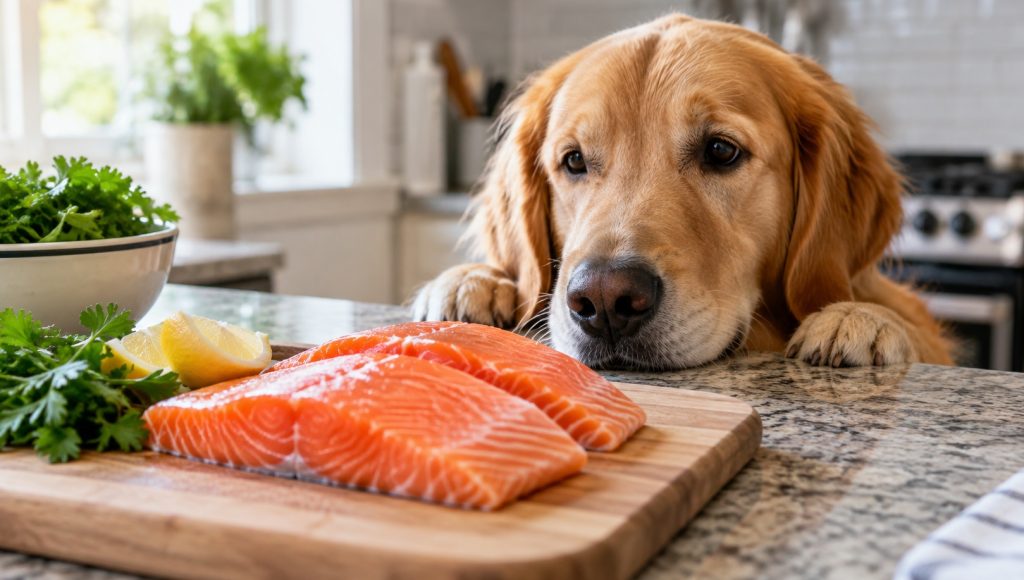
If you’ve ever dropped a piece of fresh seafood while prepping dinner, you’ve likely felt the immediate, intense gaze of your dog. Dogs are quick, opportunistic, and convinced that everything on your cutting board belongs to them. But if that dropped piece happens to be uncooked fish, you need to pause before letting them vacuum it up.
So, can dogs eat raw salmon?
The short answer is a firm, resounding no. Dogs cannot eat raw salmon, and feeding it to your canine companion can lead to severe, life-threatening medical emergencies.
While cooked salmon is a powerhouse of healthy fats and protein, raw salmon carries a deadly parasite unique to certain freshwater and marine environments. IMO, it is simply never worth the risk when safer options exist :).
Below is everything you need to know about the dangers of raw fish, what makes cooked salmon a great alternative, how to spot toxicity early, and how to safely feed fish to your dog.
The Hidden Danger: Why Can Dogs Not Eat Raw Salmon?
When pet owners ask can dogs eat raw salmon, they are often thinking about the raw food movement or the healthy omega-3 fatty acids associated with fish. While wild canids might catch fish in the wild, domesticated dogs face a specific biological threat when eating raw salmonids (salmon, trout, and steelhead).
The danger isn’t the fish meat itself—it’s what is living inside the flesh.
1. Parasitic Flukes (Nanophyetus salmincola)
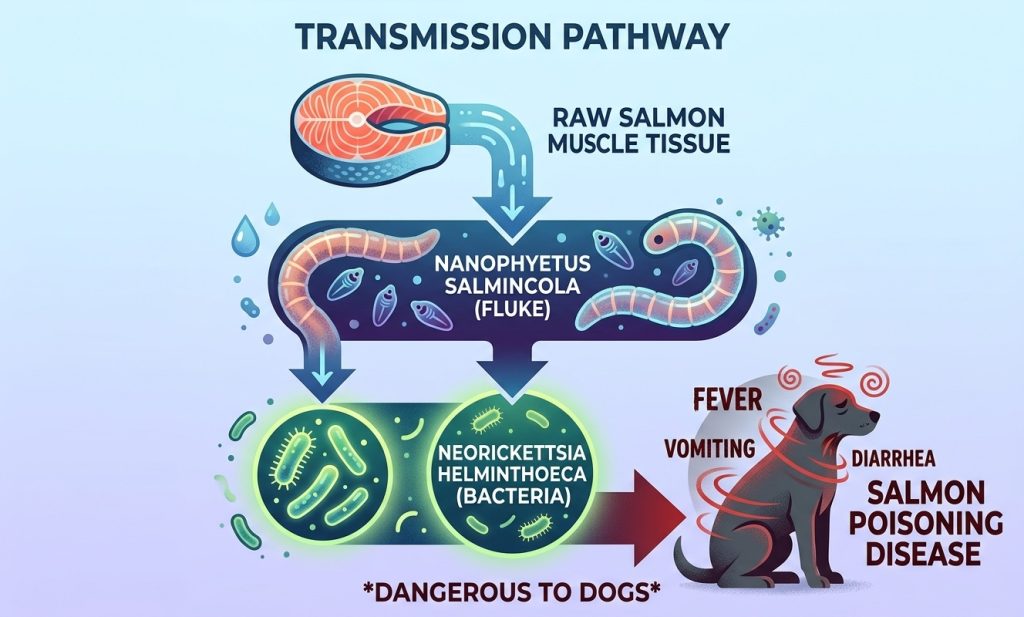
Raw salmon frequently harbors a microscopic parasitic flatworm called Nanophyetus salmincola. On its own, the fluke causes mild intestinal irritation. However, this parasite acts as a Trojan horse.
2. Bacterial Infection (Neorickettsia helminthoeca)
The fluke itself is often infected with a bacterium called Neorickettsia helminthoeca. When a dog eats raw salmon containing these parasite larvae, the flukes embed into the dog’s intestinal lining, releasing the bacteria directly into the bloodstream and lymphatic system.
This bacterial infection leads directly to Salmon Poisoning Disease (SPD)—an acute, highly fatal condition specific to canines.
3. Sharp Bones and Choking Hazards
Raw salmon fillets and cuts often contain small, needle-like pin bones. Unlike soft raw bones found in poultry, raw fish bones are flexible yet sharp enough to lodge in your dog’s esophagus, puncture the stomach lining, or cause intestinal lacerations.
Understanding Salmon Poisoning Disease (SPD) in Dogs
Salmon Poisoning Disease sounds like standard food poisoning, but it is far more dangerous. Without prompt veterinary treatment, SPD has a mortality rate of up to 90% in domestic dogs.
Where is SPD Most Common?
While you should avoid feeding raw salmon anywhere in the US, SPD is primarily endemic to the Pacific Northwest—including Washington, Oregon, Northern California, and Vancouver Island. The parasitic flukes require a specific freshwater snail (Oxytrema plicifer) to complete their life cycle, which thrives in these regional waters.
However, because commercial salmon is harvested, shipped, and distributed nationwide across grocery stores in the United States, raw salmon purchased anywhere in the country can carry the parasite if it wasn’t pre-treated under strict commercial deep-freezing protocols.
Symptoms of Salmon Poisoning to Watch For
Signs of SPD generally appear 5 to 7 days after a dog ingests raw salmon, though onset can range from 2 to 33 days.
If your dog snagged a piece of raw salmon off the counter when you weren’t looking, watch closely for these progression signs:
-
High Fever: Body temperature often spikes above 104°F (40°C).
-
Severe Gastrointestinal Distress: Violent vomiting and watery, hemorrhagic (bloody) diarrhea.
-
Extreme Lethargy: Sudden collapse of energy, weakness, or unwillingness to stand.
-
Loss of Appetite (Anorexia): Refusal to eat food or drink water.
-
Swollen Lymph Nodes: Enlargement of the submandibular and popliteal lymph nodes (felt under the jaw and behind the knees).
-
Rapid Dehydration & Weight Loss: Severe fluid loss leads to sunken eyes, dry gums, and weak pulses.
Key Takeaway: If your dog ate raw salmon and shows a fever alongside vomiting or diarrhea, do not wait. This is a medical emergency that requires immediate intervention.
What to Do If Your Dog Ate Raw Salmon: Step-by-Step
If you catch your dog eating raw fish or realize they sneaked a piece of raw salmon out of the trash, stay calm and take action immediately.
Diagnosis and Veterinary Treatment for Salmon Toxicity
When you arrive at the clinic, the veterinarian will run tests to confirm whether the Neorickettsia organism is present.
Diagnostic Procedures
-
Fecal Flotation/Sedimentation: The vet examines a stool sample under a microscope to spot Nanophyetus salmincola fluke eggs.
-
Lymph Node Needle Aspirate: A quick needle sample taken from a swollen lymph node can reveal the Neorickettsia bacteria inside host immune cells.
-
Blood Work: Complete blood counts typically show severe drops in blood platelets (thrombocytopenia) and altered white blood cell counts.
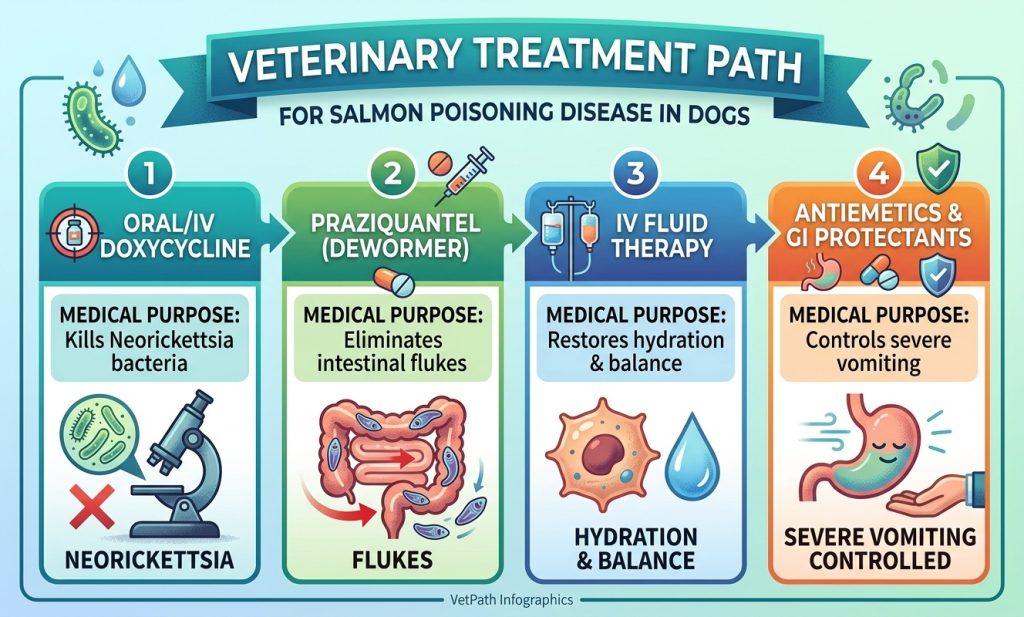
When treated early with antibiotics and supportive care, dogs typically start showing improvement within 24 to 48 hours and make a full recovery.
Can Dogs Eat Cooked Salmon? The Safe, Healthy Alternative
Now for the good news: while can dogs eat raw salmon gets a flat no, the question can dogs eat cooked salmon gets a resounding yes!
Properly cooked salmon is incredible for dogs. Heat completely destroys both the Nanophyetus fluke and the Neorickettsia bacteria, making the fish completely safe and exceptionally nutritious.
Health Benefits of Cooked Salmon for Dogs
-
Rich in Omega-3 Fatty Acids (EPA & DHA): Helps reduce systemic inflammation, supports joint health in older dogs, and maintains a glossy, healthy coat.
-
High-Quality Lean Protein: Supports muscle development, tissue repair, and overall energy levels.
-
Essential Vitamins & Minerals: Packed with Vitamin D, Vitamin B12, Selenium, and Potassium to support immune function.
How to Safely Prepare Salmon for Your Dog
If you want to cook fresh salmon for your dog at home, follow these strict preparation guidelines:
-
Remove All Bones: Debone the fillet meticulously. Even small pin bones can cause choking or puncture hazards.
-
Cook Thoroughly: Bake, steam, or grill the salmon until the internal temperature reaches at least 145°F (63°C). The flesh should flake easily with a fork.
-
No Oils, Butter, or Garlic: Cook the fish completely plain. Oils add excess calories that can trigger pancreatitis, while onions, garlic, and heavy spices are toxic to dogs.
-
Remove the Skin (Optional): While salmon skin contains omega-3s, it is very high in fat and can upset sensitive stomachs.
Raw Salmon vs. Cooked Salmon: Quick Comparison
| Feature | Raw Salmon | Cooked Salmon |
| Safety Level | Unsafe / High Risk | Safe & Healthy |
| Parasite Risk | High (Nanophyetus salmincola) | Zero (Destroyed by heat) |
| Bacterial Risk | High (Neorickettsia helminthoeca) | Zero (Destroyed by heat) |
| Bone Hazard | High (Sharp, rigid pin bones) | Low (Easily removed when cooked) |
| Digestibility | Harder on canine stomach | Easy to digest |
| Nutritional Value | High (but dangerous) | High & Bioavailable |

Source & license: Wikimedia Commons documents this photograph as originating from Pixabay and released under CC0, meaning it can be copied, modified, and used commercially without asking permission.
Safe Ways to Add Fish to Your Dog’s Diet
If you want your pup to reap the benefits of fish oils without spending your evening carefully deboning salmon fillets, you have several convenient options.
1. Pure Wild Alaskan Salmon Oil
Adding a pump of wild Alaskan salmon oil directly onto your dog’s daily kibble is the easiest, safest way to supply essential omega-3 fatty acids. It promotes skin health, relieves itchy coats, and supports joint mobility without any risk of raw fish parasites.
2. Dehydrated or Freeze-Dried Salmon Treats
Commercially prepared salmon treats undergo strict safety processes (like deep-freezing or heat-dehydration) that destroy harmful pathogens while preserving nutrients. Look for single-ingredient, wild-caught salmon bites.
3. High-Quality Commercial Salmon Kibble or Wet Food
Many premium dog food brands offer salmon-based recipes formulated by veterinary nutritionists. These provide balanced protein and fats tailored to your dog’s specific life stage.
Frequently Asked Questions (FAQs)
Can dogs eat raw salmon skin?
No, dogs should never eat raw salmon skin. Raw skin carries the exact same parasitic risks (Nanophyetus salmincola) as raw flesh. Additionally, salmon skin is extremely high in fat, which can trigger acute pancreatitis in dogs even if parasites aren’t present.
Can dogs eat raw salmon from a sushi restaurant?
No. While sushi-grade raw salmon is frozen to kill standard human-targeted parasites (like Anisakis roundworms), the process may not always eliminate encysted flukes or specific bacteria causing Salmon Poisoning Disease. FYI, it is never worth sharing your salmon nigiri with your pup :/.
What happens if a dog eats raw salmon by mistake?
If your dog accidentally consumes raw salmon, monitor them closely and call your vet immediately. Symptoms of Salmon Poisoning Disease (such as high fever, vomiting, bloody diarrhea, and swollen lymph nodes) typically develop within 5 to 7 days. Early antibiotic treatment is nearly 100% effective.
How much cooked salmon can I feed my dog?
Cooked salmon should be fed as an occasional treat or meal topper, making up no more than 10% of your dog’s daily caloric intake. A small portion (1 to 2 ounces) once or twice a week is plenty for a medium-sized dog.
Can dogs eat smoked salmon?
Smoked salmon is not recommended for dogs. While the smoking process involves heat, cured salmon contains extremely high levels of sodium and often contains toxic additives like garlic or onion powder. Excessive salt can cause sodium ion poisoning and dehydration in dogs.
Final Words
So, can dogs eat raw salmon? Absolutely not. The threat of Salmon Poisoning Disease is real, aggressive, and potentially fatal if left untreated.
As dog owners, our job is to protect our pups from hidden dangers—even when they stare at us with those irresistible “feed me” eyes while we prepare dinner.
Stick to well-cooked, unseasoned salmon fillets, high-grade salmon oil supplements, or commercial fish treats. That way, your furry family member gets all the glorious omega-3 skin and coat benefits without any of the emergency vet visits.