
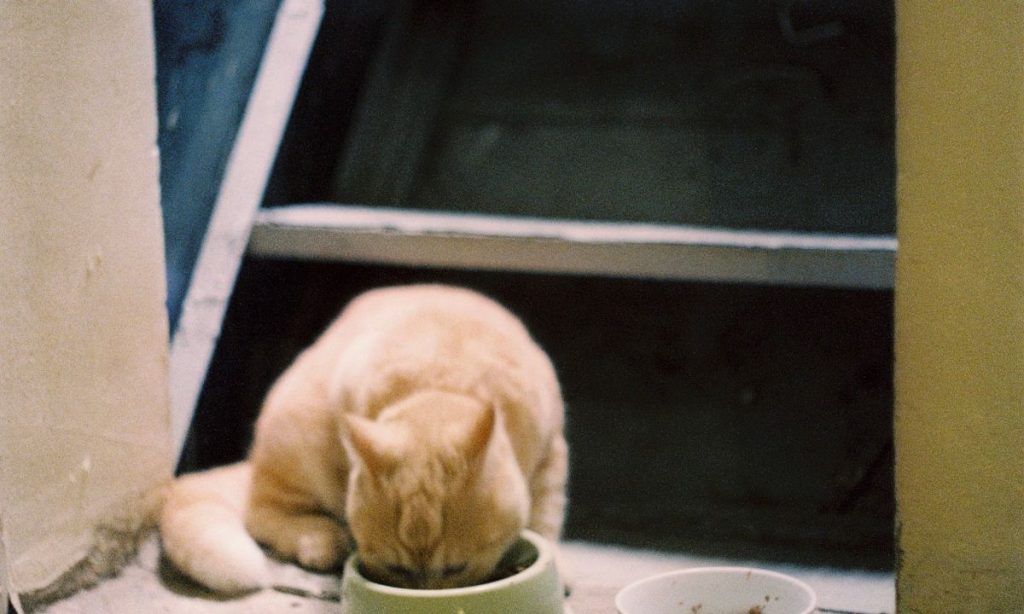
How to estimate daily portions of chicken flavor cat food for cats starts with calories, not the flavor printed on the front of the package. Two chicken-flavored formulas can deliver different energy amounts per cup, ounce, or can. A useful estimate therefore combines your cat’s body condition and nutritional needs with the food’s calorie statement. Measuring correctly matters for both weight control and ensuring that your cat eats enough.
This guide explains how to estimate daily portions of chicken flavor cat food for cats using a practical calculation, label checks, and ongoing monitoring. Owners searching for Chicken Flavor Cat Food For Picky Eater may also be managing a selective appetite. Flavor does not change the basic math, and plain cooked chicken is not a complete everyday diet. You will learn how to count wet food, dry food, treats, and mixed meals without assuming that one portion suits every cat.
Start with the individual cat, not a universal serving
Age, ideal body weight, body condition, activity, reproductive status, and health all influence daily calorie needs. A growing kitten has different demands from a sedentary adult. A pregnant or nursing cat may also need a specialized plan. An adult cat’s present weight alone is not enough to decide portions, especially if the cat is overweight or has lost muscle. Ask your veterinarian to identify an appropriate target weight and body condition.
How to estimate daily portions of chicken flavor cat food for cats works best when you establish a reasonable calorie starting point with veterinary guidance. The World Small Animal Veterinary Association publishes approximate ranges for healthy adults in ideal condition. These are starting points, not prescriptions. Do not apply ordinary adult estimates to kittens, pregnant cats, or animals with diabetes, kidney disease, or other conditions that require individualized feeding plans.
Find the food’s calorie statement and feeding guidance
Read the nutritional adequacy statement, life-stage claim, and calories on the exact package you use. In the United States, labels commonly express metabolizable energy as kilocalories per kilogram and per familiar household measure, such as per cup, can, or package. Kcal means food calories in practical feeding terms. Confirm the cup size and can weight, because ‘one can’ has no standard energy value across products.
How to estimate daily portions of chicken flavor cat food for cats is impossible to do accurately from flavor alone. A chicken-flavored dry food may list calories per cup, while a wet formula might list calories per can. If a portion is stated in grams, a digital food scale can make daily measurement more consistent. Do not confuse guaranteed nutrient percentages with calorie content; they answer different questions.
A simple formula for the starting portion
The basic calculation is daily calories needed divided by calories per serving. Suppose your veterinarian recommends 240 kcal per day for a particular adult cat, and the food lists 80 kcal per three-ounce can. The starting amount would be 240 divided by 80, or three cans per day. This is an illustration, not a recommendation for every cat. Adjust for other food and treats before serving.
How to estimate daily portions of chicken flavor cat food for cats also works for dry food. If a hypothetical food provides 400 kcal per standard cup and the agreed daily allowance is 240 kcal, the calculation is 240 divided by 400, or 0.6 cup daily. A gram measurement may be more precise if you can read the label’s kcal-per-kilogram value. Record the specific product and its current formulation rather than assuming calorie data never changes.
Calculate mixed meals without double-counting
If your cat eats both wet and dry food, assign part of the daily calorie budget to each. Imagine a 240-kcal daily goal. One 90-kcal can would leave 150 kcal for the remaining food and treats. If the dry food supplies 375 kcal per cup, 150 divided by 375 equals 0.4 cup. If treats are included, subtract their calories before deciding how much dry food to serve.
How to estimate daily portions of chicken flavor cat food for cats requires remembering that extras count. Treats, food used for training, edible toppers, and calorie-containing supplements can reduce the allowance available for complete meals. Veterinary nutrition guidance commonly recommends treats make up no more than about 10% of total daily calories. That limit is not a target to fill and does not mean every cat should receive treats daily.
Measure servings consistently and monitor leftovers
A level measuring cup is better than guessing, but different kibble sizes and packing can affect accuracy. A kitchen scale is often useful when you can calculate grams from the food’s energy density. For wet food, compare what was served with what remains. Divide the full allowance across a schedule that suits your cat and any medical instructions. Make sure another pet is not quietly eating the measured portion.
This feeding calculation becomes unreliable if one cat regularly steals another’s food. In multi-cat homes, use separate feeding places and record which cat ate each serving. Keep bowls clean and refrigerate or discard wet food according to safe handling guidance. Our guide to estimating cat food portions in a bowl setup explains why a measured plan and a comfortable eating area belong together.
Adjust the amount using body condition and weight trends
A calculated amount is a starting estimate rather than a permanent rule. Check body condition, weight, muscle, appetite, and energy over time with veterinary guidance. A cat gaining unwanted fat may need a different calorie goal or activity plan. A cat losing weight unexpectedly requires medical evaluation rather than automatic portion increases. Any reduction for an overweight cat should be controlled and monitored, since abrupt restriction can be dangerous.
A portion estimate should include a review every few weeks when a feeding plan is being established. The WSAVA notes considerable variation between individual animals. Ask the clinic how often to weigh your cat and what changes should trigger reassessment. Feeding charts are starting points, not a substitute for ongoing observation of the cat’s actual health.
Help a picky eater without undermining the calculation
A picky cat may respond to consistent mealtimes, food freshness, and a low-stress location. Try serving the appropriate complete meal at a safe temperature, while avoiding rapid switches between many flavors. Keep track of what the cat actually eats. If the cat repeatedly refuses food, evaluate for dental discomfort, nausea, and other causes instead of assuming flavor is the sole problem. Cats can become ill from prolonged inadequate intake.
The calorie-based calculation remains the same when the label describes chicken flavor or real chicken as an ingredient. Palatability does not change calories. The phrase Chicken Flavor Cat Food For Picky Eater may fit a food preference, but a complete balanced diet is the priority. For insight into food completeness, see the discussion of complete wet cat food. Do not use plain chicken, broth, or table scraps as the cat’s long-term primary diet.
Common errors with food portions
Do not assume that one cup, one can, or one pouch is a universal serving. Avoid basing calories on another formula or an outdated label. Count treats and toppers. Never use a kitten feeding guideline for a senior cat or ignore a prescription diet. Make sure all family members know the daily total, since small extra portions from several people can add up. A written meal plan on the refrigerator often helps.
How to estimate daily portions of chicken flavor cat food for cats is easier when you recheck the calculation after every food change. If a food’s calorie density changes, the portion must change too. Keep the total daily calories separate from the number of meals. Three smaller meals can still add up to the same daily allowance. A cat that begs does not automatically require more food, although persistent hunger may deserve a veterinary discussion.
When to ask for personalized veterinary guidance
Seek help if your cat is losing or gaining substantial weight, refuses meals, vomits frequently, has diarrhea, or has a chronic illness. Your veterinarian can assess body condition and formulate a calorie plan for individual needs. In some cases the right diet matters more than a precise amount of a preferred flavor. Bring the food label, recent weight records, and a list of treats and other foods offered.
How to estimate daily portions of chicken flavor cat food for cats should never delay medical assessment. A cat that stops eating needs prompt veterinary advice, especially when accompanied by lethargy or vomiting. Do not try to compensate for serious appetite loss with force-feeding or an unbalanced homemade diet. The clinic can determine whether a feeding change, medical investigation, or both are required.
Frequently Asked Questions
Daily portions depend on both the cat and the exact formula. The calorie density of chicken-flavored food can vary widely, so an accurate food label is more useful than a generic scoop recommendation. The following questions cover the most common calculation problems.
Review the calculation whenever you change food or life stage. How to estimate daily portions of chicken flavor cat food for cats is an ongoing process guided by measured intake and body condition, not a one-time number that stays correct forever.
How many cans of chicken-flavored food should a cat eat?
Divide the cat’s individualized daily calorie goal by the kcal per can, then subtract other food and treat calories. Do not use one universal can count.
Are chicken-flavored and chicken-based foods nutritionally identical?
No. Flavor wording does not establish calorie density or nutritional adequacy. Read the complete label and life-stage statement.
Is a kitchen scale necessary?
It can improve consistency, especially for dry food, but the key is knowing the food’s calorie density and measuring portions reliably.
How do I count treats?
Include their calories in the daily allowance. Veterinary nutrition guidance generally recommends keeping treats within a small fraction of total calories.
Should I increase portions when my cat seems hungry?
Not automatically. Review body condition, weight trend, and feeding schedule. Persistent appetite changes should be discussed with a veterinarian.
Final Words
How to estimate daily portions of chicken flavor cat food for cats comes down to four steps: establish an appropriate calorie starting point, read the exact label, divide calories by the serving’s energy value, and monitor the cat’s body condition. Count wet food, dry food, treats, and toppers together. A careful estimate is more useful than following a flavor-based rule.
If your search began with Chicken Flavor Cat Food For Picky Eater, remember that food acceptance and nutritional adequacy are separate concerns. Use a complete diet, watch real intake, and ask the veterinary team about unexpected changes. Our older-cat feeding routine guide offers related monitoring ideas. Adjust quantities thoughtfully rather than assuming the first calculation is permanent.









