
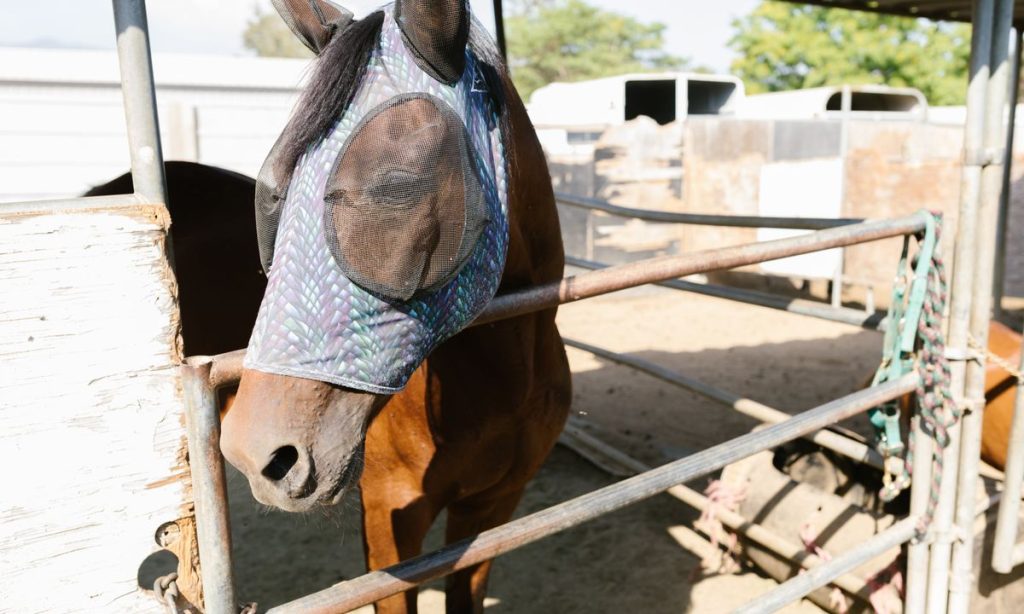
How to store a fly mask for horses safely begins with cleaning and drying it before putting it away. A damp mesh mask left in a tack box may develop odor, collect grit, or become misshapen. A mask stored near chemicals can also pick up residues that should never touch a horse’s face. Simple preparation helps preserve fit around the ears and eyes while making the next turnout easier and more comfortable.
This guide explains how to remove dirt, check stitching, protect mesh, and organize clean equipment between uses. Owners interested in a fly mask for horses should think about storage as part of safe daily handling. A well-maintained mask still needs a fit check every time it is used. Cleaning and storage do not make a damaged eye-covering safe, so inspection remains the most important step.
Remove the Mask and Inspect It First
When learning how to store a fly mask for horses safely, start by removing the mask gently and checking the horse’s face. Look for rubbing around the ears, nose, jaw, and cheeks, and confirm that the eye area has remained clear. A mask that has collapsed against the eyelashes or caused swelling should not be reused before the problem is assessed. Examine the fabric in good light for torn seams, broken mesh, rough edges, and damaged closures. Note any recurring fit problems rather than assuming washing will solve them.
Brush loose hair, hay, dust, and dried mud away from the outer material. Take care not to push grit deeper into stitched edges or mesh openings. If a mask contains detachable parts, follow the manufacturer’s directions before separating them. Avoid tugging forcefully on an ear panel or zipper. The guide to fly masks for sensitive-eyed horses explains why eye clearance and smooth contact points matter. A storage routine should protect those important features, not flatten or stretch them.
Clean the Mesh Without Damaging Its Shape
Different mask materials tolerate different washing methods. Read the sewn care label or manufacturer’s instructions before cleaning. When hand washing is permitted, use an appropriate mild solution, move the fabric gently, and rinse until no residue remains. Avoid harsh solvents or concentrated fragrances that may irritate sensitive facial skin. Machine washing, spinning, or heated drying can damage some mesh structures and closures. Do not improvise a stronger wash just because a mask was muddy after turnout.
After rinsing, reshape the mask carefully without forcing the eye cups or pulling the seams. Look for trapped debris inside ear pockets or the nose area. Remove hair from hook-and-loop fasteners so their grip remains dependable. A soft brush may help lift surface dirt, but scrubbing can fray delicate fabric. How to store a fly mask for horses safely depends on preserving the material’s ability to hold its intended position. A visibly distorted mask may no longer protect the face comfortably.
Dry Completely Before Storage
Moisture is one of the easiest storage problems to prevent. Allow the washed mask to air-dry fully in a clean, ventilated area according to its care instructions. Keep it away from direct heat sources that could deform synthetic fabric, adhesive, or elastic. A wet mask folded inside a plastic bag can trap moisture against inner seams. Do not return the mask to a horse while damp if it could cause rubbing, cling to the face, or hold dirt against sensitive skin.
Turn the mask as needed during drying so seams, ear panels, and closure folds do not remain wet. Before storing, feel the fabric in several places rather than trusting the outer surface alone. Check again for odor or stubborn debris. A cloth bag or clean ventilated storage compartment may be useful once the equipment is dry. FYI, a tidy-looking mask is not necessarily a dry mask. Give thick binding and layered fasteners enough time to air out before closing the container.
Choose a Clean, Dry, Pest-Resistant Location
How to store a fly mask for horses safely also involves the environment around the tack. Choose a dry shelf, dedicated hook, or ventilated container protected from rodents, insects, and accumulated dust. Keep the mask away from manure, damp bedding, pesticides, fly sprays, feed additives, and other chemicals. Do not suspend it from a sharp peg that can tear the mesh or stretch a strap. Store the mask in its natural shape where possible, without heavy objects pressing on its eye cups.
Label masks when several horses use similar equipment. Sharing an unclean face covering between horses may spread dirt or organisms, especially where eye discharge or skin disease is present. Ask a veterinarian about cleaning precautions if an infection is suspected. Keep spare masks separate from worn or damaged items to prevent accidental reuse. Do not place tack in direct sunlight for prolonged storage if the material’s care instructions warn against it. Accessible, orderly storage saves time during turnout checks.
Check the Mask Again Before Reuse
A stored mask can still deteriorate. Before the next use, examine the mesh for fresh holes, rodent damage, stiffness, loose stitching, and a fastener that no longer holds. Confirm that no dust, insects, or cleaning residue remain inside. Place it on the horse according to the maker’s fit directions and make sure eye clearance is maintained during movement. Remove it immediately if the mask rubs, shifts into the eyes, restricts vision, or causes distress. Storage supports safe use; it never replaces fitting.
Include fly masks in the horse’s overall insect-control plan. The University of Minnesota Extension describes fly masks and other physical barriers as part of management, alongside keeping horse areas clean and dry. The trail-riding fly-mask guide covers a different use context, where movement and tack interactions also matter. Whether the mask is used in a field or during another activity, observe the horse closely and examine the face regularly. Replace equipment when safe fit cannot be restored.
Frequently Asked Questions
These storage questions address damp mesh, washing, shared equipment, and worn fasteners. The right approach depends partly on the material’s care instructions.
Make a final inspection part of every use. A clean, neatly stored mask is only helpful when it also fits and keeps the eyes clear.
Can I store a fly mask while it is slightly damp?
No. Dry all layers and closures thoroughly to avoid trapped moisture, odor, and skin irritation when the mask is reused.
Is it safe to machine wash every fly mask?
No. Washing requirements vary by material. Follow the maker’s instructions and avoid processes that deform the mesh or eye cups.
Should I fold a fly mask tightly?
Avoid crushing molded eye areas or stretching seams. Store it so its intended shape and facial clearance are preserved.
Can two horses share the same fly mask?
Only if fit and hygiene are appropriate. Do not share contaminated gear, and seek veterinary advice when infection is suspected.
What if a stored mask smells musty?
Inspect for moisture, contamination, and damage. Clean it according to the label, dry thoroughly, and replace it if it cannot be restored safely.
Final Words
How to store a fly mask for horses safely is a practical sequence: remove it gently, inspect the horse and mask, clean according to instructions, dry completely, and protect the shape in a clean location. Keep chemical residues, dampness, and rodents away from facial equipment. Recheck fasteners and eye clearance before each use. Damaged mesh or rubbing should prompt replacement or professional advice rather than an improvised repair.
When selecting or reusing a fly mask for horses, remember that daily care matters as much as the initial fit. Keep clean masks labeled and ready, but never let convenience override the horse’s comfort. Good storage reduces avoidable wear and makes it easier to recognize a mask that should no longer be worn.









