
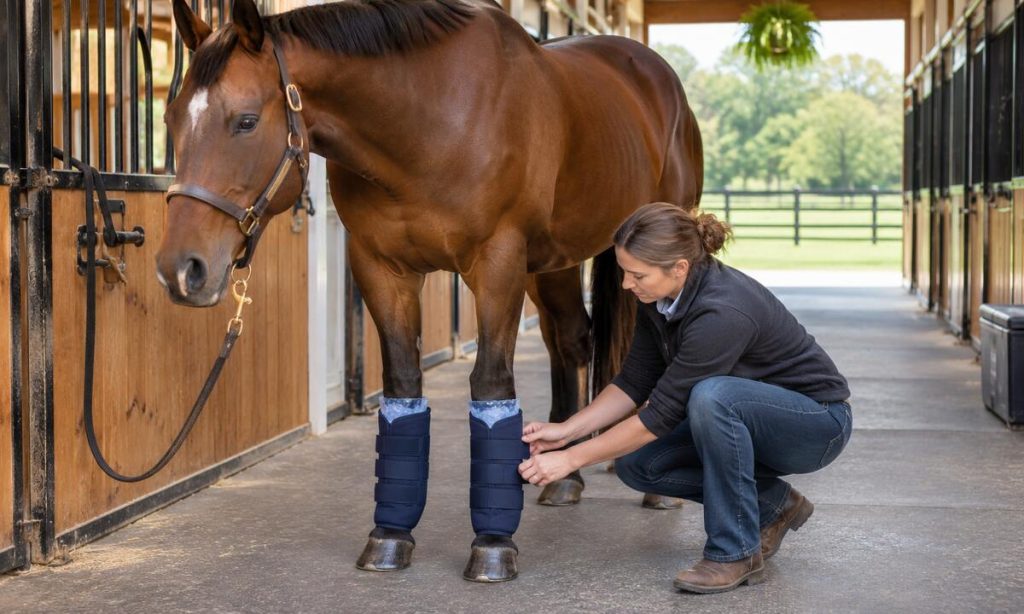
Ice boots for horses are used to cool selected areas of the lower limb. They can be part of a veterinary-directed plan after exercise or for particular medical concerns. The phrase “What to look for in a ice boots for horses” appears in searches, but the real question is whether a cooling method can reach the right tissue safely. Shape, coverage, stability, comfort, and monitoring matter more than a dramatic product claim.
This guide explains the differences between gel wraps, ice-water sleeves, and other cooling setups without recommending a particular product. It also shows how to evaluate fit, watch skin condition, maintain equipment, and recognize injuries that require a veterinarian. Ice boots for horses should support an appropriate care plan, not delay diagnosis. Cold therapy for suspected laminitis, acute tendon pain, or significant swelling demands individualized professional guidance.
Start With the Purpose of Cooling
A tired horse after ordinary exercise and a horse with a hot, painful limb are not the same situation. Some owners use brief cooling as part of post-work care. A veterinarian may prescribe a more intensive technique for inflammation or certain urgent conditions. Research indicates that different systems cool different tissues to different degrees; a cool outer surface does not prove deep structures have reached a therapeutic temperature.
If the horse is suddenly lame, refuses to bear weight, has severe swelling, or seems systemically ill, arrange prompt veterinary care. Do not walk the horse excessively to “test” the injury. The veterinarian may examine tendon structures, joints, hoof temperature, and circulation before recommending cold therapy. For hoof-related red flags, see the guide to signs of laminitis. Selecting ice boots for horses begins with a defined purpose and safe treatment instructions.
Look for Coverage That Matches the Target
Cold packs placed around the cannon region may not cool the hoof as effectively as a setup designed for the entire lower limb. Conversely, cooling a broad area may be unnecessary when the veterinarian has identified a small, specific region. In equine cryotherapy studies, coverage, contact, moisture, and cooling medium all influenced measured temperatures. A sleeve that holds ice or circulating water behaves differently from a wrap with removable frozen inserts.
Ask which anatomical area requires contact: the hoof, pastern, fetlock, tendons, or more of the lower leg. Check whether the design allows continuous contact without hard edges. Ice boots for horses that slide down, bunch behind the fetlock, or leave gaps may deliver uneven cooling. Equipment coverage should support the clinical goal, not simply cover the largest area possible. No single boot style fits every injury or veterinary protocol.
Fit, Fastening, and Horse Comfort
An overly tight wrap can irritate tissue or affect circulation, while a loose boot can slip, twist, or create a trip hazard. Examine the shape of the horse’s leg, the width around key points, and the fastening system. The correct tension should keep the equipment secure without creating ridges or pressure points. Hair, skin folds, and existing wounds can alter fit, so a familiar setup may need reassessment.
Introduce the equipment calmly in a safe, non-slip space. Start with the horse standing quietly and a handler positioned out of the kick zone. Watch for repeated stepping, pawing, sudden snatching of the leg, or attempts to remove the boot. These may signal distress or discomfort. Check the manufacturer’s use limits, but confirm therapeutic duration with the veterinarian. Cold therapy should never require restraining a panicked horse simply to complete a timer.
Understand Ice, Water, and Gel-Pack Differences
A boot filled with an ice-and-water mixture can maintain broad contact, although it may be heavy and require careful handling. A gel-pack system may be easier to carry and fit into a routine, but temperature can change quickly as it warms. A dry-sleeve or compression-cooling setup uses different mechanics again. Published veterinary research has compared temperature changes among techniques; the results cannot be generalized to every horse or tissue.
Do not assume that a colder pack automatically works better. Excessive cold, poor contact, pressure, prolonged application, or a lack of monitoring can create problems. Follow the clinician’s instructions on duration, breaks, replacement of ice, and skin inspection. Avoid direct placement of extremely cold, rigid inserts against vulnerable skin when the system is not designed for it. Practical fit and consistent observations are more meaningful than a marketing claim about extreme temperature.
Hygiene and Care After Every Session
Ice boots for horses often contact damp hair, bedding dust, sweat, and barn dirt. Moisture trapped around the leg can irritate skin and leave closures grimy. Remove the system carefully, check the cooled area, and clean the equipment according to the material and maker’s instructions. Empty ice water completely. Do not leave a damp boot packed away overnight or share dirty equipment between horses.
Inspect seams, straps, buckles, pocket lining, and any part holding ice or gel. Cracked inserts, frayed hook-and-loop closures, stiff edges, and leaks can change both fit and cooling. Our guide to cleaning and inspecting horse boots describes inspection habits that transfer to many equine leg accessories. For wet conditions, the advice on drying horse leg equipment after muddy conditions can also help prevent persistent moisture. Let the material dry fully before storage, and keep clean parts separate from soiled stable gear.
A Careful First-Use Routine
Before the first session, have a veterinarian clarify whether cooling is appropriate and where it should be applied. Assemble clean equipment, check the fit on an uninjured standing limb if appropriate, and make sure the horse has a safe footing and a calm handler. Read all instructions for filling, securing, emptying, and storing the boot. Arrange a way to monitor the horse without repeatedly disturbing the wrap.
During use, watch the horse’s posture and behavior, inspect accessible skin, and note time and any unusual response. Follow the prescribed duration rather than extending it because the horse seems comfortable. After removal, assess the leg and document the response. Contact the veterinarian if swelling, pain, lameness, skin discoloration, or new distress appears. A written routine helps family members and barn staff apply the same safety checks consistently.
When Ice Boots Are Not Enough
Cold therapy is not a diagnosis. Deep tendon injury, hoof disease, infection, and serious trauma may require examination, imaging, medication, controlled movement, or other care. Severe heat in the hoof, stronger digital pulses, shifting weight, and reluctance to move can signal a possible laminitis emergency. A veterinarian decides whether ice-based treatment is indicated and how long it should continue. Immediate professional assessment is important.
Another common mistake is treating ice boots for horses as interchangeable with boots meant to protect against strikes or abrasions. Our explanation of ordinary protective tendon boots helps distinguish physical protection from active cooling. The functions are different: impact gear primarily shields the leg during activity, while cryotherapy aims to change tissue temperature. Neither category can be relied upon to treat the underlying cause of a suddenly painful limb.
Frequently Asked Questions
The following practical questions help owners evaluate ice boots without implying that all cold therapies work the same way. Evidence shows cooling varies with method and anatomy. Clinical decisions should reflect the horse’s diagnosis, comfort, and the treatment objectives agreed with a veterinarian.
If the horse has acute severe lameness, obvious injury, or symptoms consistent with laminitis, contact a veterinarian first. The answers below are for equipment awareness and routine care, not an independent plan for treating an injured horse.
Are ice boots the same as protective leg boots?
No. Cold-therapy equipment is designed to cool tissue, while protective gear is primarily used to reduce contact from bumps or brushing.
Can ice boots prevent every tendon injury?
No. They do not eliminate the causes of tendon strain and should not be presented as guaranteed injury prevention.
How long should a horse wear ice boots?
Follow the horse’s veterinary protocol and the equipment’s safe-use instructions. Duration varies by purpose and cooling system.
What if my horse resists the boots?
Stop, check fit and discomfort, and introduce handling gradually. Do not force a distressed horse to tolerate the equipment.
When should equipment be replaced?
Replace components with leaks, hardened edges, unreliable fasteners, poor fit, or damaged gel inserts that cannot be safely restored.
Final Words
When deciding what to look for in ice boots for horses, think first about the tissue being cooled and why. Check anatomical coverage, secure fit, ease of cleaning, and the animal’s response. A useful system should be manageable for the handler and comfortable for the horse within a veterinarian’s treatment plan.
Ice boots for horses can be practical tools, but they are not shortcuts around a lameness assessment. If a horse is injured, seek veterinary guidance before choosing a cooling duration or technique. Careful use, hygiene, and documentation turn a routine into something safer and more consistent.
Reference
These university and peer-reviewed veterinary sources discuss cryotherapy, cooling methods, and hoof-related conditions. They support the distinctions made in this educational article, not a claim that any particular equipment cures disease.
Research conditions may involve controlled clinical or laboratory procedures unlike ordinary barn use. A veterinarian should interpret what those results mean for a specific horse.









