
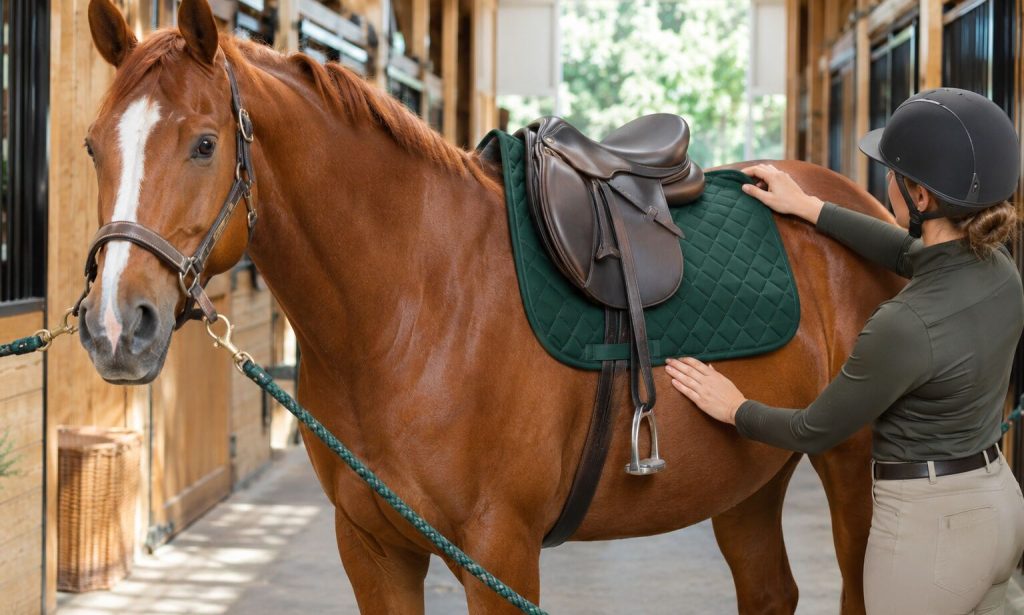
The right saddle pad does more than look tidy beneath a saddle. It helps manage moisture, protects tack from dirt, and supports a comfortable interface between horse and equipment. How to compare saddle pads for horses options by fit and use begins with saddle shape, riding discipline, the horse’s back, and the way the pad sits in motion. Extra thickness is not automatically extra comfort.
When comparing saddle pads for horses, check cut, size, material, thickness, care requirements, and whether the pad stays in position. This guide explains the differences between everyday pads, shaped designs, and half pads. It also covers common fitting mistakes and warning signs of back discomfort. A pad should complement a correctly fitting saddle, not hide a saddle that pinches or shifts.
First Confirm Saddle Fit Without the Pad
A pad cannot correct a saddle that is fundamentally too narrow, too wide, unbalanced, or painful. The American Association of Equine Practitioners has published professional guidance about assessing saddle fit and pressure. A qualified saddle fitter can evaluate the horse standing and moving, while a veterinarian should assess ongoing back pain or performance changes.
Before buying another layer, check the saddle’s balance, clearance, and contact with the back. Look for rocking, bridging, or pressure concerns with professional help. A horse’s shape changes with muscle development, weight, age, and workload. A pad that worked last season may no longer sit correctly under the same saddle.
Do not use padding to mask pain
Signs of concern include flinching while tacking up, reluctance to move forward, bucking, soreness along the back, rubs, or altered behavior. These signs have several possible causes. Stop and arrange appropriate assessment rather than adding more thickness. UC Davis veterinary resources recognize poor saddle fit as one possible contributor to equine back pain.
Compare Pad Shape to the Saddle and Discipline
English saddle pads vary in outline, including dressage, all-purpose, and jumping shapes. A pad should cover the relevant saddle contact area without large folds or excess bulk. Western pads have different proportions and may be built for longer contact surfaces or different working conditions. Match the design to the saddle, not just the horse’s coat color.
Check that the pad does not pull tightly across the withers or bunch behind the saddle. There should be appropriate space and a clean contour when the saddle is fastened. Recheck after the horse walks, because a pad can move even if it looked tidy while standing. Exact sizes vary, so use measurements and a real fitting test.
Allow clearance at the withers
A pad that stretches flat over the withers can create pressure or pull as the horse moves. Lift the front into the saddle’s gullet as appropriate to the system and avoid trapping wrinkles. Ask the saddle fitter to show the correct placement for that saddle design. A few extra inches of fabric cannot compensate for incorrect saddle geometry.
Compare Thickness, Loft, and Stability
Thick pads can alter the saddle’s fit and rider balance. Thin pads may be appropriate under a well-fitted saddle, while certain arrangements call for different cushioning. The decision should be based on fitting, not a universal preference for more foam or wool. Materials compress differently under load, and thickness measured on the shelf may differ in use.
A half-pad approach for horses adds another layer beneath the saddle. It may change pressure distribution but can also make a snug saddle tighter. Have the full setup assessed under the actual rider when possible. Adding several layers at once makes it difficult to identify what causes slipping or uneven contact.
Notice movement under the saddle
The pad should remain smooth and centered during mounting, walking, trotting, and turns. Movement or bunching can suggest incorrect pad shape, tack fit, or mounting habits. Do not rely solely on an isolated sweat mark as proof of perfect or poor fit. Use it alongside behavioral observations and professional evaluation.
Compare Materials for Climate and Workload
Cotton and other absorbent textiles can be practical for routine rides because they are washable and relatively easy to inspect. Wool and specialized materials may handle moisture and compress differently. Synthetic designs vary widely in texture, drying speed, and care needs. The right material depends on climate, ride length, horse sensitivity, and the cleaning routine available.
In warm weather or demanding exercise, trapped moisture and heat may contribute to skin irritation. Choose a design with a realistic cleaning schedule and avoid putting damp dirty pads back onto a horse. If the horse is prone to rubbing or has a diagnosed skin issue, work with the veterinarian on appropriate tack contact and hygiene.
Avoid the “magic fabric” promise
No single material guarantees zero pressure, cooling, or a perfect fit. IMO, easy inspection and reliable cleaning matter more than impressive-sounding fabric terminology. Feel for hard seams, lumps, uneven filling, and rough edges before each ride. Reject damaged pads that create localized rubbing.
Match Pad Features to the Ride
For everyday schooling, prioritize consistent fit, breathability, and ease of laundering. For longer trail rides, stability and moisture management become especially important because small rubs can worsen over hours. For jumping or dressage, pad shape should suit the saddle and permit the rider’s normal leg position without bulky interference.
A non-slip pad for trail riding may be relevant if the overall setup is correctly fitted but needs stability. Still, persistent slipping can point to saddle balance, horse shape, girthing, or rider position. Do not treat a sticky surface as a substitute for investigating why the saddle moves.
Consider special back shapes carefully
An older horse, a horse with diminished topline muscle, or a markedly swaybacked horse may need professional fitting adjustments. Our swayback horse pad considerations illustrate why specialized shapes require extra care. A pad should not become a home-made medical treatment for back pain.
Use and Maintain the Pad Correctly
Before every ride, brush away grit from the horse’s back and inspect the underside of the pad. Lay it smooth and centered with adequate clearance, then saddle according to the fitting guidance. Check for folds after tightening the girth and again after a short warm-up. Do not ride with a pad that shifts into a tight ridge.
After the ride, inspect skin, sweat, and the pad’s contact surface. Air-dry before storing. Wash when needed using the care instructions and rinse away detergent thoroughly. Some pads require special handling or slow drying to retain their shape. Storing a damp pad in a closed tack trunk invites odor and unnecessary irritation.
Know when to replace a pad
Replace fabric that has hardened, split, worn through, or developed permanent lumps. Stitching or loops that pull unevenly can change how the pad sits. Repeated movement or fresh rubbing also warrants a fit review. A visually attractive pad is not a bargain if it keeps creating pressure points.
Frequently Asked Questions
Saddle pad decisions become clearer when you separate fabric features from the saddle’s actual fit. These answers address practical questions riders often ask before changing pads.
Use these principles with a qualified saddle fitter when the horse’s shape, discipline, or comfort makes the choice uncertain.
Can a thick pad fix a poor-fitting saddle?
No. Extra thickness can change pressure but may worsen a narrow fit. Correct the saddle fit itself with professional help.
Should a pad cover the entire saddle?
It should suit the saddle’s contact area and shape without folds or pressure at the edges. Exact coverage varies by discipline.
Are half pads always better?
No. They alter the saddle-pad system and may be useful only in a properly assessed setup.
Why does a pad keep sliding?
Possible causes include shape mismatch, saddle balance, girthing, or movement. Check the full setup instead of assuming the fabric is at fault.
How often should a saddle pad be washed?
Clean it according to soil, use, and care instructions. Dry it fully before storage and inspect its underside before each ride.
Final Words
To compare saddle pads for horses by fit and use, start with a correctly fitted saddle and the horse’s comfort. Then assess pad shape, thickness, material, stability, and care. Watch what happens during real movement and after the ride. A pad should support sound tack use, not conceal pressure or soreness.
Thoughtfully chosen saddle pads for horses make daily grooming and riding more consistent. When behavior, skin, or back comfort changes, seek expert fitting or veterinary advice. The best pad is the one that works with the whole horse-and-saddle system, ride after ride.









