
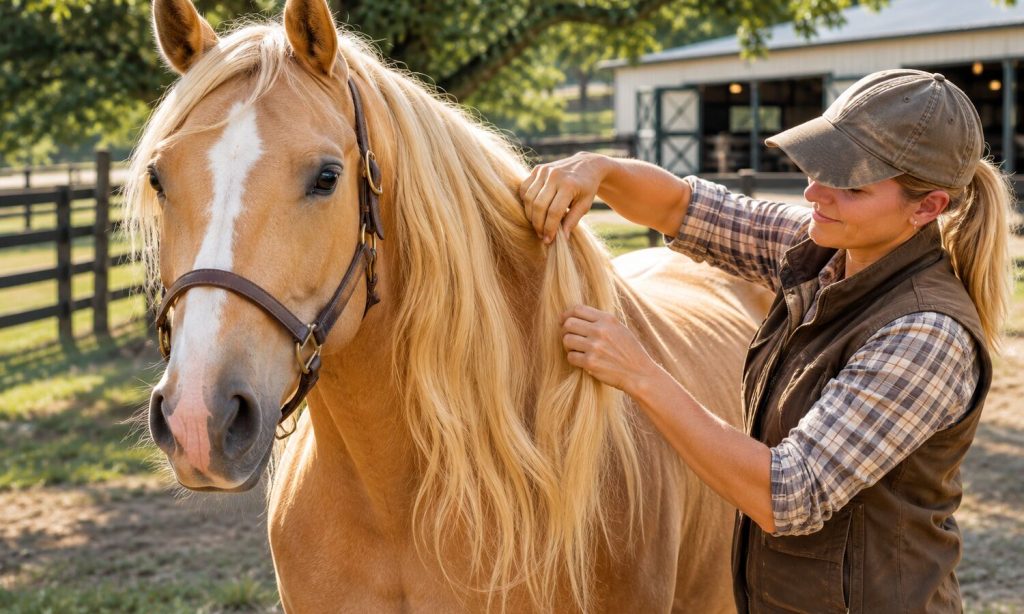
A thin or broken mane can be disappointing, but no supplement can guarantee long, thick horsehair. What to look for in a supplement for horse mane growth begins with a complete review of the horse’s ration and the reason hair is missing. Healthy hair needs adequate nutrition, yet rubbing, parasites, skin disease, grooming damage, and genetics can affect the mane even when the diet is balanced. Adding more vitamins without checking the current feed may create new problems.
The sensible goal is to identify genuine nutritional gaps and correct them safely. The site’s supplement for horse mane growth overview describes the broader category; this guide focuses on scientific plausibility, label quality, balanced nutrients, and veterinary red flags. You will learn why protein matters, how minerals can interact, and when hair loss deserves examination. Patience is important because existing broken hairs cannot be repaired by an overnight feeding change.
Check for Non-Nutritional Causes First
Look closely at the roots and skin before assuming mane length reflects a nutrient deficiency. A rubbed crest, dandruff, sores, flakes, or bald patches may indicate insect irritation, parasites, infection, friction from equipment, or another skin problem. Tail rubbing and mane loss can also follow persistent itch. Ask a veterinarian to examine unexplained or progressive hair loss, especially when it is accompanied by discomfort, weight loss, or changes in the coat elsewhere.
Inspect grooming tools, mane bands, blankets, halters, and fences for repeated friction. Too-tight braids, harsh detangling, and pulling at knots can snap fibers and make growth appear stalled. Adjust handling gently and give the mane a chance to regrow. The site’s article on horse shampoo for hair growth claims is useful for separating surface grooming from deeper nutrition. Shampoo can clean hair but does not fix a systemic nutritional deficit.
Review the Entire Ration, Not One Ingredient
A horse’s feed plan should meet energy, protein, vitamin, and mineral needs for its age, body condition, and workload. Start with forage quantity and quality, then account for concentrate feed, ration balancers, grazing, salt, and other supplements. University extension guidance emphasizes meeting nutrient requirements without creating excesses. Adding an extra powder on top of a fortified ration may duplicate nutrients. A forage analysis and qualified equine nutrition review can be more valuable than guessing from a mane photograph.
Protein supplies amino acids used to build tissues, including hair. But more crude protein is not automatically better if the ration already meets requirements. Quality, digestibility, and adequate intake matter. Poor growth or weight loss may point toward a broader feeding or health issue. Oklahoma State University equine nutrition guidance notes that necessary amino acids must come from the diet. If the current feeding plan is incomplete, correct that foundation before expecting a specialized mane label to compensate.
Understand Zinc, Copper, and Selenium Balance
Trace minerals support normal tissue function, but their relationships are important. Zinc and copper levels should be evaluated together within the total ration; adding one mineral without considering the other can create imbalance. Selenium is necessary in small amounts but excessive intake can be toxic and may be associated with hair and hoof damage. Do not combine multiple supplements containing selenium just because each has a different marketing purpose.
Read the label for the actual amount of each nutrient per recommended daily serving, not only percentage claims or prominent ingredient names. Calculate the contribution from fortified feed, mineral blocks, and other supplements with a nutrition professional. University and veterinary sources support caution with excess mineral supplementation. If a deficiency is suspected, use appropriate examination and ration assessment rather than relying on hair-mineral tests alone. Mane appearance is not a reliable stand-alone laboratory test.
Question Growth Promises and Check Evidence
A label that promises rapid mane growth may be appealing, yet equine supplement trials often have limited evidence. Ask whether the claimed outcome has been measured in horses, in controlled research, using the same ingredients and amounts. Results in people or small laboratory animals do not prove effectiveness for equine mane growth. Look for transparent nutrient quantities, clear feeding instructions, storage information, batch identification, and credible quality controls. Avoid claims that sound like a cure for all coat problems.
Biotin, fatty acids, amino acids, and trace minerals may appear on labels, but their presence does not establish a missing nutrient or prove additional benefit. Biotin research is often discussed in connection with hoof quality, which should not be casually equated with mane growth. A supplement can be appropriate when it addresses a documented shortfall, not because it contains the longest list. IMO, an honest ‘may support normal nutrition’ claim is more believable than a promise of dramatic mane length in days.
Track Progress With Realistic Expectations
Take consistent photos of the same mane area under similar lighting, then compare over months rather than days. Record changes in rubbing, weather, blanketing, grooming, and ration. Healthy new hair grows gradually, and damaged length does not magically mend. If the mane breaks faster than it grows, reducing friction and addressing itch may make more difference than nutrition changes. Avoid repeatedly starting and stopping several products; it becomes impossible to identify what mattered.
Work with the veterinarian if hair loss spreads, skin lesions appear, or body condition changes. The veterinary team may check parasites, infections, hormonal or systemic conditions, and the adequacy of the diet. If a supplement trial is approved, set a follow-up date and evaluate against meaningful observations. Do not use color or shine as the only outcome; indoor light, coat products, and grooming can alter appearance without changing underlying health.
Store and Use Supplements Responsibly
Keep the preparation in its original labeled package, away from heat, moisture, pests, and feed contamination. Use a dry measuring tool and follow its specific directions. Check dates, batch numbers, and recommended quantities before giving a serving. Do not introduce a supplement during an unrelated sudden hay or grain change when you are trying to evaluate effects. Keep fresh water and adequate forage available, and store supplements where other horses cannot consume extra portions.
Review the plan periodically as the horse ages or its workload changes. A supplement that was appropriate during a documented deficiency may not need indefinite use after the ration is corrected. Share the full list of feeds and additives with your veterinarian, including amounts per day. Good nutrition supports normal mane growth, but it does not override genetics or stop hairs from breaking under repeated friction. A gentle grooming routine remains essential.
Frequently Asked Questions
Mane health reflects nutrition, skin condition, and physical damage. These answers help separate the main issues.
Sudden hair loss, inflamed skin, or systemic symptoms should prompt veterinary assessment. Supplement labels cannot diagnose the cause.
Can a supplement make every horse’s mane grow faster?
No. Results depend on the reason for poor hair growth, and strong controlled evidence for many claims is limited.
Is more selenium good for mane growth?
No. Excess selenium is dangerous and can damage hair and hooves. Evaluate total ration intake with professional guidance.
Could rubbing cause a short mane?
Yes. Friction, itching, and grooming damage can break hair even when nutrition is adequate.
Should I add zinc or copper without testing the ration?
Not casually. Mineral balance and other fortified feeds matter, so discuss additions with a veterinarian or equine nutritionist.
How long before I can judge improvement?
Hair regrowth takes time. Use consistent photos over months and address skin problems or breakage first.
Final Words
What to look for in a supplement for horse mane growth is not a magic ingredient but evidence of a real nutritional need. Review forage and the full ration, investigate itching or friction, examine mineral balance, and assess claims cautiously. A supplement may help correct a shortfall, yet it cannot substitute for veterinary care or gentle grooming.
Use the horse mane nutrition supplement overview as background while focusing on your horse’s actual condition. Healthy mane care is built on good forage, appropriate nutrient intake, comfortable skin, and time. If hair loss is unusual, the first investment should be a sound diagnosis rather than another hopeful scoop.
Reference
The following veterinary and institutional resources support the treatment-related guidance in this article.
University of Minnesota Extension: Feeding Vitamins and Minerals · University of California Davis: Equine Dermatology · Oklahoma State University: Nutrient Needs of Horses · University of Kentucky: Selecting Feeds for Horses









