
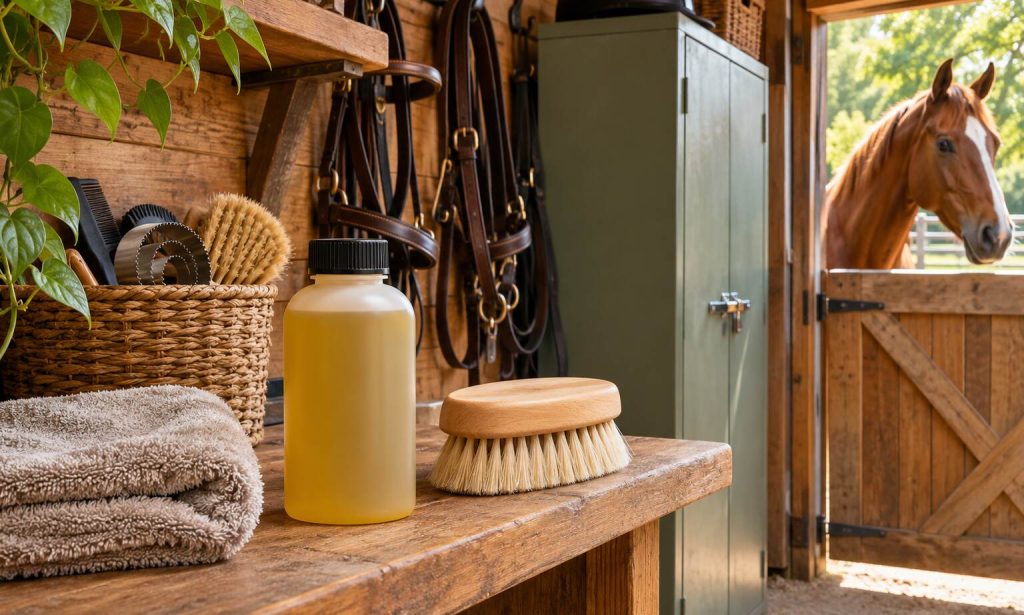
Hoof oil is easy to overlook once a grooming session ends. Yet the way a bottle is closed, stored, and handled matters as much as the care taken during application. Learning how to store hoof oil for horses safely helps protect the formula from contamination and prevents accidental exposure to curious animals or children. A stable shelf should never double as an unmarked chemical cupboard.
Different formulations may contain oils, waxes, solvents, or other ingredients. Those differences determine storage instructions and usable life. This guide explains how to read labels, arrange a safer storage spot, manage brushes, recognize changes in a product, and protect feed and water. It also explains when hoof condition needs a farrier’s judgment rather than more dressing.
Begin With the Container Label
Before putting a product away, read the complete label and any safety instructions. Look for temperature guidance, flammability warnings, closing requirements, shelf-life dates, and instructions for preventing contamination. A hoof dressing is not automatically harmless because the main ingredient sounds natural. If instructions differ from general barn advice, follow the specific product label. Never guess the storage limits of an unknown mixture.
Keep the dressing in its original, clearly labeled container whenever possible. That label helps another person identify the contents and follow the right precautions. Do not transfer it into an old drink bottle, food jar, or unmarked squeeze container. If a cap is damaged, check whether the manufacturer provides a compatible replacement. Our overview of hoof oil for horses helps explain why formulas can differ.
Choose a Cool, Dry, Secure Storage Location
A designated grooming cabinet is generally better than a sunny windowsill or an open shelf over feed. Choose a stable location away from direct heat, freezing conditions unless permitted by the label, rain, and heavy dust. Temperature swings can change a product’s texture or packaging integrity. Make sure shelves are strong enough to prevent bottles from falling and lids can be reached without balancing on feed bins.
Keep the cabinet inaccessible to horses, dogs, cats, and children. Avoid storing grooming liquids beside hay, grain, supplements, veterinary drugs, or drinking-water supplies. Segregate flammable materials according to their labels and fire-safety guidance. When deciding how to store hoof oil for horses safely, a locked or latched area also prevents accidental use by someone who has not read the instructions.
Prevent Dirt and Moisture From Entering the Bottle
Hoof care can be messy. A brush loaded with soil, bedding, manure, or water should not be dipped repeatedly into the main container. Clean the hoof first and use a separate applicator as directed. Keep the neck and rim free from caked residue so the lid closes correctly. If the container uses an integrated brush, clean it exactly as the label or maker instructs.
Do not add water or other products to thin a thickened dressing unless instructions explicitly allow it. Mixing formulas can change their behavior and create avoidable skin risks. Set the bottle on a washable tray rather than directly on a stall floor. The companion guide to using hoof-care products safely explains why careful handling around skin and eyes matters.
Make Brush and Tool Care Part of Storage
Separate applicators from feed scoops, medical tools, and clean grooming towels. Use only brushes intended for the formula and horse-care task. Wipe a brush after use and follow the product directions for washing and drying. A damp brush stored inside a closed box can encourage unwanted odors and deterioration. Store clean tools where air can circulate and where animals cannot reach them.
Inspect handles and bristles before the next use. Broken fibers may lodge in the product or scratch a sensitive area. A reusable tray makes drips easier to notice and clean. If the bottle itself leaks, place it upright in containment while arranging safe disposal or transfer only if explicitly permitted. Never leave a puddle where a horse could step or lick.
Track Dates and Product Changes
Write the opening date on a label or a barn log without covering safety instructions. Keep a note of unusual temperature exposure or any spill. Products differ: some have printed expiration dates, and others specify a recommended period after opening. An unchanged smell does not prove a product is still safe or effective. Avoid inventing a universal six-month or one-year rule.
Examine the contents before each application. Unexpected separation, mold, a strong changed odor, unusual color, or hardened residue can signal a problem. Some separation may be normal if the label says so, so distinguish expected appearance from new changes. When in doubt, consult the manufacturer’s instructions and discard suspicious material according to local requirements. Do not use questionable dressing just to empty the jar.
Reduce Spills and Accidental Exposure
Close the cap promptly after each grooming session. Set the product down on a level surface and keep the horse securely positioned away from it. Never place open oil near heaters, flames, or electrical work. Wash hands after handling and use protective equipment if the label requires it. Clean small drips immediately, taking care not to spread liquid onto a stall floor.
If a bottle spills, isolate animals from the area and follow the label and local waste guidance. Do not wash unknown liquids into water troughs or storm drains. Contact a veterinarian or poison control service when a pet ingests a substance or develops symptoms after exposure. How to store hoof oil for horses safely includes preparing other barn workers to respond correctly, not just putting the lid back.
Keep Hoof Health Separate From Storage Claims
Hoof oil may be part of a grooming routine, but it cannot replace appropriate trimming, nutrition, or investigation of hoof disease. Dry-looking horn does not always indicate an oil deficiency. Hoof cracks, foul odors, sudden heat, marked tenderness, or lameness need the attention of a farrier or veterinarian. A beautifully stored bottle does little for a hoof that needs examination.
Review care alongside hoof conditioner considerations for brittle hooves and the practical hoof oil selection guide. Neither article replaces hands-on examination. Store all hoof products separately and check their labels individually; two containers that look alike may have very different ingredients or storage needs.
Frequently Asked Questions
These common questions focus on everyday handling, not claims that a dressing will fix an unhealthy hoof. Always prioritize instructions specific to the product in your barn.
If label information is missing or contradictory, avoid applying the product until you can identify the correct guidance. Contact your veterinarian for any suspected exposure that affects the horse.
Can hoof oil be stored in a tack room?
Often, if the room meets the product label’s temperature, ventilation, and security requirements. Keep liquids away from feed and ignition sources.
Should I refrigerate hoof oil?
Not unless the manufacturer specifically directs it. Cold conditions may change texture and can damage some containers.
Is it safe to keep oil in another bottle?
Keep it in the original labeled packaging. Unmarked or food-like containers invite serious identification and ingestion mistakes.
How do I know when to throw hoof oil away?
Follow any printed expiry or discard instructions. Dispose of material that is contaminated, unidentified, or unexpectedly changed.
Can I store a wet application brush in the jar?
Avoid introducing water or dirt. Follow the specific maker’s directions for built-in and separate applicators.
Final Words
How to store hoof oil for horses safely comes down to five habits: keep the original label, choose a secure dry location, prevent contamination, document opening dates, and respond promptly to damage or changes. Protect hay, water, and other animals from accidental contact. No storage routine makes an expired or unidentified product acceptable.
Keep grooming equipment clean and involve your farrier when hoof condition changes. If you are considering different forms of hoof oil for horses, compare label precautions before bringing them into the barn. Small daily checks are far easier than dealing with a spill or skin reaction later.









