
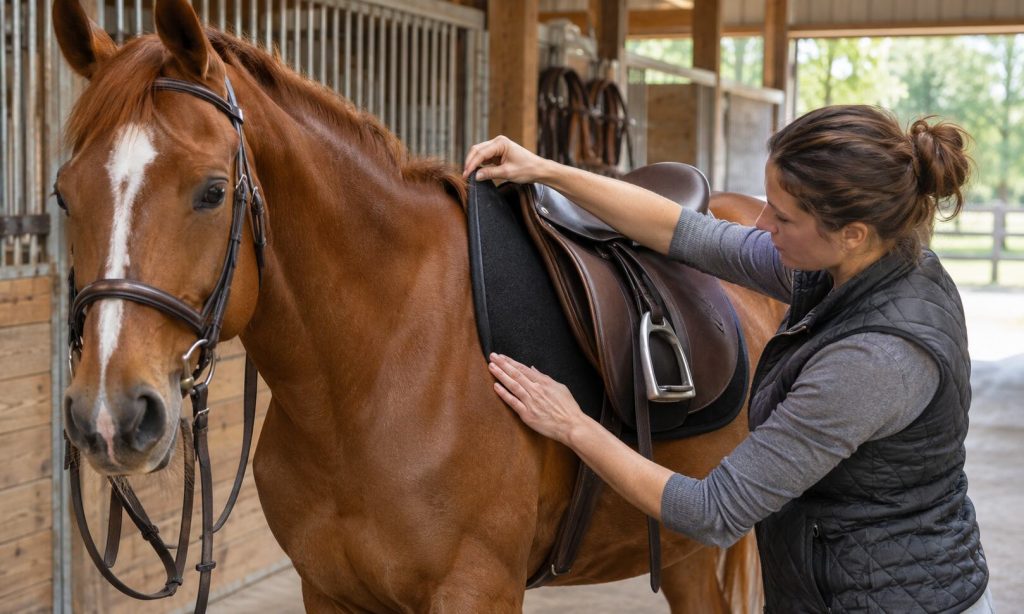
Common mistakes when choosing a half pad for horses begin with a perfectly understandable hope: a softer layer might make every ride more comfortable. Yet adding cushioning changes the space between a horse’s back and the saddle. A pad can affect balance, wither clearance, and panel contact. It cannot turn an unsuitable saddle into a properly fitted one. Before considering wool, gel, foam, or shims, look at the complete tack setup and how the horse moves.
This guide explains the errors that matter, the checks you can make safely, and when professional assessment is necessary. Our article about the best half pad for horses describes construction differences, while this guide concentrates on preventing poor decisions. Saddle fitting is individual: a pad that works beneath one saddle may create problems beneath another. Your goal is a stable, comfortable setup supported by evidence, not an impressive stack of padding.
Start With the Saddle, Not the Half Pad
One of the most important common mistakes when choosing a half pad for horses is treating the pad as the first solution to a riding problem. Before adding any layer, a knowledgeable saddle fitter should assess the tree, panels, balance, length, and appropriate clearance. A saddle that already sits too close around the shoulders may become tighter with extra padding. A pad cannot fix a tree whose shape is fundamentally wrong for the horse.
The American Association of Equine Practitioners has published clinical guidance on examining saddles that may contribute to back pain. Its material emphasizes assessing the horse, tack, and ridden movement together. That does not mean every change in behavior is caused by a saddle. It means you should avoid attributing discomfort to a lack of cushioning without investigating other explanations. Document how the tack fits before considering an adjustment.
Look at the Complete Layered Setup
Consider the ordinary saddle pad, the proposed half pad, and the saddle as one system. Adding thickness can change the saddle’s angle and where pressure is concentrated. More layers may also trap heat or shift during movement. Do not copy another rider’s pad arrangement merely because both horses have similar builds. If you have questions about actual dimensions, our half-pad sizing guide explains panel coverage and placement.
Common Mistakes When Choosing a Half Pad for Horses
Most preventable errors arise from assumptions about comfort, fit, and everyday care. A thick pad may feel soft in your hands yet create pressure when compressed beneath a rider. A handsome contoured edge can look tidy while a seam or binding sits in an unfortunate place. Materials matter, but they must be evaluated in the context of the actual horse and saddle.
The following common mistakes when choosing a half pad for horses are especially worth checking before a new pad becomes part of the normal routine. Each has a practical alternative that focuses on observation rather than guesswork. None of these visual checks can measure pressure accurately on its own. When the horse shows persistent discomfort, veterinary assessment and professional saddle fitting take priority.
Mistake 1: Assuming Thicker Always Means More Comfortable
Extra thickness reduces the available space under a saddle and may alter balance. That can matter most when the saddle already fits snugly. Padding also compresses differently across its surface. Choose an amount of material for a defined purpose, not because it appears plush. Ask a fitter whether the existing saddle can accommodate it. FYI, the softest-feeling layer in a tack room is not necessarily the most useful one on a horse.
Mistake 2: Picking a Size From Horse Height Alone
Horse height does not tell you the length or shape of your saddle panels. A pad can extend too far, stop short of a contact area, or place its edges under load. Compare the actual panel footprint and the design’s measurement chart. Check front and rear placement and leave the intended central channel clear. The question is where the pad sits beneath this saddle, not whether the horse is generally large or small.
Mistake 3: Using Shims Without a Fitting Plan
Removable shims change the thickness of particular areas. In a professionally assessed setup, an adjustment may have a specific purpose. In a poorly assessed setup, inserting shims by trial and error can introduce new imbalance. Common mistakes when choosing a half pad for horses include treating those pockets like a universal correction kit. Record any fitter-approved configuration and recheck it as the horse’s body shape changes.
Mistake 4: Ignoring Withers, Spine, and Binding
A pad should not pull tightly across the withers or bunch along the spine when positioned as designed. Look for curled edges, thick bindings beneath the panels, and uneven folds between layers. Recheck clearance with the complete tack arrangement. Some pads have a raised front, while others rely on their contour and placement. Check the actual design instead of assuming every half pad should be positioned identically.
Mistake 5: Deciding From a Static Photo
A horse standing square can provide a useful first view, but movement can reveal slipping, bouncing, or changes in balance. An appropriately qualified fitter should observe the horse during suitable movement and, when safe, under a rider. You should not ride through obvious pain to complete the test. Take notes on changes across gaits and turns. A neat photograph does not establish that pressure is evenly distributed.
Mistake 6: Using a Pad to Hide Warning Signs
Resistance to saddling, abnormal sensitivity, swelling, new rubbing, reluctance to move, or repeated bucking can have several causes. They deserve attention rather than another layer of equipment. Stop using the questionable setup and speak with a veterinarian about possible pain. A saddle fitter can assess tack, but cannot rule out every medical cause. Our guide on saddle pads and a horse with a sore back discusses this distinction.
How to Evaluate a Half Pad Step by Step
A repeatable evaluation makes common mistakes when choosing a half pad for horses easier to avoid. Begin with the current saddle and a clean, dry horse. Note the existing pad and any known fitting concerns. Do not alter multiple variables at once. If you change the half pad, girth, saddle position, and riding workload together, identifying the cause of a new problem becomes difficult.
Use these checks to prepare better questions for your fitter, not to diagnose pressure distribution yourself. The saddle-pad fit and use guide explains how ordinary pads differ by activity and design. For a half pad, the most important question is whether its specific thickness and shape serve a demonstrated need without disturbing the saddle’s original fit.
Before You Add the Pad
Inspect the pad for flat seams, secure stitching, suitable material condition, and the intended channel. Measure panel coverage and check its care instructions. Photograph the original saddle setup from consistent angles for your records. Ask a fitter whether the proposed pad thickness is appropriate. A pad with removable inserts should have a clear plan for insert location and review, not a handful of experimental configurations.
During a Controlled Fitting Check
With professional guidance, check that the pad lies smoothly and remains centered. Watch the saddle’s balance and whether the pad creeps backward or rotates. Reassess with an appropriate rider and controlled movement when the horse is comfortable and safe. Stop if the horse reacts with clear distress, and investigate. The absence of obvious problems in one short session does not prove a permanent fit.
After the Ride
Remove the equipment gently and examine the skin and hair for new rubbing, heat, or swelling. Sweat patterns can provide context, but are not a reliable standalone pressure map. Compare the horse’s response with previous rides, and keep notes on any changes. Reassess fit after weight changes, training changes, or muscle development. IMO, a short written fitting record is more useful than relying on memory from one good ride.
Care, Replacement, and Professional Follow-Up
Another group of common mistakes when choosing a half pad for horses concerns maintenance after the purchase. Dirt, dried sweat, and unevenly compressed materials can affect how a pad sits against the tack. Follow the care label, remove loose hair, clean at the recommended interval, and allow complete drying. Natural fibers and technical foams may require different washing methods. Avoid strong cleaning agents that leave irritating residues.
Inspect stitching, binding, shape, and any inserts regularly. Replace a pad when wear prevents smooth positioning or the material no longer behaves as intended. Consider changes in the horse’s topline or saddle fit before blaming the pad alone. A related guide to replacing a saddle pad for a high-withered horse explains common deterioration clues that may also prompt a half-pad inspection.
Know When Expert Assessment Is More Important
Call a veterinarian when there is persistent back pain, lameness, swelling, or a sudden change in behavior. Request a qualified saddle assessment for recurring slipping, bridging concerns, instability, or a changing body shape. These professionals answer different questions and may need to work together. Common mistakes when choosing a half pad for horses become harder to repeat when each adjustment has a purpose, a record, and a follow-up check.
Frequently Asked Questions
Half pads generate understandable questions because materials, tack designs, and horse shapes vary. There is no single thickness or material that suits every horse. The answers below focus on avoiding common errors.
For pain, lameness, or a saddle that clearly fits poorly, put professional assessment first. These short answers are general care guidance, not a substitute for an examination of your horse and tack.
Can a half pad fix a saddle that is too narrow?
No. Adding thickness may make a narrow fit tighter. Have the saddle evaluated instead of trying to correct the tree shape with padding.
Are gel or sheepskin half pads automatically safer?
No material guarantees a better fit. Its thickness, construction, positioning, and interaction with the saddle matter. Evaluate the complete system.
Should I use shims on both sides?
Not by default. Shim placement should follow a fitter’s specific assessment. Symmetry in the pad does not necessarily resolve the horse’s needs.
How often should I check half-pad fit?
Inspect it during normal tack care and re-evaluate after body-condition, training, or equipment changes. Seek help promptly when discomfort appears.
Do uneven sweat marks prove my half pad fits badly?
No. They can prompt closer inspection but do not prove a particular pressure pattern. Ask for a proper fit assessment when concerns persist.
Final Words
Common mistakes when choosing a half pad for horses usually begin with a reasonable idea taken too far: more softness, more thickness, or more adjustment must be better. Sound decisions start with saddle fit, measured coverage, sensible materials, and careful observation. Avoid using a pad to conceal persistent soreness or movement problems. A thoughtfully chosen pad should complement a stable tack setup, not compensate for a saddle that needs correction.
If you need more detail on materials and intended uses, our best half pad for horses overview provides context without replacing a professional fitting. Keep a record of the configuration and review it as your horse changes. The safest way to avoid common mistakes when choosing a half pad for horses is to make each change for a reason and check the result.









