
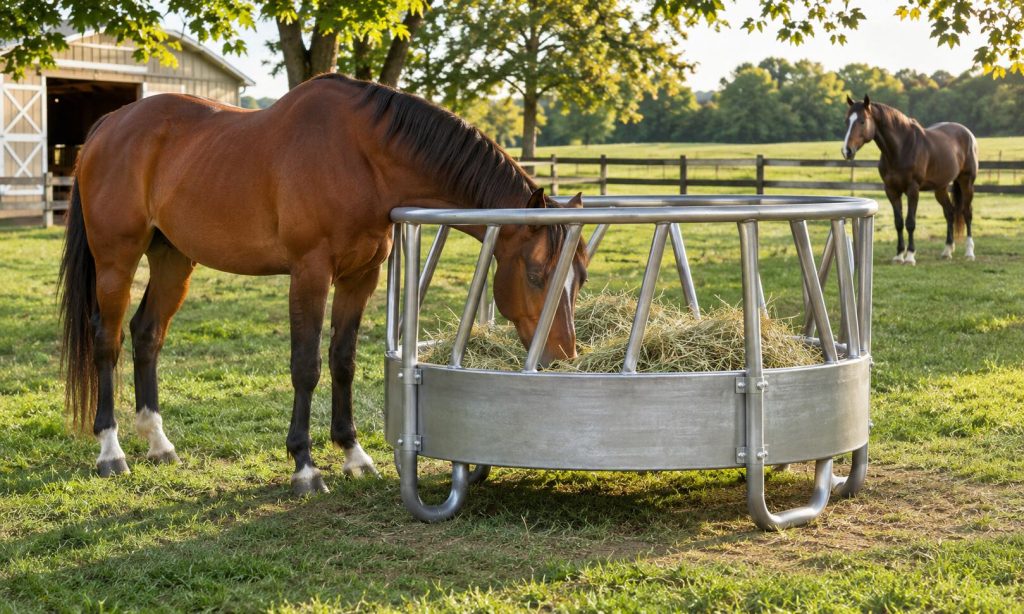
What to look for in a hay feeder for horses starts with the horse’s access to safe, suitable forage. A feeder can keep hay away from mud, reduce waste, and simplify daily chores. Yet a poorly planned feeding station can create different problems: trapped limbs, crowding, spoiled hay, or inaccessible meals for timid animals. The most useful feeder is one that fits the horses, the space, and the way you deliver hay.
This guide explains how to assess layout, opening design, stability, cleaning, and everyday feeding behavior. If you want background on common formats, our best hay feeder for horses overview introduces rack, box, and slow-feeding designs. Here, the focus is on practical safety and management checks rather than individual models. Start by watching how your horses eat and where hay is currently wasted. Then examine the equipment against those real conditions.
Match the Feeder to How Your Horses Actually Eat
The first answer to what to look for in a hay feeder for horses is not a particular shape. It is a realistic picture of daily feeding. Count how many animals will share each station, how much hay you serve, and whether all horses approach together. A feeder with one convenient access point might work for an individual horse but create competition in a mixed group.
Look for a plan that lets quieter horses obtain their ration without being driven away. Observe the group at the beginning and end of feeding, not only when everyone is relaxed. Older, injured, or lower-ranking horses may benefit from separate feeding places. If one horse consistently misses forage, adding capacity elsewhere may solve more than increasing the size of the existing bin.
Decide Between Individual and Shared Stations
For a stall, consider whether a securely mounted rack or container preserves movement space and allows sensible cleaning. In a paddock, consider safe access around the entire feeder, footing quality, and whether horses can move away without becoming cornered. For group round-bale arrangements, our round-bale feeder safety guide explores crowding and rail design in more detail. Never assume a feeder is suitable for foals simply because adult horses use it.
Inspect Openings, Edges, and Structural Stability
What to look for in a hay feeder for horses includes every point where a muzzle, jaw, hoof, halter, or leg could become trapped. Examine bar spacing, gaps beneath panels, corners, hinges, and any exposed fasteners. There is no single dimension that makes every opening safe for every horse. Size, age, and behavior matter. Look for smooth finishes and covered edges instead of sharp sheet metal or projecting hardware.
A feeder must remain stable when animals lean, pull hay, or nudge it. Check the manufacturer’s installation instructions, anchoring points, and the support surface. A heavy structure can still move on uneven ground. A wall-mounted rack can loosen if installed into an inadequate surface. What to look for in a hay feeder for horses therefore includes the strength of its actual installation, not just its published weight or material thickness.
Check for Snag and Entanglement Hazards
Loose wire, torn netting, broken welds, exposed screws, or unstable lids need correction before use. Be especially careful with hay nets and hanging attachments if a horse paws, chews ropes, or wears a halter in turnout. Place equipment according to safe manufacturer guidance and barn-specific advice. FYI, a tidy photograph cannot show how a curious horse might interact with an opening when nobody is watching.
Confirm Safe Placement and Footing
Place feeding points where water and mud will not collect. Leave room for turning and avoiding other horses. Keep access routes clear for both animals and people carrying hay. Avoid placing a movable feeder where it could be pushed against a gate or fence opening. In winter, ice can change an otherwise acceptable location into a slipping risk. Check conditions throughout the season.
Choose a Design That Supports the Forage Plan
A hay feeder should deliver the correct forage, not determine the horse’s nutritional needs. University of Minnesota Extension advises providing harvested forage in ways that limit direct feeding from dirty ground. Its research also shows that feeder design can influence hay waste. Those findings support thoughtful management, but they do not mean any feeder can compensate for moldy hay, an unsuitable ration, or poor storage.
When considering what to look for in a hay feeder for horses, distinguish waste control from deliberate restriction. What to look for in a hay feeder for horses also involves how easily you can remove spoiled or leftover feed. Some slow-feed arrangements increase the time required to consume a hay meal. That may serve a management goal, but the horse still needs adequate forage and reliable access. Discuss substantial intake restrictions with a veterinarian or qualified equine nutrition professional. Estimate forage needs separately from the volume a feeder happens to hold.
Assess Hay Format and Loading
Loose small-bale hay, flakes, square bales, and round bales call for different equipment. Check whether a feeder accepts the actual hay you use without forcing it into a narrow compartment or leaving dangerous strings and net wrap. Remove baling twine and other packaging materials before offering hay. Make sure people can reload the feeder without climbing into an unsafe enclosure or reaching beneath moving parts.
Calculate Access, Not Just Capacity
A large advertised capacity tells you little about whether every horse can feed comfortably. Watch the animals rather than assuming maximum volume solves competition. Our guide to estimating daily hay portions for horses explains weighing forage and accounting for individual needs. Record what was offered, what was consumed, and what became waste. Capacity becomes useful only after the feeding plan is sound.
Keep Hay Clean and Inspect It Before Feeding
Discard hay with visible mold or suspicious spoilage. A feeder should not become a storage bin for wet, decomposing leftovers. Provide drainage or protect the feeding station from weather as appropriate. University extension guidance emphasizes maintaining hay quality and avoiding moldy forage. Plan where uneaten hay will go, how you will remove it, and how you will keep water from accumulating around the structure.
Compare Cleaning Effort and Long-Term Durability
What to look for in a hay feeder for horses also includes the daily chore of removing dust, scraps, and droppings. Choose a design that permits safe access to all surfaces. Narrow corners, enclosed bases, and immovable grates can trap wet material. If regular cleaning requires dismantling several difficult fasteners, a convenient-looking feeder may become neglected over time.
Inspect whether materials withstand the actual conditions in your barn. Metal can corrode, plastic can crack, and wooden edges can splinter. None is automatically suitable without checking its design and condition. A feeder that can be inspected from the outside and cleaned without excessive reaching is often easier to manage consistently. IMO, ordinary maintenance convenience deserves more attention than decorative details.
Build a Simple Inspection Routine
At each feeding, remove contaminated hay and notice changes in how horses approach. Periodically examine welds, bolts, nets, anchors, edges, and drainage. After storms or a hard freeze, inspect the base and surrounding footing. Repair or remove damaged equipment promptly. If you also use nets, the separate article on cleaning and maintaining horse hay nets covers their distinctive wear points.
Test the Setup Before Making It Routine
Even after careful selection, what to look for in a hay feeder for horses remains an observation question. Introduce a new station calmly and watch each horse approach, reach, withdraw, and eat. Confirm that no animal gets caught on the structure and that quieter group members have access. Do not leave a questionable setup unattended because it appeared stable for a few minutes.
Measure waste and feeding time over several normal days, while keeping the ration appropriate. Note whether the hay becomes soaked or dirty, whether refilling is practical, and whether horses crowd the feeder. A pattern of weight loss, feed refusal, or aggressive competition calls for management changes and professional advice. The feeder is a tool within a larger welfare plan, not a substitute for one.
Questions to Record During the Trial
Can each horse reach hay without stretching awkwardly or pushing through a narrow gap? Are there loose edges after normal use? Is the footing safe by morning? Does the structure remain steady? Are the horses eating enough suitable forage? Revisit the answers after adding or removing animals from the group. These observations provide a more useful comparison than appearance alone.
Frequently Asked Questions
Owners often want a single feeder size or material that works in every stable. The better choice depends on hay format, individual horses, and site conditions. These answers clarify common practical concerns.
Keep inspecting any feeding arrangement after installation. If an animal appears injured, cannot access forage, or shows signs of choking, stop normal feeding and contact a veterinarian promptly.
Is a hay feeder better than feeding directly on the ground?
It can reduce waste and dirty forage in many setups. The feeding height, access, stability, and safety of the actual design still matter.
Do slow-feed hay nets work for every horse?
No. Feeding behavior, dentition, mobility, and safe placement can affect suitability. Ensure enough forage remains available and review special needs professionally.
How many horses can use one feeder?
No universal number applies. Observe whether every horse feeds without persistent crowding or exclusion, and add separate access points when needed.
Are metal feeders always more durable?
Not necessarily. Construction quality, corrosion, fasteners, anchoring, and routine inspection affect longevity more than the material label alone.
How often should I clean a hay feeder?
Remove wet or dirty leftovers when noticed and inspect during daily feeding. Set a deeper cleaning schedule suited to the design and conditions.
Final Words
What to look for in a hay feeder for horses comes down to safe access, sound construction, appropriate forage delivery, and realistic upkeep. Start with your horses’ behavior and feeding needs. Inspect openings, edges, stability, footing, and cleaning access. Then monitor the installation under real conditions. A feeder that saves hay but excludes a timid horse or traps moisture has missed the point.
For a broader introduction to feeder types, revisit our best hay feeder for horses guide. Apply the checks here to the actual structure and use. What to look for in a hay feeder for horses is best answered by a safe, observed feeding routine that supports every animal in the group.









