
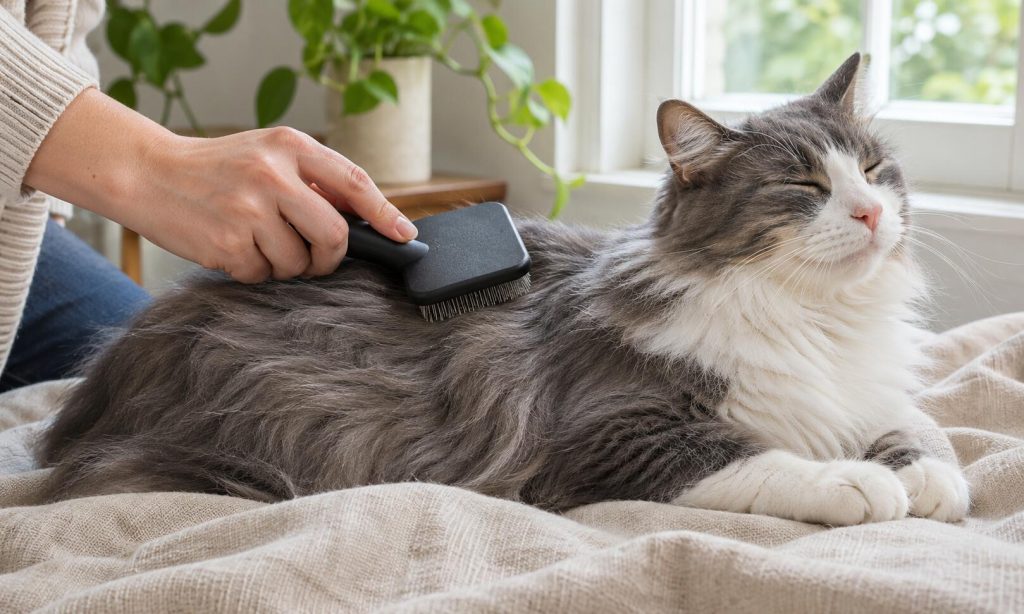
A medium-haired cat can look perfectly tidy on the surface while loose undercoat gathers beneath the outer fur. A well-chosen brush should lift that hair without tugging, scraping skin, or making grooming feel like a wrestling match. Finding the best brush for medium hair cat coats depends on your cat’s coat density, tolerance for grooming, and whether loose fur or tangles cause the bigger problem.
This guide compares seven distinctly useful tools, from gentle rubber grooming to metal combs and self-cleaning slickers. We focus on what each design can realistically do, what it cannot do, and how to use it without causing discomfort. The right choice often combines one everyday brush with a comb that checks for hidden tangles. Start with short, calm sessions and let your cat set the pace.
Quick Picks for Medium-Haired Cats
These seven choices cover different grooming jobs. Match the tool to your cat’s coat and comfort rather than choosing only by the amount of fur it removes.
| Product | Best For | Key Advantage | Buy | |
|---|---|---|---|---|
| Aumuca Cat Brush | Everyday loose fur | One-click pin cleaning | View on Amazon | Jump to Review |
| Coastal Pet Safari Soft Slicker | Gentle regular brushing | Compact slicker format | View on Amazon | Jump to Review |
| SleekEZ Cat Brush | Loose surface shedding | Distinctive shedding edge | View on Amazon | Jump to Review |
| KONG Rubber Brush for Cat | Brush-shy cats | Simple flexible rubber design | View on Amazon | Jump to Review |
| Cafhelp Two-Pack Metal Combs | Checking for tangles | Two comb sizes | View on Amazon | Jump to Review |
| Swihauk Self-Cleaning Slicker | Quick cleanup | Push-button hair release | View on Amazon | Jump to Review |
| KALAMANDA Slicker and Comb | Two-tool starter setup | Brush plus separate metal comb | View on Amazon | Jump to Review |
1. Aumuca Cat Brush for Shedding — Best Everyday Slicker
What We Like
- Rounded protective pin tips
- One-click fur release
- Angled metal pins
- Hanging loop for storage
What We Don’t Like
- Pin brush needs a light hand
- Not a substitute for a tangle check
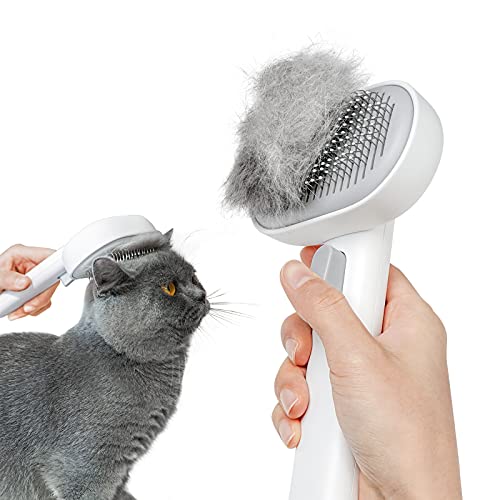
The Aumuca slicker is a starting point when a medium-haired cat sheds regularly but resists long grooming sessions. Its metal pins bend through the coat rather than acting like stiff teeth on a comb. The listing describes rounded protective tips and an angled pin design, both intended to make contact more comfortable. That does not mean every cat will welcome the tool. Begin along the shoulders or back and move in the direction of hair growth. Short passes work better than pressing the brush down to reach every layer at once.
One useful feature is the release button. After a few passes, the backing plate pushes collected fur away from the pins so you can lift it off. That is convenient during seasonal shedding, especially when you would otherwise pause to pull hair from a slicker by hand. The brush uses a hanging loop for storage, which also helps protect the pins from being bent in a crowded grooming drawer. A medium coat may have different lengths around the chest, belly, and back legs. Adjust pressure and stroke length in each area instead of applying a single routine everywhere.
A slicker can collect loose fur effectively, but it does not reliably tell you whether a knot remains near the skin. After brushing, glide a separate metal comb gently through the coat. If it catches, stop and inspect the coat rather than pulling. Cats with fine skin or established mats need particularly cautious handling. For an easier introduction to grooming, see our guide to using a brush in a low-stress cat grooming routine. Owners who can manage several brief sessions may find this design more useful than one long weekly effort.
My Recommendation
Choose the Aumuca when daily loose-fur removal matters most and easy cleanup will help you stay consistent. Keep pressure light; its pins are not intended to tear through mats. Pair it with a rounded metal comb for a final check. If your cat dislikes pin brushes altogether, start with the softer KONG rubber option instead.
2. Coastal Pet Safari Soft Slicker Brush — Best Compact Slicker

What We Like
- Cat-specific soft slicker
- Stainless steel pins
- Compact brush head
- Comfortable everyday handle
What We Don’t Like
- No push-button cleaning plate
- May snag existing dense knots
Coastal Pet’s Safari soft slicker follows a straightforward grooming approach: a compact head, stainless steel pins, and a handle you can guide. For a medium-haired cat, that simplicity can be an advantage. You can work in short sections without a bulky rake getting in the way. The listing identifies the brush as suitable for regular shedding and loose hair removal. Start on the upper back, then gently move toward the sides. Avoid dragging it across thin-skinned areas, and never keep brushing one spot when your cat becomes restless. A few successful strokes are better than finishing the entire coat by force.
A compact slicker suits cats whose outer coat is smooth yet hides fluff around the shoulders. It can lift dead hair before that fur collects in bedding or becomes tangled with longer strands. Unlike a self-cleaning model, you clear the pins manually. This adds a small maintenance step, but it also leaves fewer moving parts. Bent, broken, or rough tips can irritate skin and are a good reason to replace a brush. Wash or clean the tool according to its supplied directions and dry it before storing.
The main limitation is the same one shared by other slickers: loose hair and tight mats are different problems. A dense knot close to the body requires inspection and sometimes professional grooming. Do not use repeated forceful brush passes to flatten or break it apart. Follow the session with a comb only where the coat is already loose. The Safari model makes sense when you want an uncomplicated brush and are willing to remove the collected hair yourself. If cleaning convenience is your priority, a retractable-pin model may fit your routine better.
My Recommendation
I would shortlist the Safari soft slicker for a cooperative cat with light-to-moderate shedding and a coat that is not heavily matted. Its modest head makes controlled strokes easier. Plan to clean the pins by hand and use a comb for hidden tangles. Choose a rubber brush first if your cat dislikes wire-pin contact.
3. SleekEZ Cat Brush for Shedding — Best for Loose Topcoat Fur

What We Like
- Made for shedding removal
- Works across coat lengths
- No retractable pin mechanism
- Also lifts hair from fabrics
What We Don’t Like
- Edge needs careful pressure
- Cannot untangle tight mats
SleekEZ takes a different approach from a conventional slicker. Its grooming edge is designed to catch loose hair as you draw it along the coat. The current listing explicitly describes use on short, medium, and long coats, making it relevant to cats whose hair length falls between those categories. The design can be appealing when the main goal is removing shedding fur rather than styling the coat. Start with a small area on the back. Apply very little pressure and check your cat’s response before continuing. The edge should travel over the coat; it should never be used to scrape at the skin.
This tool also has a household use beyond the cat itself. The manufacturer describes lifting pet hair from fabric surfaces such as bedding and cat trees. That can make it helpful during heavy shedding periods when fur seems to gather everywhere. However, what works on upholstery may not be comfortable on an individual cat. Avoid assuming that a tool should remove a dramatic amount of hair each time. A healthy coat has both attached and loose strands, and overgrooming can create irritation. Keep sessions short, particularly on thinly coated body areas.
For medium-haired cats with frequent small tangles, a shedding edge is not enough by itself. It does not separate and examine individual strands in the way a comb can. Use it only over coat that is already free of tight knots. If your cat flinches, twists away, or shows redness, stop immediately. Consider a softer tool or speak with a groomer about the coat’s condition. SleekEZ is most useful as a targeted shedding aid, not an all-purpose replacement for brushing, combing, or gentle handling.
My Recommendation
SleekEZ is worth considering for the household that primarily wants to catch loose coat hair and clean fur from soft furnishings. Use a gentle touch and avoid delicate or knotted areas. I would not make it the only grooming tool for a cat with a dense, easily tangled undercoat. A comb remains important.
4. KONG Rubber Brush for Cat — Best Gentle Introduction

What We Like
- Flexible rubber contact
- Cat-specific compact size
- No metal pin tips
- Simple handheld design
What We Don’t Like
- Limited reach into dense undercoat
- Not built for detangling
Some cats approach a metal slicker with suspicion. A rubber grooming brush offers a different starting experience, especially when the cat enjoys ordinary stroking but dislikes pointed tools. The KONG rubber brush for cats is a compact handheld item rather than a rake or fine-tooth comb. Its flexible contact surface may be easier to introduce around the shoulders and back. Begin without any grooming pressure: let the cat sniff the brush, give a short stroke, and reward relaxed behavior. A cat who walks away has told you the session is over, and that choice is worth respecting.
Rubber tools generally suit loose outer fur and the sensation of light massage better than hidden coat separation. This distinction matters for medium hair. A brush may feel pleasant and still leave compacted fluff near the legs or chest. Use the KONG design to create a calm routine and pick up surface hair, then gradually introduce a smooth metal comb if your cat permits it. The current Amazon item provides basic product identity and dimensions, but it does not establish how well the brush performs on every coat texture. Treat individual tolerance as the deciding factor.
Do not force the rubber nubs through a knot or use circular scrubbing that twists long strands together. Gentle strokes following hair growth are a better starting point. If loose hair does not come out easily, that is not automatically a failure; some cats shed less at certain times or have finer coats. For nervous pets, the companion article on caring for cats that dislike brushing offers additional handling ideas. The rubber brush is a comfort-first choice, not a full detangling kit.
My Recommendation
Start with the KONG rubber brush when your cat is new to grooming, easily startled, or unhappy with pin tips. Its biggest strength is approachable contact, not deep shedding removal. Build cooperation first, then use a metal comb for short checks if needed. Cats with painful mats should see a professional rather than endure repeated home brushing attempts.
5. Cafhelp Two-Pack Stainless Steel Combs — Best Tangle Check
What We Like
- Two useful comb lengths
- Rounded metal tooth ends
- Durable stainless steel build
- Helps locate hidden snags
What We Don’t Like
- No broad brush pad
- Unforgiving if pulled through knots
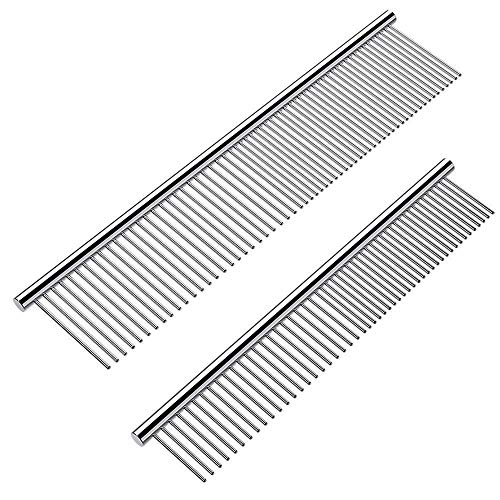
A comb tells you something a slicker may not: whether the coat separates freely all the way through. The Cafhelp set includes two stainless steel grooming combs with rounded ends. The listing gives two lengths, approximately 6.3 and 7.4 inches, so you can use the smaller one around compact areas and the longer one on the back or sides. Metal teeth are useful for finding tangles, but that makes technique important. Hold a small section of fur near its base and begin at the free end. Never yank when the comb stops. Work gently or stop if the snag will not release.
Medium-haired cats often collect fine knots behind the ears, under the forelegs, and where the body rubs against bedding. A comb can help you notice those trouble spots before they become painful. It will not safely remove every mat. The product description mentions rounded tooth ends and corrosion-resistant construction, practical features for routine use. Its two sizes allow a handler to select a manageable tool for each area. Since the set does not include a broad brush head, it may feel slower for surface shedding across a large area.
Think of these combs as a partner to a gentle brush, not an invitation to force through dense fur. After a few light brush passes, test a small section with the comb. If it glides smoothly, move on. If it catches near the skin or the cat reacts painfully, stop and seek veterinary or professional grooming help. The guide to using brushes safely with longer-haired cats explains why patient handling matters. For a medium coat with occasional concealed tangles, this two-piece set adds a useful diagnostic step.
My Recommendation
Pick Cafhelp when hidden tangles are your main concern or when you already own a gentle brush. The two comb sizes offer flexibility, and the rounded teeth are intended for careful coat work. A comb requires more patience than a slicker. If your cat is fearful or has tight mats, avoid forcing a home detangling session.
6. Swihauk Self-Cleaning Slicker — Best Quick Fur Release

What We Like
- Push-button hair removal
- Protective plastic pin heads
- Lightweight grip material
- Built for loose-fur brushing
What We Don’t Like
- Dog-and-cat multipurpose design
- Brush head may be bulky for small areas
Swihauk combines a slicker-style grooming head with a button that pushes gathered fur away from its pins. The product is marketed for dogs and cats, and its listed features include protective plastic pin heads and a lightweight textured handle. For a medium-haired cat that sheds frequently, the convenience of fast cleanup can make small daily sessions easier to maintain. Use light strokes down the back and sides. When the head fills, clear it before continuing. Do not press harder in an attempt to pull more hair from the coat. Removing only loose fur is the sensible goal.
The rubberized grip may help you control small hand movements, but the brush is not designed exclusively for cats. Some owners may find a larger multipurpose slicker awkward around a cat’s face, belly, or narrow leg areas. That limitation is about fit rather than build quality. Use a smaller comb or simply skip those sensitive zones if your cat resists. The manufacturer’s current listing mentions metal construction and the release mechanism. It does not establish that every cat finds the head comfortable. Always inspect the tool and your pet’s skin before and during use.
A useful routine is brief and predictable: one or two minutes on a calm cat, then a break. This avoids overwhelming a cat that tolerates the tool briefly. For medium coats with tangles, follow with a gentle comb check instead of increasing slicker pressure. If you find skin redness, swelling, or a tight knot, grooming should pause until you can assess the problem safely. Swihauk is most appealing when you value the convenience of a self-cleaning head but do not need a specialized mat-removal tool.
My Recommendation
Choose Swihauk if cleaning collected fur slows down your regular grooming routine. The retractable mechanism is useful for repeated short brushing sessions. Its shared dog-and-cat design may feel large on petite cats, so compare the head size with your pet first. For precise work near tangles, use the Cafhelp combs with extra care.
7. KALAMANDA Slicker Brush and Metal Comb — Best Starter Pair

What We Like
- Brush and comb together
- Rounded slicker pin covers
- Retractable hair-release plate
- Non-slip grooming handle
What We Don’t Like
- Two tools require more storage
- Comb still needs patient handling
A two-tool kit can simplify the decision for someone who has not yet learned what their medium-haired cat needs. KALAMANDA bundles a self-cleaning slicker brush with a separate metal comb. The listing describes rounded tips on the brush pins, a release button, and a comfortable grip. Those features cover two distinct tasks: lifting loose coat hair and checking for smaller tangles. Start with the slicker on a calm area of the body. Use just enough contact to move through loose strands, and pause when the cat changes posture or tries to leave.
After brushing, use the metal comb very lightly to see whether the coat separates cleanly. This matters because a slicker can make fur look smooth while a knot remains beneath the surface. Work from the ends of hair toward the base, keeping movements short. For a cooperative cat, having both tools immediately available saves a separate purchase and helps build a consistent routine. The package does not mean every step must happen in one sitting. Some cats tolerate the slicker one day and a few comb strokes the next. Their comfort should guide the pace.
The practical tradeoff is that a kit offers versatility without replacing technique. A self-cleaning head can collect loose fur, yet it cannot safely break apart a tight mat. Likewise, a metal comb can identify a knot but may pull painfully if misused. Keep both tools clean and inspect them for bent tips. If your cat develops severe matting, contact a groomer or veterinarian. For a medium coat that is mostly easy to manage, this pair gives you both daily maintenance and a more precise follow-up without requiring a large collection of accessories.
My Recommendation
KALAMANDA is my practical starter-kit choice for owners who need both a daily slicker and a separate checking comb. Its two-tool design covers more grooming situations than a single brush. Do not force the comb through knots. If your cat already tolerates a slicker and has few tangles, a simpler one-tool purchase may be enough.
How to choose best brush for medium hair cat
The best tool depends on what your cat’s coat does between grooming sessions. Think about shedding, fine tangles, skin sensitivity, and the amount of handling your cat accepts. A sensible grooming routine is comfortable and repeatable, even when it removes less hair than a dramatic product demonstration.
Match the Brush to Coat Density and Tangles
Medium length does not tell you everything about coat density. One cat may have silky outer hair with little undercoat; another may have thick fluff near the chest and hindquarters. A slicker is often useful for everyday loose fur. A rounded metal comb gives more precise feedback about knots hidden beneath the outer coat. A rubber brush may be better for cats that dislike the feel of pins. Before buying, check whether the tool is meant for surface shedding, detangling, or massage. These jobs overlap, but they are not identical. A brush that removes plenty of loose hair may still miss a compact tangle.
Part the coat gently and look for skin redness or areas that seem tight. Never try to cut a mat out with household scissors. Cat skin can be caught surprisingly easily. When tangles are painful or close to the skin, veterinary or professional grooming is the safer next step. The article on keeping longer-haired cats comfortable between grooming sessions covers useful monitoring habits.
Check Pin Tips, Head Size, and Cleaning
Look closely at the part that touches your cat. Rounded comb teeth and smoothly finished slicker pins can make controlled grooming easier, but no design is automatically gentle when used with too much pressure. A head that feels manageable in your hand is usually preferable to a very large brush around narrow body areas. Self-cleaning slickers save time when loose fur fills the head quickly. Plain brushes have fewer moving components and may be simpler to wash or inspect. Keep any product dry and clean according to its instructions. Replace a tool when its tips become rough, bent, or damaged.
Prioritize Comfortable Sessions Over Maximum Fur Removal
Introduce the brush while your cat is relaxed. Let them investigate it, make a few gentle strokes in the direction of hair growth, then pause. A treat, praise, or quiet rest can help build a positive routine. Look for ears flattening, skin twitching, tail thumping, or attempts to escape. These are reasons to stop, not signals to restrain the cat more firmly. Grooming frequency varies with coat texture and seasonal shedding. Many medium-haired cats benefit from frequent brief sessions rather than one intense weekly session. If your cat suddenly becomes unable or unwilling to groom, consult a veterinarian. Pain, illness, or mobility changes may be involved.
Frequently Asked Questions
These quick answers address the most common decisions about brushing a medium coat safely and comfortably.
How often should I brush a medium-haired cat?
Start with several short sessions each week and increase frequency if loose hair or tangles build up. Adjust for shedding season and your cat’s comfort. Do not keep brushing irritated skin.
Is a slicker brush or metal comb better?
They have different jobs. A slicker can collect loose hair across a broad area. A comb helps find smaller tangles under the topcoat. Many cats benefit from both, used gently.
Can a grooming brush prevent hairballs?
Removing loose fur may reduce the amount swallowed during self-grooming, but brushing cannot guarantee that a cat will never form hairballs. Repeated retching, vomiting, or appetite changes warrant veterinary advice.
Should I brush out a tight mat myself?
Do not pull, scrape, or cut close-to-skin mats. They can be painful, and scissors can injure a cat’s thin skin. Ask a veterinarian or qualified groomer to assess difficult matting.
What if my cat dislikes every brush?
Pause and introduce a softer tool in very short sessions. Let the cat leave freely and reward calm participation. A sudden change in tolerance, especially with tenderness, deserves a veterinary check.
Final Verdict
For most cooperative medium-haired cats, the Aumuca slicker is a useful everyday starting point. The Coastal Pet Safari offers a simpler compact alternative, while the KONG rubber brush is worth considering for brush-shy cats. Add a rounded comb when hidden tangles are the real challenge. Whatever you choose, gentle technique matters more than removing the greatest amount of hair in one sitting.
Affiliate disclosure: This article contains Amazon affiliate links. If you purchase through them, PetAdvisorPro may earn a commission. As an Amazon Associate I earn from qualifying purchases.









