
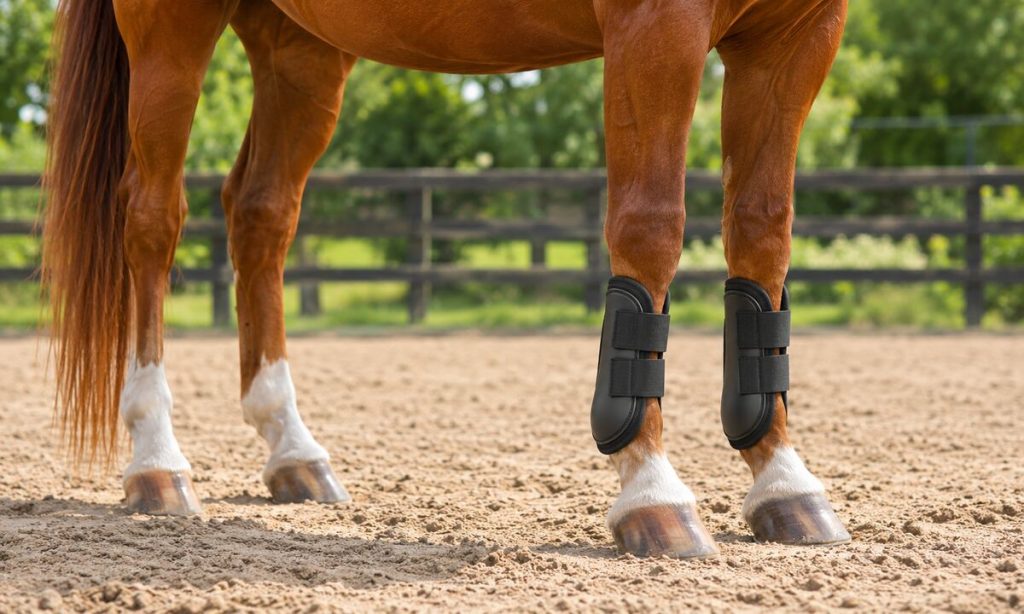
An accidental brush from one hoof against another leg can happen during schooling, turns, and trail riding. Splint boots are designed to add a protective layer around parts of a horse’s lower leg, but no boot guarantees injury prevention or corrects poor movement mechanics. The best splint boots for horses should fit securely without rubbing, protect the intended area, and avoid unnecessary heat or bulk.
We compared seven distinct front-leg splint and broader sport-boot designs, including vented options and four-piece sets. Some products include fetlock or suspensory-style support features rather than serving as simple splint guards. Match protection to the activity and your veterinarian’s or trainer’s advice. Check measurements carefully and remove boots after work to inspect skin, heat, and fit.
Quick Picks
These seven picks vary in coverage, ventilation, fastening style, and whether they are sold as front pairs or four-leg sets.
| Product | Best For | Key Advantage | Buy | |
|---|---|---|---|---|
| Professional’s Choice Competitor Front Splint Boots | Basic front cannon protection | Stretch neoprene with two straps | View on Amazon | Jump to Review |
| Classic Equine AirWave Classic Splint Boots | Vented dedicated splint protection | Perforated foam and leather splint pad | View on Amazon | Jump to Review |
| Wandrola Sport Splint Boots Four-Piece Set | Front-and-hind schooling protection | PU shell with neoprene lining | View on Amazon | Jump to Review |
| Harrison Howard Four-Pack Horse Sport Boots | Contoured lower-leg sport coverage | Multi-strap fetlock wrap | View on Amazon | Jump to Review |
| Tough1 Economy Vented Front Sport Boots | Budget front sport protection | Neoprene with suspensory sling strap | View on Amazon | Jump to Review |
| SuyiKrxn Four-Pack Neoprene Splint Sport Boots | Flexible four-leg coverage | Four-strap neoprene wrap design | View on Amazon | Jump to Review |
| Professional’s Choice 2XCOOL Sports Medicine Boots | Lightweight breathable sport coverage | Neoprene-free cooling-oriented fabric | View on Amazon | Jump to Review |
Professional’s Choice Competitor Front Splint Boots

- Splint-boot-specific design
- Two secure closures
- Four-way stretch neoprene
- Front pair included
- Simple daily cleaning
- Single nominal size
- Heat retention needs monitoring
Professional’s Choice Competitor is a straightforward pair of front splint boots intended to protect the lower leg during regular work. The listing describes four-way stretch neoprene with two hook-and-loop fasteners and a stated height of about nine and a half inches. Its simple construction may appeal to riders who need a targeted guard rather than a bulky wrap around the fetlock. However, a universal-size label should not be mistaken for a universal anatomical fit, particularly on unusually fine or substantial legs.
Measure the horse’s cannon circumference and the desired protected area before ordering. The two straps should close evenly without pulling the boot out of alignment or creating tight bands. Verify the reinforced section sits on the correct side and does not catch when the horse moves. Watch the first few minutes at walk and trot, then pause to check for twisting or slipping. Neoprene is flexible, but that does not mean it should be stretched excessively to force a fit.
The listing says the material is easy to maintain and does not absorb sweat in the same way as some fabrics, yet warmth and moisture can still build up beneath a closed boot. Remove it after work, inspect skin and hair, and clean off sand or dried sweat. This is a sensible low-complexity front-leg option for a horse that actually brushes the cannon area. It does not provide guaranteed tendon protection or make a poorly fitted boot safe through tighter fastening.
My Recommendation
I would start with the Competitor when the horse needs simple front splint coverage and the advertised dimensions fit correctly. The two-strap design is easy to inspect. I would be cautious about the one-size claim on unusually small or large cannons and always check the legs after an initial short session.
Classic Equine AirWave Classic Splint Boots

- Purpose-built splint guard
- Breathable perforated body
- Shock-absorbing pad lining
- Several size choices
- Front-leg format
- Fit must follow chart
- Ventilation is not heat-free
Classic Equine AirWave Classic is a dedicated front splint boot with a perforated foam body and a leather splint pad backed by impact-absorbing lining. The ventilation concept makes it worth comparing for horses that heat up quickly during schooling. Unlike a plain neoprene wrap, the boot emphasizes a more defined protective section. The manufacturer lists small, medium, and large sizes, which may allow a closer match than one-size products, provided the rider measures the legs accurately.
Use the brand’s measurement guidance and check both the length and circumference, because a boot can fit around the leg while extending too far toward a joint. Position the leather guard correctly over the vulnerable brushing area and close the fasteners without uneven tension. A short trial at walk, trot, and turns can reveal whether the boot rotates or rubs. Perforations may help airflow, but intense work and hot weather still call for monitoring leg temperature and sweat beneath the boot.
Inspect the leather splint patch for wear and the foam structure for tearing or loss of resilience. Follow the maker’s cleaning instructions; never store boots with damp sand pressed into their interiors. This model is particularly relevant to riders seeking a dedicated splint guard that considers ventilation. Its protective coverage is not a medical guarantee. If a horse has pain or a tendon concern, consult a veterinarian rather than relying on a thicker guard to manage the problem.
My Recommendation
AirWave is my first comparison for a dedicated splint boot with ventilated construction and several sizes. I like the distinct reinforced strike area, but it must align correctly on the horse. Use a short trial and remove the boots promptly afterward to check warmth, skin, and pressure points.
Wandrola Sport Splint Boots Four-Piece Set

- Four boots in set
- Hard protective PU shells
- Soft inner neoprene
- Hook-and-loop fasteners
- Front and hind coverage
- Sizing based partly on height
- Shell placement requires care
The Wandrola Sport Splint set includes four boots for front and hind lower-leg protection. Its listings describe a sturdy PU outer shell and a softer neoprene lining, offering a different protection approach from flexible splint guards. This can interest a rider who has observed interference on more than just the front legs. The selected size guide references horse height ranges, but those are broad estimates; actual leg measurements and how the shell rests against the cannon are essential.
A hard shell needs accurate positioning so the intended protective area covers potential strikes without rubbing the tendons or impeding fetlock motion. Use the supplied front and hind pieces only on their designated legs, and fasten each strap according to instructions. Observe several minutes of movement to check that the shell stays centered. A boot that rotates can turn a protective edge into a friction point. Do not assume the largest shell provides the most protection if it extends into a joint or shifts during work.
The manufacturer promotes easy wipe-down care, which is useful after a muddy schooling day. Check inside the neoprene for grit and inspect the shell for cracks after impacts. Remove boots promptly following exercise to monitor heat or pressure marks. This set can be practical for a horse whose training genuinely warrants four-leg coverage, but it may be more gear than necessary for a horse with occasional minor front-leg brushing. Match the design to the specific activity and fit.
My Recommendation
I would consider Wandrola when you need front-and-hind coverage and prefer a structured shell over a plain neoprene wrap. Check actual cannon measurements instead of relying solely on horse height. Correct shell orientation and a short movement trial are critical. Choose a front-only option if that is all the horse requires.
Harrison Howard Four-Pack Horse Sport Boots

- Four-piece set
- Contoured fetlock coverage
- Breathable neoprene design
- Several secure straps
- Front and hind use
- More straps to adjust
- Can run warm during long work
The Harrison Howard four-pack is a broader horse sport-boot system intended for both front and hind legs. Its contoured lower section and multiple straps extend coverage beyond the simplest front splint guard. The listing describes neoprene construction, a shock-absorbing splint area, and a fetlock-supportive wrap profile. These elements make it worth comparing for riders who need extensive lower-leg coverage, but they do not prove medical support or protection against internal soft-tissue injuries.
Multiple fastening points can help adjust the boot to the leg, yet each strap also creates a potential pressure point when overtightened. Follow the sizing chart, identify the correct boot for each leg, and position the lower section without impeding flexion. Ask a trainer to check how the horse moves in these boots at walk, trot, and turns. If the wrap shifts downward, twists, or brushes the opposite leg, stop and correct the fit. More coverage is only useful when the horse remains comfortable.
Clean neoprene interiors thoroughly and dry them between sessions. Inspect hook-and-loop material after every use because bedding and hair can weaken the grip. Check the fetlock region and cannon for heat, rubbed hair, or tenderness immediately after removing the boots. This four-pack is most relevant to owners who want a consistent set across several legs. For a horse whose risk is limited to one front cannon, a simpler splint boot may reduce unnecessary bulk and warmth.
My Recommendation
Harrison Howard makes sense when your horse genuinely needs broad front-and-hind sport coverage. I like the contoured design, but more straps mean more opportunity for fit mistakes. Measure each leg, avoid excessive tension, and remove boots after work. Do not interpret fetlock-support marketing as treatment for an injury.
Tough1 Economy Vented Front Sport Boots

- Front pair included
- Neoprene construction
- Quick-grip closures
- Contoured fit darts
- Lower sling strap
- Sport boot rather than simple splint
- Size options need verification
Tough1 Economy Vented Front Sport Boots are a budget-oriented option with neoprene, quick-grip closures, contoured darts, and a lower suspensory-style sling strap. The selected product is a purple medium front pair. Compared with a minimalist splint boot, this design wraps additional lower-leg structures and may interest riders who prefer a sport-boot shape. It should not be treated as a substitute for medical support, and the word vented does not eliminate the need to monitor heat during exercise.
The darts are intended to improve how the material follows the leg, but correct size remains essential. Check the circumference and length against the manufacturer’s chart and place the sling strap exactly as directed. A strap positioned incorrectly can rub or pull the boot out of alignment. Test the horse at the intended schooling pace and inspect the boots after several minutes. A sport wrap that shifts downward or rotates is not safer simply because it has more closures. Do not force a medium size onto a leg outside the range.
The neoprene and quick-grip straps are straightforward to handle in a busy barn, provided they are cleaned after each use. Remove dirt and hair from the hook-and-loop surface to maintain grip, and let the boots dry fully before storing. This can be a practical comparison for someone seeking a basic front sport-boot set. If the horse only needs a narrowly reinforced splint area, a more targeted pair may be a better choice with less coverage and potential heat.
My Recommendation
I would consider Tough1 Economy Vented if a front sport boot with a lower sling fits the horse and the activity. The simple closures are convenient, but their placement matters. Measure first and monitor warmth after riding. For only minor cannon brushing, the more targeted Competitor or AirWave style may be sufficient.
SuyiKrxn Four-Pack Neoprene Splint Sport Boots

- Four boots in package
- Flexible neoprene material
- Multiple hook-and-loop straps
- Front and hind dimensions listed
- Washable protective format
- Fit differs across legs
- Heavy wrapping may trap heat
The SuyiKrxn four-pack uses flexible neoprene wraps with multiple hook-and-loop straps and separate front and hind pieces. The listing identifies approximate front and hind lengths, which may help owners compare the coverage against their horse’s cannons. This is a softer protective system than a rigid PU-shell boot. It can be useful for a horse that brushes in several locations, but a broad wrap alone cannot prevent all lower-leg injuries or correct the underlying way the horse travels.
Four straps can spread closure along the leg, yet each needs consistent, appropriate tension. Measure both front and hind legs independently, because one-size assumptions often fail on horses with substantial differences in limb shape. Position the wraps smoothly without wrinkles and verify that the lower edges do not catch during flexion. After fitting, lead the horse and watch from all sides before riding. A wrap that twists or slides should be adjusted or replaced, not tightened until the leg is compressed.
Neoprene requires regular washing and complete drying to prevent grit and sweat from sitting against the skin. Inspect the hook-and-loop closures after muddy work, and remove the boots promptly after exercise to check warmth. This is an accessible comparison for riders seeking multiple flexible guards in one purchase. Its value depends on whether the dimensions truly match each limb and whether the horse needs all-four coverage. Some horses will be more comfortable using fewer or lighter boots.
My Recommendation
SuyiKrxn is worth comparing if you need a flexible four-leg set and can confirm its front and hind dimensions fit. I would be meticulous about strap tension and watch for neoprene heat buildup. If only one pair of legs needs protection, avoid adding unnecessary wraps merely because four boots are supplied.
Professional’s Choice 2XCOOL Sports Medicine Boots
- Neoprene-free construction
- Moisture-wicking liner
- Lightweight flexible material
- Durable stretch strap patch
- Front pair format
- Not a simple splint-only guard
- Cooling claims vary by conditions
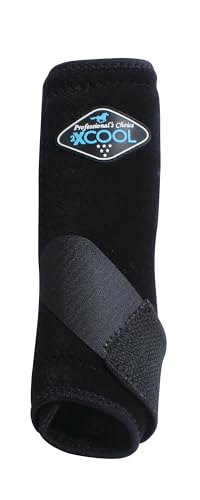
Professional’s Choice 2XCOOL Sports Medicine Boots use a neoprene-free, lightweight construction and a moisture-management textile marketed for improved cooling. The selected listing is a medium black two-pack. This makes the product distinct from many thick neoprene lower-leg wraps, particularly for riders concerned about retained warmth during active schooling. However, it is a broader sport-boot design rather than a narrow splint guard, and no fabric can guarantee a cool limb in every temperature or level of exercise.
The company describes stretch materials and a reinforced strap patch, features worth examining for durability and movement. Verify the actual boot size against cannon measurements and secure it without compressing the leg. A broad protective wrap should follow the limb without slipping, rotating, or interfering with fetlock movement. After a short test at walk and trot, remove it and compare skin temperature and contact areas. Cooling claims should be judged against how your own horse responds, not as medical assurances.
Moisture-wicking performance works best when fabric is kept clean. Follow the specific wash instructions and inspect the liner for trapped sand, hair, and worn patches. Remove the boots promptly after work, even if the leg feels less sweaty than with another design. This model is a helpful alternative for someone seeking more ventilation while retaining sport-boot coverage. Its suitability still depends on where the horse actually needs impact protection and how closely the boot fits.
My Recommendation
2XCOOL is my lightweight sport-boot comparison for riders prioritizing breathability over traditional neoprene construction. I would choose it only when its broader coverage matches the horse’s needs. Measure carefully, check that the straps stay centered, and inspect heat and rubbing after use despite the cooling-oriented marketing.
How to choose best splint boots for horses
When evaluating the best splint boots for horses, focus first on why your horse needs protection. The intended activity, leg measurements, and time spent wearing the boots matter more than decorative color or a generic claim of support.
Match the protection style to the actual risk
Splint boots commonly aim to protect the inside of the cannon area from brushing strikes. Sport boots may wrap more of the lower limb or fetlock, and tendon boots use different reinforcement and coverage. Do not assume broader coverage always means safer movement. A horse with a known injury, swelling, lameness, or abnormal gait needs a veterinarian’s assessment before protective gear is selected. Boots can sometimes reduce minor impact exposure, but they do not strengthen an injured tendon or prevent every strain. Choose front-only or all-four-leg sets according to where actual interference occurs. Ask a knowledgeable trainer to observe the horse moving, and check competition rules if using boots in a regulated event. The product should match its intended use—schooling, turnout, or specific competition—without restricting normal joint motion.
Measure each leg and fit the straps safely
Use the manufacturer’s chart to measure the relevant cannon circumference and vertical coverage. Do not rely only on breed, horse height, or a description such as medium. Front and hind legs can need different sizes, and some four-pack sets use different shapes for each pair. Place the boot so the reinforced area covers the target side without pressing into the tendons or fetlock. Fasteners should close evenly and securely but not constrict circulation; follow each maker’s guidance on strap direction and tightness. Check that the boot does not rotate, slide downward, wrinkle behind the leg, or catch on the opposite limb. Have a trainer demonstrate correct placement if you are new to boots. Fit again after a few minutes of movement because some materials settle or stretch under use.
Control heat, moisture, wear, and riding duration
Close-fitting neoprene can retain warmth and sweat, particularly during hot weather or long work. Vented designs and lighter textiles may allow more airflow, but no boot is completely heat-free. Remove protection promptly after riding, check for rubbed hair or tender skin, and let legs cool naturally. Clean out sand and grit before the next session; trapped particles can cause friction even in an otherwise well-sized boot. Wash and dry according to the product instructions so hook-and-loop straps remain effective. Inspect hard shells, stitching, splint guards, and elastic for cracks, deformation, or loss of grip. Rotate or replace worn gear before its protective surface fails. Some horses perform comfortably without boots when no brushing risk is present. The decision should be specific to the horse and task rather than automatic every time you ride.
Frequently Asked Questions
Here are practical answers to the questions owners often ask before choosing.
What is the difference between splint boots and sport boots?
Splint boots typically focus on cannon-area brushing protection. Sport boots may cover more of the lower limb or fetlock and use different materials and strap patterns.
Do splint boots prevent tendon injuries?
No boot can guarantee prevention of tendon injury. Protective boots may reduce some external impacts, but lameness or tendon concerns require veterinary evaluation.
Can splint boots be worn on the hind legs?
Only if the particular product is designed and sized for hind use. Front and hind leg anatomy differs, and some products are sold as front-only pairs.
How tight should horse splint boots be?
They should follow the maker’s fit guidance, stay secure, and avoid constriction. If the boot twists, rubs, or leaves concerning pressure marks, remove it and reassess sizing.
Should I leave splint boots on all day?
Usually they are used for a specific activity and removed afterward. Prolonged wear can trap heat, sweat, or grit; follow veterinarian and manufacturer guidance for special situations.
Final Verdict
The best splint boots for horses depend on leg shape and the risk being addressed. Professional’s Choice Competitor is a straightforward front splint pair, while Classic Equine AirWave emphasizes ventilation and a dedicated splint pad. Wandrola and Harrison Howard provide four-leg protection sets, and Tough1 Economy Vented offers another front sport-boot format.
SuyiKrxn supplies a flexible four-pack, while Professional’s Choice 2XCOOL is a broader sports-medicine style with moisture-management features. None replaces correct training, hoof balance, or veterinary care. Measure each leg, use boots for the intended activity, and inspect for rubbing and excessive warmth immediately after exercise.
Affiliate disclosure: This article contains Amazon affiliate links. If you purchase through them, PetAdvisorPro may earn a commission. As an Amazon Associate I earn from qualifying purchases.









