
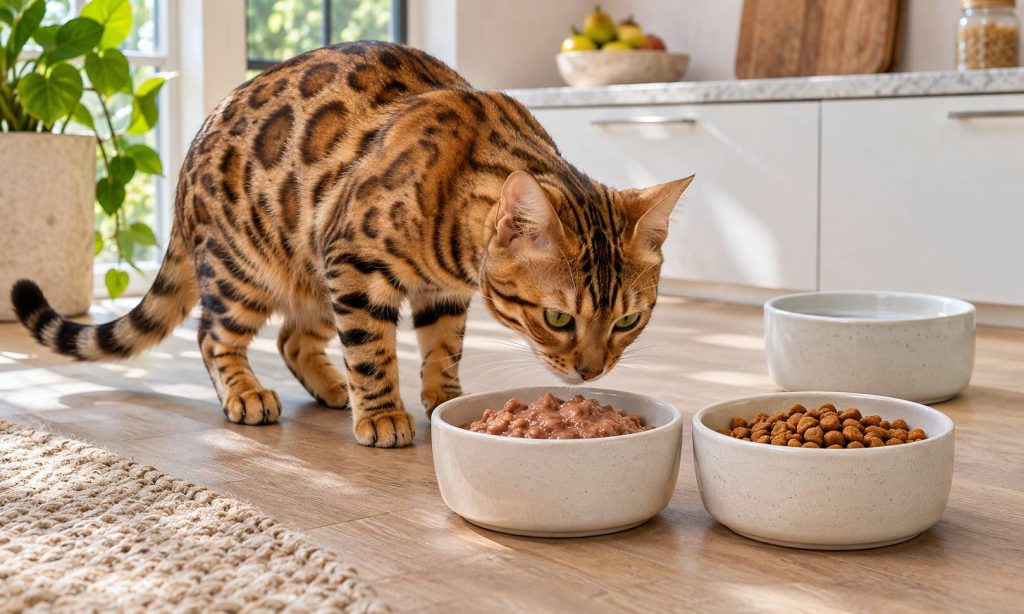
Bengal cats can be active, curious, and enthusiastic about meals, but their spotted coats do not create a unique set of nutritional rules. To compare food for Bengal cats, start with the same essential standards used for other domestic cats: nutritional adequacy, life stage, portion needs, health history, and how well the animal accepts the diet. A glamorous package or a breed photograph cannot tell you whether the recipe fits your cat’s daily needs.
This guide explains how to compare wet and dry formats, feeding statements, calorie density, ingredient information, and practical routines. It is an informational framework, not a ranking of products. For category context, see our food for Bengal cats overview. The goal is a complete, balanced diet that maintains healthy body condition, hydration, and consistent eating habits for your particular cat.
Begin With Life Stage and Complete Nutrition
Check the nutritional adequacy statement on the package. In the United States, a complete and balanced cat food generally relies on nutrient profiles or feeding-trial procedures recognized by the Association of American Feed Control Officials. The statement should specify whether the food is intended for adult maintenance, growth and reproduction, or another appropriate stage. Kittens need a growth-appropriate diet, while adults need maintenance nutrition unless a veterinarian directs otherwise.
Do not mistake a treat, topper, or intermittent feeding item for a complete daily diet. An attractive ingredient list does not replace evidence that the whole formula supplies necessary nutrients. If your Bengal is pregnant, nursing, recovering from illness, or managing a condition, ask the veterinarian which nutritional designation is appropriate. A food selected for an active adult may be unsuitable for a growing kitten or a cat with an individualized medical plan.
Compare Calories Against Your Cat’s Real Activity
Calorie needs depend on body size, age, neuter status, environment, activity, and health. Bengal cats often have a reputation for energy, but that does not prove every individual needs a high-calorie food. Read the calorie statement and feeding instructions, then discuss a sensible starting portion with your veterinarian. Monitor the cat’s weight and body condition rather than relying on appetite alone. Overfeeding can cause gradual weight gain even in playful cats.
Compare foods on a consistent basis. One cup of kibble and one pouch of wet food may deliver very different energy amounts. If you switch formats, calculate the daily caloric contribution rather than simply replacing bowl volume. Treat calories count too. A cat that spends hours playing with puzzle toys may still consume more energy than it uses. FYI, a Bengal’s ability to leap onto a cabinet is not an official measurement of its calorie budget.
Understand Wet and Dry Food Differences
Wet food typically contains much more moisture than dry kibble. That can help contribute to total water intake, though individual cats still need constant access to fresh water. Dry food may be convenient for portioning and certain feeding devices, but a bowl left available all day can make intake harder to measure. Neither format is automatically superior for every healthy Bengal. Assess nutritional completeness, feeding behavior, moisture needs, and the household routine.
Compare textures and acceptance too. Some cats prefer pâté, shreds, or smaller kibble shapes; others are more cautious about changes. Avoid repeatedly changing diets to satisfy a single day’s preference. A cat refusing food or eating significantly less than usual needs attention because prolonged poor intake can be dangerous. Ask a veterinarian about sudden appetite changes, vomiting, diarrhea, weight loss, or urinary concerns. A moisture-rich food is not a substitute for evaluating dehydration or disease.
Read Ingredient Information Without Being Misled
Ingredients appear by weight before processing under common labeling rules, so their order can be influenced by moisture. A named meat at the top of the list does not prove superior nutrition across the finished diet. Likewise, an unfamiliar ingredient is not automatically harmful. Evaluate the full nutrition statement, intended life stage, manufacturer information, and how well the food fits the cat’s needs. Avoid blanket claims that a single ingredient determines quality.
Consider protein sources and food intolerances only with appropriate context. If a veterinarian suspects an allergy, the diagnostic process may involve a carefully controlled diet trial rather than casual ingredient swapping. Special marketing labels should not override medical guidance. A genuinely useful comparison asks whether the food is complete, safe, correctly portioned, accepted, and suitable for the individual. The goal is not to win an ingredient-list debate at the kitchen table.
Evaluate Packaging, Freshness, and Feeding Practicality
Compare the package size with how quickly you use it. A large bag may be economical in theory, but it is less convenient if food loses freshness before your cat finishes it. Check expiration or best-by information, storage directions, and the integrity of the seal. For wet food, note serving size and refrigeration instructions after opening. Never feed visibly spoiled, swollen, leaking, or otherwise questionable food.
Plan around the feeding routine. Can measured meals be served consistently? Does the cat eat slowly or gulp? Is there more than one pet competing near the bowl? A separate quiet feeding location may help you monitor intake. Our Bengal cat food storage guide discusses handling both dry and wet food. Even a well-formulated diet loses practical value if it is stored or served unsafely.
Transition Gradually and Track the Outcome
Introduce a new diet gradually when the veterinarian agrees and there is no urgent medical reason for a different schedule. Blend a small amount of the new food into the familiar ration, increasing it over several days as tolerated. Cats differ in digestive sensitivity and appetite. Avoid mixing so many new foods that you cannot identify the cause of a problem. Keep fresh water available throughout the transition.
Watch stool quality, appetite, vomiting, body weight, and general behavior. A food change should support steady health, not lead to persistent digestive upset. If the Bengal refuses meals or shows concerning signs, contact your veterinarian instead of pushing through the switch. When possible, weigh food portions for consistency. The old saying that cats are particular diners has some truth, but constant surprise menus rarely make feeding easier.
Use a Simple Comparison Framework Instead of Hype
Write down the options you are considering and compare five facts: nutritional adequacy, calories per serving, moisture format, storage requirements, and suitability for your cat’s age and health. A short factual checklist is more useful than a long list of marketing phrases. Consider cost in terms of the daily amount actually fed, not simply the largest bag or can. Avoid direct conclusions about quality based on a package photo.
Review the cat’s body condition and feeding plan periodically, especially after neutering, a change in activity, or a medical diagnosis. If weight is trending upward or downward unexpectedly, ask the veterinarian to reassess calories and health. IMO, a food that fits the cat’s needs and is served consistently deserves more attention than a dramatic claim printed beside a jungle cat illustration.
Frequently Asked Questions
These questions address common breed-related assumptions and food comparison decisions. The answers apply to healthy Bengal cats unless a veterinarian recommends a specialized diet.
Individual health and activity matter more than breed stereotypes. Seek veterinary advice for persistent appetite, weight, urinary, or digestive changes.
Do Bengal cats need a special breed-specific food?
Not automatically. A Bengal generally needs complete and balanced nutrition appropriate to its life stage and individual health, just as other domestic cats do.
Is wet food better for Bengals than dry food?
Either can contribute to a suitable diet when nutritionally complete. Wet food supplies more moisture, while dry food can be convenient. Portion control and the cat’s needs matter.
How do I compare calorie amounts across foods?
Read the calorie statement and compare energy per serving or weight. Adjust portions with veterinary guidance and monitor body condition.
Should I choose cat food by the first ingredient?
No. Ingredient order alone does not establish the nutritional adequacy of the finished food. Review the complete-and-balanced statement and suitability for the cat.
How quickly can I change my Bengal’s food?
A gradual transition over several days often helps with tolerance, unless the veterinarian directs otherwise. Stop and seek advice for persistent digestive problems or poor intake.
Final Words
Compare food for Bengal cats by nutritional adequacy, life stage, calories, moisture, freshness, and individual tolerance. The breed’s appearance and activity reputation should not replace a careful look at the actual animal. Maintain measured meals, fresh water, and regular body-condition checks.
Our food for Bengal cats resource can provide category context while you use this comparison framework. A practical feeding plan is one your cat eats consistently, your household can manage safely, and your veterinarian considers appropriate.









