Introduction
A horse that feels heavy on the forehand may lean on the reins, rush, lose balance, or seem difficult to slow. Changing to a stronger bit is not a reliable fix. The feeling can reflect training, rider balance, saddle fit, discomfort, conformation, or another issue, and the bit itself can create pain if it is poorly fitted or used with heavy hands. Start by checking the horse’s comfort and tack, then work with an experienced instructor on balance and clear, consistent aids. If you are researching a bit for a horse heavy on the forehand, use this guide to understand how to use existing equipment safely and when to seek professional help, rather than trying to solve balance with more pressure.
What “heavy on the forehand” can mean
Riders may use this phrase when a horse leans into the reins, feels difficult to rebalance, rushes, or carries much of its weight toward the front. It is a description of a feel or way of going, not a diagnosis. It can relate to the horse’s stage of training, fitness, conformation, the task being asked, the rider’s position, or discomfort. A horse can also appear heavy because rein contact is too strong or inconsistent.
If the behavior is new, gets worse, appears with lameness, or accompanies resistance to saddling or bridling, arrange a veterinary assessment. Check saddle and bridle fit with qualified professionals. Do not assume the horse is being stubborn or needs stronger equipment.
How the bit should be used
A bit is one part of communication, alongside the rider’s seat, balance, legs, and hands. It applies pressure to sensitive structures in the mouth, including the tongue, bars, and lips. Use the bit only as taught by a qualified instructor for the rider’s discipline and skill level. Maintain a steady, elastic connection appropriate to the exercise, then soften when the horse responds. Avoid pulling continuously, jerking, seesawing, or using the reins to force the horse’s head into a position.
A bit should not be used to overpower a horse. If the horse is difficult to stop or unsafe to ride, dismount only when it is safe to do so and ask an instructor or trainer for help. Do not experiment with different leverage or stronger designs during a ride to regain control.
Check the bridle and bit before mounting
Inspect the equipment
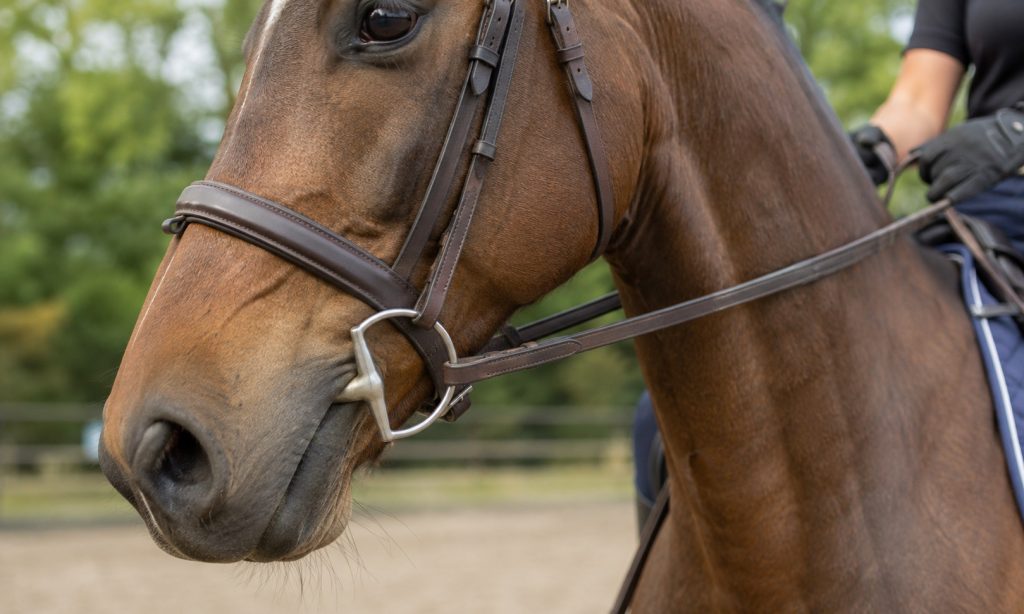
Check the mouthpiece, rings, cheeks, stitching, buckles, and reins for cracks, rough edges, corrosion, or damage. Confirm that any keeper or attachment required for the bit’s design is present and secure. A damaged or incorrectly assembled bridle can cause discomfort or create a snag hazard.
Check fit with professional guidance
Bit fit depends on the horse’s mouth shape, dental anatomy, the bit’s design, and how it is adjusted. Avoid copying a measurement or fit from another horse. A qualified bit fitter, veterinarian, or equine dental professional can assess whether the bit sits appropriately and whether dental concerns are present. The bridle should not pinch the lips, pull the bit sharply upward, or require the noseband to hold the mouth closed.
Watch the horse’s response
Before and after riding, notice whether the horse accepts the bridle calmly, chews and swallows comfortably, or shows repeated head tossing, gaping, tongue movement, jaw crossing, tail swishing, or resistance. These signs have multiple possible causes and do not prove bit pain, but they warrant checking fit, handling, and health rather than tightening the tack or increasing rein pressure.
Remove the bridle calmly after the ride and check for redness, swelling, rubs, or fresh sores around the lips and mouth. A normal-looking mouth does not rule out discomfort, but any injury or repeated resistance is a reason to stop using that setup until a professional has assessed it.
\n\n
Respond to a heavy feel without pulling harder
-
Ask your instructor to observe. A ground observer can help distinguish the horse’s balance from the rider’s hand, seat, and timing. Do not attempt advanced schooling exercises without suitable instruction.
-
Return to a safe, simple exercise. If the horse and rider are comfortable, use a familiar gait and clear transitions in a controlled arena. Stop the exercise if the horse becomes distressed, painful, or difficult to control.
-
Use brief, consistent aids. Avoid holding constant pressure or pulling harder as the horse leans. Follow your instructor’s guidance for giving and releasing aids, and do not use the bit as a substitute for balance or training.
-
Reassess the whole setup. Check saddle fit, girth comfort, dental care, hoof comfort, rider position, footing, and whether the task is appropriate for the horse’s training and fitness.
-
Stop when safety or comfort is uncertain. Get help before continuing if the horse is bolting, rearing, bucking, showing pain, or the rider cannot maintain safe control.
When to seek veterinary or professional help
Contact a veterinarian if the horse develops a sudden change in performance, mouth sores, difficulty eating, head tossing, unusual resistance, lameness, back sensitivity, or signs of pain. Dental problems and other health concerns can affect how a horse responds to a bridle. A veterinarian can assess health and advise whether a dental or other specialist examination is appropriate.
Ask a qualified instructor or trainer to assess balance, rider aids, and schooling. A saddle fitter should check a saddle that shifts, creates dry spots, or provokes back sensitivity. A bit fitter can help evaluate mouthpiece fit and bridle adjustment. These checks are complementary; a bit change alone may not address the cause of a heavy feel.
For general information about choosing equipment for a particular ride, see the published guide to horse bits for trail riding. Any bit or bridle should be assessed for the individual horse, rider, activity, and relevant competition rules.
Frequently Asked Questions
Will a stronger bit make a horse lighter on the forehand?
Not reliably. A stronger bit can increase pressure and may mask discomfort or training issues. Balance, rider aids, tack fit, health, and the horse’s conditioning should be assessed first.
Should I change bits if my horse leans on the reins?
Do not make a bit change as a quick fix. Ask an instructor and, when there are new or concerning signs, a veterinarian or qualified bit fitter to help identify the cause.
What signs suggest my horse’s bit may be uncomfortable?
Head tossing, gaping, tongue movement, jaw crossing, sores, or resistance can be clues, but they have multiple causes. Check bridle fit and ask a qualified professional to assess the horse.
Can a poorly fitted saddle make a horse feel heavy?
Discomfort or restricted movement can affect how a horse goes. If the saddle shifts, causes sensitivity, or performance changes, have fit assessed and discuss pain signs with a veterinarian.
Can a beginner safely try a new bit?
A novice rider should not experiment with equipment or leverage without instruction. A qualified instructor can help evaluate the horse, bridle fit, and the rider’s skill before any change.
Final Words
Use the bit with light, consistent communication and a correctly fitted bridle; do not pull harder to correct a horse that feels heavy on the forehand. Check the horse’s comfort, equipment, rider balance, and training, and involve an instructor or veterinarian when behavior changes or pain is possible. A bit for a horse heavy on the forehand should be chosen only as part of an individual assessment, not as a substitute for addressing the reason the horse feels heavy.