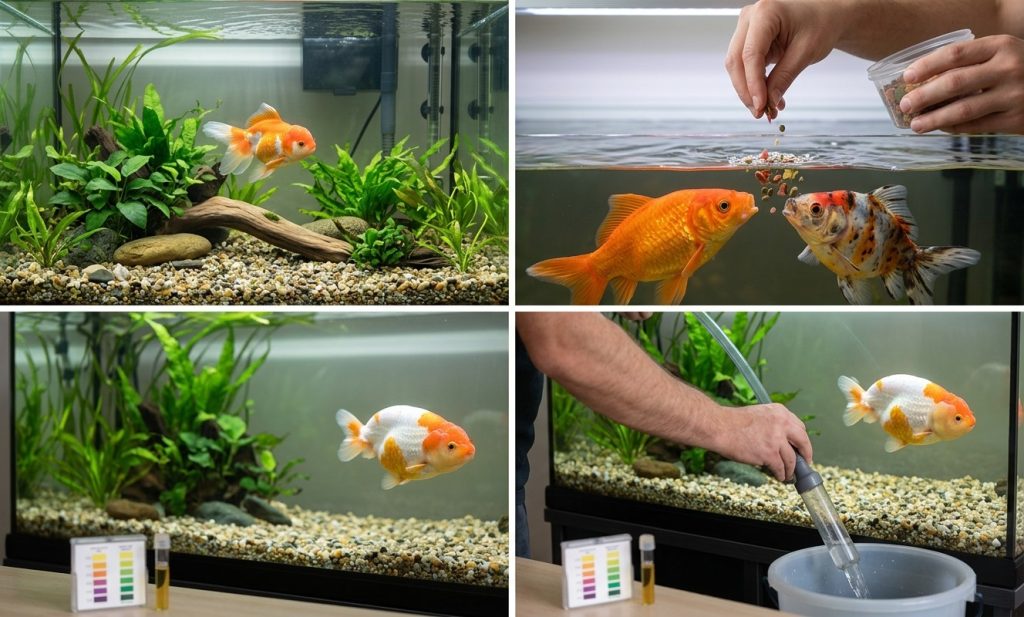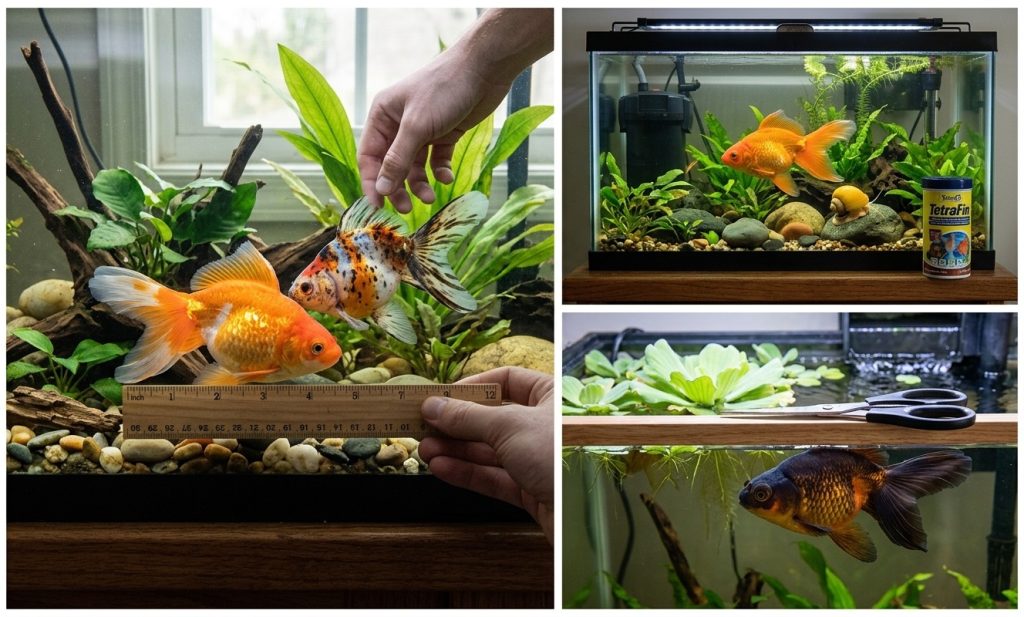
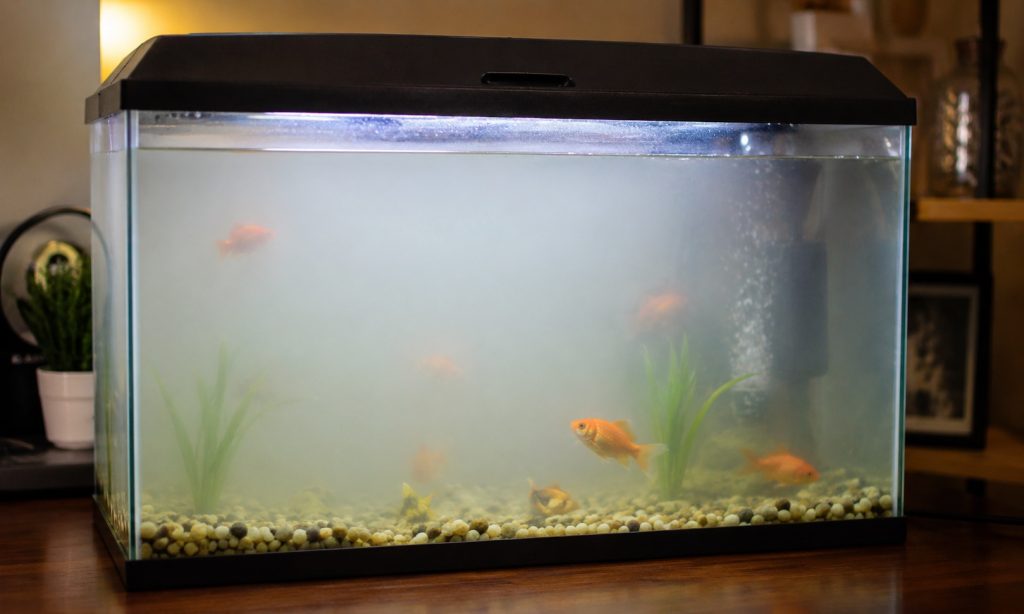
Cloudy water usually means a bacterial bloom, excess waste, or poor filtration—fixable with testing and care.
I have kept and cared for dozens of goldfish tanks and helped hobbyists solve cloudy water issues many times. This article explains why is my goldfish tank cloudy, how to diagnose the exact cause, and step-by-step fixes you can trust. You will find practical tests, safe treatments, prevention plans, and real-life tips based on hands-on experience.
Common causes of cloudy goldfish tanks
Cloudiness happens for a few main reasons. Knowing which cause applies helps you act fast and avoid stressing your fish.
- Bacterial bloom
- Tiny bacteria multiply quickly after new water, new substrate, or a big clean. Water looks milky or white.
- Algae bloom
- Green water is usually free-floating algae from excess light or nutrients.
- New tank syndrome
- A tank that is cycling will often go cloudy until beneficial bacteria establish.
- Overfeeding and waste build-up
- Uneaten food and goldfish waste feed bacteria and algae. This is a frequent reason why is my goldfish tank cloudy.
- Poor or undersized filtration
- Filters that are dirty, clogged, or too small for goldfish volume let particles circulate.
- Disturbed substrate or decor
- Cleaning gravel aggressively or stirring it up with a siphon can cloud water.
- Mineral cloudiness
- Hard water or freshly treated tap water can precipitate minerals that make water hazy.
- Medication or additives
- Some treatments temporarily cloud water or disturb biofilms that keep water clear.

Source: reddit.com
How to diagnose the type of cloudiness
Diagnosis is simple if you inspect color, timing, and tests.
- Check the color and smell
- White or gray with no strong smell usually means bacterial bloom. Green means algae. Brown or tea-colored may mean tannins from driftwood.
- Note timing
- Did the cloud appear after a big water change, new substrate, or overfeeding? That points to bacteria, minerals, or particulate disturbance.
- Test water chemistry
- Measure ammonia, nitrite, nitrate, and pH. High ammonia or nitrite often goes with cloudy water in new or stressed tanks.
- Look at the surface and filter
- Fine particles that don’t settle point to bacterial clouds. Visible plant or algae fragments point to algae blooms.
- Use a jar test
- Scoop a jar of tank water and let it settle for 12–24 hours. If particles settle, it’s grit or debris. If not, it’s bacteria or algae.
If you ask why is my goldfish tank cloudy, running these checks will narrow it to a clear cause in most cases.
:strip_icc()/cloudy-aquarium-water-1378803-3736ff0eb5b34aa0907ae9df2882a86e.png)
Source: thesprucepets.com
Step-by-step fixes to clear a cloudy tank
Follow a calm, safe plan. Sudden, large changes can harm goldfish.
- Test first
- Check ammonia, nitrite, nitrate, and pH. Fix toxic spikes before cosmetic issues.
- Partial water changes
- Change 20–30 percent of water once or twice over a few days. Use dechlorinated water at the same temperature.
- Reduce feeding
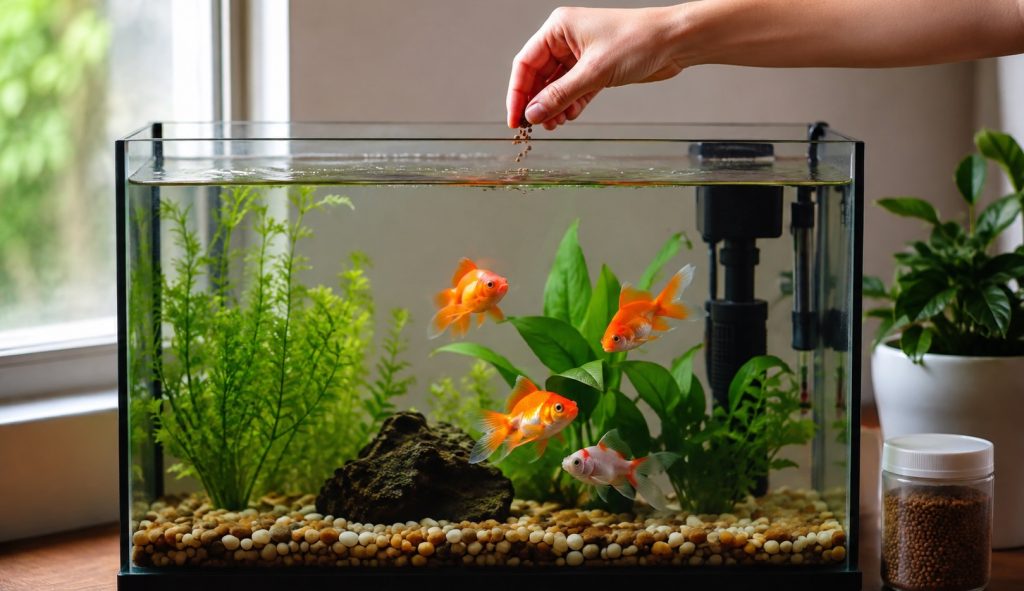
- Feed less for several days. Remove uneaten food within five minutes.
- Clean the substrate gently
- Use a gravel vacuum to pull out debris. Do not strip all the gravel at once; do sections over weeks.
- Clean but don’t sterilize the filter
- Rinse mechanical media in tank water you removed. Replace carbon or chemical media only if needed. Keep biological media moist and intact.
- Add beneficial bacteria
- Commercial bacterial starters can help a tank recovering from a bacterial bloom or after heavy cleaning.
- Control light and nutrients
- Reduce light hours to 6–8 per day to slow algae growth. Avoid overfertilizing plants.
- Use a UV sterilizer for persistent green water
- A UV can clear free-floating algae in a few days when used correctly.
- Check and treat water hardness if minerals cause cloudiness
- Let tap water sit or use a water softening method if precipitates form.
These steps answer why is my goldfish tank cloudy and provide a safe route to clear water.
Preventing future cloudiness
Prevention is easier than constant fixing. Set a routine and choose the right equipment.
- Regular maintenance
- Weekly partial water changes of 20–30 percent and a monthly deep clean prevent waste buildup.
- Proper feeding
- Feed small amounts once or twice daily and remove leftovers.
- Right-size filtration
- Choose a filter rated for more gallons than your tank holds. Goldfish produce heavy waste.
- Avoid overstocking
- Keep fish numbers suitable for tank volume. Crowding is a top reason why is my goldfish tank cloudy.
- Stable water source
- Use conditioned tap water and keep temperature steady to avoid stress on biological filtration.
- Live plants
- Fast-growing plants absorb nitrates and compete with algae, improving clarity.
- Monitor and record
- Keep a log of test results, cleanings, and feeding to spot trends before cloudiness returns.

Source: reddit.com
Water chemistry and testing for clarity
Good water data tells you why cloudiness happens and how to fix it. Test kits are cheap and valuable.
- Key parameters to test
- Ammonia: should be zero in a cycled tank.
- Nitrite: should be zero.
- Nitrate: keep under 40 ppm for goldfish; lower is better.
- pH: goldfish tolerate 7.0–8.4 but sudden swings cause stress.
- Hardness: very hard water can cause mineral haze in some situations.
- Interpretation tips
- If ammonia or nitrite is high, do immediate partial water changes and address the biofilter.
- If nitrate is high, increase water changes and clean substrate.
- If all tests are normal and water remains cloudy, suspect bacterial bloom or algae and follow mechanical/UV steps.
Testing regularly reduces guesswork about why is my goldfish tank cloudy and prevents repeat problems.
Filters, media, and equipment that help
Choosing the right gear makes clarity easier to maintain.
- Filter types that work well
- Canister filters: high flow and good media options for larger goldfish tanks.
- Hang-on-back filters: easy to maintain for medium tanks.
- Sponge filters: excellent biological filtration for smaller setups or as backup.
- Media recommendations
- Mechanical: foam, floss, or sponge to trap debris.
- Biological: ceramic rings or bio-balls to host nitrifying bacteria.
- Chemical: activated carbon for removing dissolved organics and discoloration.
- Add-ons for stubborn cases
- UV sterilizer for green water or free-floating pathogens.
- Powerheads to improve circulation in larger tanks.
- Airline stones to boost oxygen and help biological filtration.
Using the right filter strategy addresses why is my goldfish tank cloudy and keeps conditions stable.
Personal experience and lessons learned
I once inherited a 55-gallon goldfish tank that turned milky white after a full clean. I panicked and almost changed all the filter media, which would have crashed the biofilter. Instead I did staged water changes, rinsed the mechanical pads in tank water, and added a small dose of beneficial bacteria. The water cleared in four days and the fish stayed healthy. Lesson: avoid drastic simultaneous changes and prioritize testing and slow fixes.
When you ask why is my goldfish tank cloudy, remember slow, steady maintenance is nearly always the best approach.

Source: reddit.com
Common mistakes to avoid
Prevent simple errors that make cloudiness worse.
- Cleaning all filter media at once
- This kills beneficial bacteria and often causes ammonia spikes.
- Overusing antibiotics or flocculants
- These can harm biofilters or mask underlying problems.
- Large, sudden water changes
- Big changes stress fish and shift pH.
- Ignoring regular testing
- Without tests you guess and may miss toxic spikes.
Frequently Asked Questions of Why is My Goldfish Tank Cloudy
Why is my goldfish tank cloudy after a water change?
A cloudy tank after a water change often results from stirring up gravel or disrupting bacteria. Do smaller, staged water changes and vacuum the substrate to reduce cloudiness.
Will cloudy water harm my goldfish?
Cloudy water by itself is not always harmful, but it can signal high ammonia or nitrite, which are toxic. Test the water to ensure parameters are safe.
How long does it take for a cloudy tank to clear?
Cloudy water from bacteria or minor debris can clear in 24–72 hours with proper partial changes and filter care. Algae or mineral issues may take several days to weeks.
Can I use clarifiers to fix cloudiness quickly?
Clarifiers can help by clumping fine particles so filters remove them, but they do not fix root causes like excess waste or poor filtration. Use them sparingly and along with water testing.
Should I replace the filter media to clear cloudiness?
Do not replace all filter media at once. Rinse mechanical media in tank water and only replace chemical media as needed. Preserving biological media prevents cycling problems.
Conclusion
Cloudy water is a common, solvable problem. Most cases stem from bacterial blooms, algae, overfeeding, or inadequate filtration. Test your water, make small, safe changes, and follow a steady maintenance routine to clear and prevent cloudiness. Take action now: test your tank, reduce feeding, and clean the filter gently. If you found this guide useful, subscribe for more aquarium tips or leave a comment with your tank details so I can help you troubleshoot further.