
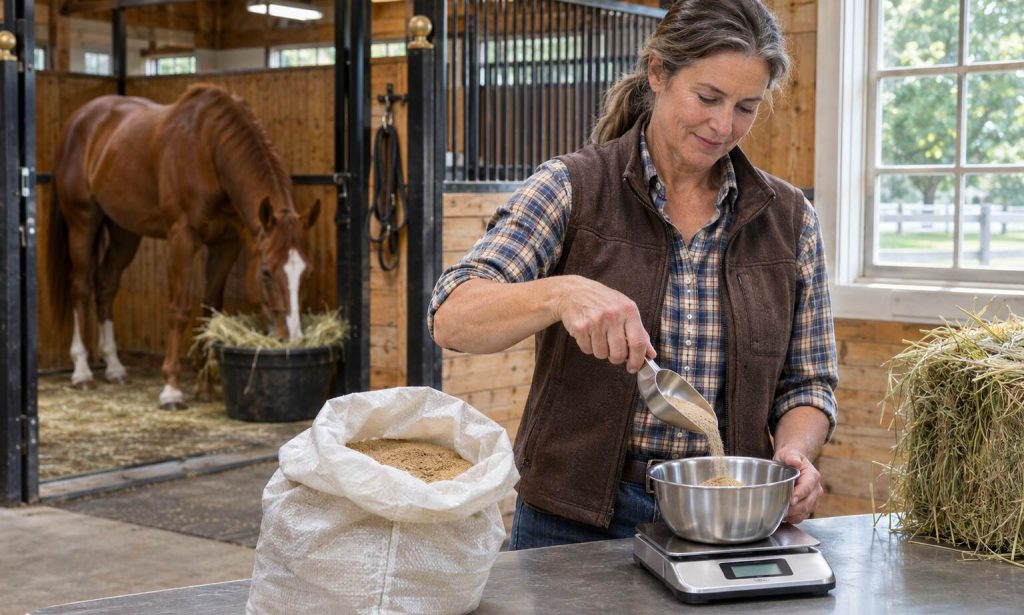
Protein supplement portions for horses should be based on the whole diet, not a scoop size copied from another barn. A mature horse at maintenance has different needs from a growing youngster, lactating mare, or athlete. Learning how to size a protein supplement for horses begins with forage analysis, body condition, workload, and veterinary nutrition advice. More protein is not automatically better.
The word ‘size’ can refer to a container, a serving amount, or the nutrient contribution of each serving. Only the last two matter for ration planning. This guide explains the difference between crude protein and amino acids, how to read a label, and why a feeding change needs a measured reason. It avoids offering an unverified dose for an individual horse.
Check Whether the Ration Actually Has a Gap
Start with the hay or pasture, any concentrate, a ration balancer, treats, and supplements already given. Forage is often the largest portion of the diet. Its protein and amino-acid contribution cannot be reliably estimated from color or texture alone. A forage test and records of weighed daily intake allow a nutritionist to identify shortfalls with greater confidence.
Horses may look thin for reasons unrelated to protein deficiency, including inadequate calories, dental disease, parasites, or other illness. Do not interpret every poor topline as proof that a protein powder is required. Our protein supplement for horses overview explains common terminology, while a veterinarian should investigate unexplained weight or muscle changes.
Understand Crude Protein and Amino Acids
Crude protein percentage is a broad measure derived from nitrogen content, not a direct measure of usable muscle-building nutrients. Essential amino acids, including lysine, must be provided in the diet. Two feed ingredients with the same crude protein percentage may differ in their amino-acid profile and digestibility. Quality and balance matter alongside total grams.
The University of Minnesota Extension discusses differences in amino-acid levels among forages and the limits of using crude protein alone. Ask your equine nutritionist to consider the complete amino-acid profile and not just the largest number on a bag. How to size a protein supplement for horses therefore starts with identifying the missing nutrient, rather than treating every additional gram as useful.
Match the Plan to the Individual Horse
A horse’s life stage and health status influence its nutritional needs. Growth, lactation, recovery, and sustained work can change protein and energy requirements. A sedentary adult in good condition may need no additional protein at all. Medical conditions can also alter the appropriate feeding plan. Discuss specialized needs with your veterinarian, particularly for horses with kidney or liver disorders.
Record approximate body weight, body condition score, workload, feed intake, and changes across several weeks. Use a weight tape consistently if no scale is available, while recognizing that it only estimates weight. The weight-gain supplement selection guide provides context on separating calorie concerns from protein questions. Avoid changing three feeds at once.
Read the Label as a Nutrient Calculation
A serving recommendation does not by itself reveal what a horse receives. Check the amount per serving, crude-protein percentage, declared amino acids, and additional minerals or vitamins. For a simple illustration, 100 grams of material at 20% crude protein contains about 20 grams of crude protein before accounting for digestibility or amino-acid balance. This is arithmetic, not a recommended serving.
Convert ounces to grams consistently, and check whether a scoop represents weight or volume. Different powders vary in density; a scoop that looks full may not contain the labeled number of ounces. Note whether the product label expresses protein per kilogram of dry powder or per prepared serving. Those measures are not interchangeable when water or another feed is added. Check the unit twice before calculating. Follow the manufacturer’s measuring instructions and use a scale when practical. Your nutritionist can compare calculated intake with the horse’s true requirement before choosing a serving.
Account for Nutrient Overlap and Energy Intake
Protein concentrates can also supply calories, minerals, vitamins, or other active ingredients. Adding one supplement to an already fortified ration can create imbalances even if the protein arithmetic looks reasonable. Evaluate feed labels together, rather than reading each bag in isolation. Do not use several ‘topline’ formulas simultaneously without reviewing their combined composition.
Adequate calories and sound training are needed for muscle development. Supplying extra protein will not fix insufficient exercise, chronic pain, poor-quality forage, or dental problems. The topline supplement handling guide describes practical monitoring alongside appropriate feeding. How to size a protein supplement for horses should therefore be one step in a balanced ration review.
Introduce Dietary Changes Gradually and Observe
When a veterinarian or nutritionist recommends a change, follow the specific transition plan. Abrupt changes to concentrate intake can disrupt digestion or feeding behavior. Weigh actual portions, note whether the horse leaves feed behind, and keep feeding equipment clean and dry. Do not assume the amount consumed equals the amount offered when a shared feeder is involved.
Track body condition, manure consistency, appetite, energy, and training recovery over time. A log helps the professional judge whether the plan meets the goal. Stop and ask for advice if the horse develops colic signs, diarrhea, poor appetite, or another sudden change. Protein supplements are not emergency treatments for unexplained weakness or weight loss.
Reassess the Portion Instead of Guessing
Recalculate when forage batches, turnout, workload, age-related needs, or feed brands change. Hay from different fields can vary substantially in nutrients. A horse doing more work may need a different total energy supply before it needs extra supplemental protein. Repeating the same scoop amount year after year misses these changes.
Set a reasonable review point with the nutritionist and recheck weight and body condition under similar conditions. Keep the original bag label and lot information until the ration has been evaluated. If a horse improves after several changes, do not credit one supplement without evidence. Our amino-acid supplement context may help readers understand related ingredient labels.
Frequently Asked Questions
Choosing a serving size is a nutrition calculation that depends on the whole ration. These questions address common misunderstandings before a new supplement enters the feed room.
No answer below prescribes an individual horse’s daily grams. Veterinary and equine nutrition guidance should establish the actual target.
Does every working horse need extra protein?
No. The full diet may already provide enough protein and essential amino acids. Workload alone does not prove a deficit.
Can I measure a powder with any feed scoop?
No. Scoop volumes and product densities differ. Check the label and use weight when possible.
Is a higher crude protein number always better?
No. Amino-acid composition, digestibility, and overall ration balance matter.
Can protein supplements replace good hay?
No. Forage remains fundamental to equine digestion and feeding behavior.
When should I seek veterinary advice?
Ask about unexplained weight loss, muscle wasting, reduced appetite, abnormal manure, or concerns related to illness.
Final Words
How to size a protein supplement for horses is best answered with data. Weigh the ration, test forage when feasible, evaluate amino acids, and match the plan to the horse’s age, condition, workload, and health. Read labels carefully and avoid combining fortified feeds blindly. A larger scoop is not a substitute for a balanced diet.
If you are revisiting protein supplement for horses, use its terminology to prepare questions for your veterinarian or nutritionist. Keep records and adjust only when the ration analysis shows why a change is useful.









