
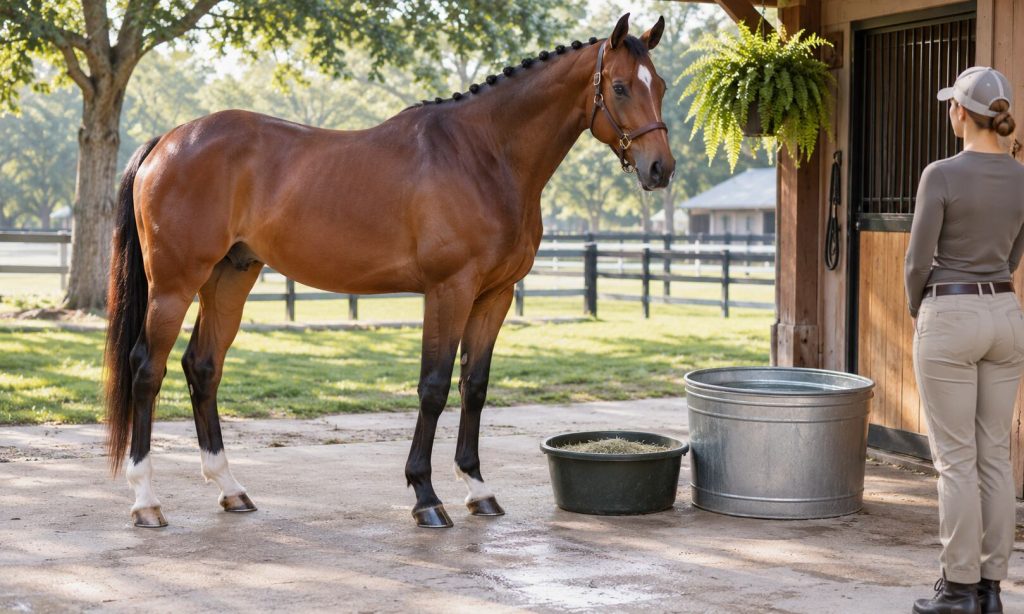
Performance horses do not automatically need a shelf full of supplements. Their first priorities are appropriate forage, enough calories, clean water, salt, and a workload matched to fitness. Still, certain supplements can serve a practical purpose. Electrolytes may be useful after heavy sweating, a ration balancer can help close nutrient gaps, and a targeted vitamin or amino-acid product may be appropriate following a diet assessment. The best supplements for performance horses are those that address a documented need rather than promise instant speed or stamina.
We compare seven verified Amazon products across electrolyte, amino-acid, vitamin E, and mineral categories. Each has ingredients, serving formats, and limitations. None replaces a balanced ration, conditioning, cooling, or veterinary care. Check event medication and supplement rules before competition, and review every product with your veterinarian or equine nutritionist. A horse with unusual fatigue, dark urine, poor recovery, or persistent muscle problems needs clinical evaluation.
Quick Picks
These seven products serve different roles in performance nutrition. Water and sweat loss also matter; see how much water horses drink.
| Product | Best For | Key Advantage | Buy | |
|---|---|---|---|---|
| Farnam Apple Elite Electrolytes Powder | After heavy sweating | Sugar-free flavored electrolyte blend | View on Amazon | Jump to Review |
| Pennwoods Horse Electrolyte Supplement | Sweat-loss mineral replacement | Includes chloride in blend | View on Amazon | Jump to Review |
| Formula 707 MuscleMx | Amino-acid conditioning category | Lysine, creatine and related ingredients | View on Amazon | Jump to Review |
| Equinety Horse XL Amino Acid Powder | Essential amino-acid supplementation | Amino-acid-focused powder | View on Amazon | Jump to Review |
| Kentucky Performance Products Elevate Maintenance Vitamin E | Targeted vitamin E needs | Natural vitamin E per scoop | View on Amazon | Jump to Review |
| Pivotal Feeds Equine Total Recovery | Amino acids plus digestive ingredients | Nine amino acids and probiotics | View on Amazon | Jump to Review |
| Formula 707 Daily Essentials Ration Balancer | Forage-based nutrient gaps | Concentrated vitamin-mineral pellets | View on Amazon | Jump to Review |
Farnam Apple Elite Electrolytes Powder

- Sodium and potassium included
- Calcium and magnesium listed
- Sugar-free powder formula
- Apple flavor for feed mixing
- 40-day supply on listing
- Only useful when losses justify it
- Flavor may not suit every horse
Farnam Apple Elite Electrolytes Powder is designed around the minerals a horse loses through sweat. The current listing identifies sodium, potassium, calcium, and magnesium, and describes a sugar-free apple-flavored formula. That makes its intended role clear: electrolyte replacement when workload, weather, or prolonged sweating increases mineral losses. A light schooling ride on a cool day may not require an extra electrolyte product. Before adding one, evaluate the horse’s ordinary salt access, water availability, feed, sweat level, and the conditions in which it works.
The powder format is convenient for a consistent feed routine, but palatability still matters. A horse that refuses feed because of a new taste will not gain the intended benefit. The manufacturer promotes hydration support, yet no supplement can hydrate an animal that will not drink. Always supply abundant plain, clean water. When working in heat, cooling and prompt water access come before any scoop. If your horse shows severe weakness, prolonged high respiratory rate, or signs of heat stress, seek veterinary help rather than relying on a supplement.
The listing advertises a forty-day supply, although actual use depends on the label’s directions and the horse’s activity. Weigh the recommended amount and avoid stacking several electrolyte products without comparing ingredients. Sodium and potassium are not ingredients to add without limit. Keep the container dry and sealed, and introduce the taste when the horse is relaxed rather than for the first time at a competition. This can be a practical item in a hot-weather kit, provided it fits a broader feeding and hydration plan.
My Recommendation
I would compare Apple Elite for a horse that regularly sweats during training or travel and readily eats flavored feed. The sugar-free powder and identifiable minerals suit a targeted use. Its tradeoff is the need to judge workload and intake carefully. If the horse will not drink, prioritize water access and veterinary guidance rather than more powder.
Pennwoods Horse Electrolyte Supplement

- Sodium and chloride listed
- Potassium, calcium and magnesium
- Powder for feed or water
- Five-pound container
- Targeted exercise positioning
- Concentrated dosing needs care
- Not a substitute for drinking
Pennwoods Horse Electrolyte is another product aimed at sweat-related mineral replacement, but its listed profile makes chloride especially explicit. Alongside sodium and potassium, the maker names calcium and magnesium. Those are relevant components when discussing fluids and electrolyte losses during intense work. The product is offered as a five-pound powder, a format that may suit a barn using measured servings. The key distinction from everyday supplements is its event-specific purpose. A horse working lightly may already receive sufficient electrolytes from the regular ration and salt.
The manufacturer describes mixing the powder into either feed or water. Those choices sound flexible, but taste and water intake must be monitored. If electrolytes are added to a bucket, a separate source of unflavored water should still be available. Do not use a flavored bucket as the only drink option. A horse that has stopped sweating, seems disoriented, or struggles to recover after exercise needs urgent cooling and veterinary attention. A commercial electrolyte is not a treatment for heatstroke, colic, or a serious metabolic problem.
At a busy show, the five-pound package may be less portable than individual sachets. You can premeasure servings into clearly labeled containers if the manufacturer permits safe storage, while preserving the original lot and instructions. Check whether salt, concentrate, and other supplements already provide some of the same minerals. Avoid multiplying products because the horse seems tired after a hard session. Fitness, feed energy, tack fit, and underlying health may explain that fatigue. Compare this blend with a horse’s sweat pattern and daily intake rather than expecting visible performance gains.
My Recommendation
Pennwoods is useful to compare for owners seeking a straightforward electrolyte profile that explicitly includes chloride. It may suit a horse with significant sweat losses and a reliable feeding routine. Its concentration and water-mixing options demand careful supervision. I would select between this and another electrolyte only after reviewing the horse’s existing salt and water plan.
Formula 707 MuscleMx

- Lysine identified
- Creatine included
- Gamma oryzanol listed
- OKG in formula
- Measured 32-serving package
- Performance gains not established here
- Ingredient-rule checks essential
Formula 707 MuscleMx is marketed for muscle conditioning and weight-related goals. Its current listing identifies lysine, creatine, gamma oryzanol, and ornithine-alpha-ketoglutarate, often shortened to OKG. Those ingredients make it distinct from an electrolyte or vitamin-only supplement. Lysine is an essential amino acid, but the presence of several compounds in a tub does not prove a particular training benefit. The condition of a performance horse begins with enough dietary energy, adequate quality protein, soundness, and appropriate conditioning. Evaluate those before buying a muscle-focused formula.
The manufacturer presents explanations for how each ingredient might contribute to muscle processes. These are product claims, not independent proof that the supplement improves speed, endurance, or recovery in horses. Do not assume a horse with poor topline lacks one specific ingredient. Saddle fit, dental issues, chronic pain, insufficient calories, workload, and disease can all affect appearance. An equine nutritionist can assess the actual forage and concentrate for protein quality. A veterinarian should evaluate unexplained weight loss, muscle soreness, or inconsistent performance.
The verified listing describes a three-pound container with thirty-two servings. That suggests a measured daily routine, but dosing must follow the current package and the horse’s health history. Check the ingredients against competition rules, especially for horses entered in regulated events. This is not a shortcut around training, rest, turnout, and a safe exercise plan. Keep the label available for your veterinarian and trainer. If no dietary protein deficit or specific management goal is identified, a more basic ration adjustment may be more sensible than a complex supplement.
My Recommendation
I would only consider MuscleMx after an equine nutrition review identifies a reason to explore its ingredient category. It has a distinct lysine-and-creatine profile, which makes comparison possible. The principal drawback is the lack of verified outcome evidence in this roundup. Training, complete feed, and event-rule compliance should decide whether it belongs in the program.
Equinety Horse XL Amino Acid Powder

- Amino-acid blend identified
- No added soy claimed
- Sugar-free positioning
- Long 100-day listing supply
- Powder format for feed
- Broad recovery claims unproven
- May duplicate ration protein
Equinety Horse XL focuses on amino acids rather than supplying a broad electrolyte mixture. The listing describes a proprietary branched essential amino-acid blend and a one-hundred-day supply. It also states that the formula contains no soy, sugar, or starches. That ingredient positioning may interest an owner trying to avoid unnecessary sugar in a feeding program, but it does not establish clinical benefit for every working horse. Amino acids are building blocks of protein; whether additional amounts help depends on the existing forage and concentrate ration.
The product marketing makes wide claims about strength, recovery, joints, and more. Those statements should not be treated as proof that this powder repairs an injury or prevents a breakdown. A horse with a tendon problem, lameness, or poor performance needs diagnosis and appropriate rehabilitation. For a healthy athlete, check total protein intake and essential amino-acid balance before adding a tub. Quality hay and a suitable concentrate can already provide adequate protein. More powder does not automatically mean better muscle or a more comfortable horse.
One scoop is described as a regular serving in the listing, but the actual instructions should govern use. A long supply can be convenient for owners maintaining a consistent program. Store it away from moisture and document every added supplement in the horse’s feed record. If the horse competes, compare the full ingredient list with the applicable association’s rules rather than assuming a natural or amino-acid label is automatically allowed. This can be a discussion option when a nutrition professional identifies an amino-acid gap, not a default purchase for all performance horses.
My Recommendation
Horse XL is a candidate when a nutrition professional identifies a need for extra essential amino acids in a working horse’s ration. Its formula is easier to categorize than broad herbal blends. I would be cautious about its expansive recovery marketing and check whether the existing feed already supplies enough protein before adding it.
Kentucky Performance Products Elevate Maintenance Vitamin E

- Natural vitamin E formula
- 1,000 IU per listed scoop
- Two-pound powder package
- Specific nutrient target
- Easy feed-mixing format
- Blood and diet assessment advised
- Not a general energy booster
Kentucky Performance Products Elevate Maintenance offers a narrower nutritional purpose: vitamin E. The current listing describes natural vitamin E, with one thousand international units per seven-gram scoop. This differs sharply from multi-ingredient performance powders. Vitamin E status can matter when pasture access is limited or a horse has special nutritional needs, but supplementation should follow evaluation of the total diet. A blood test and veterinarian’s recommendation may be appropriate. There is no sound reason to assume every horse in training needs the same vitamin E amount.
Vitamin E is not a stimulant and should not be presented as a way to create instant energy, stamina, or muscle. Its relevance concerns normal biological function and nutritional adequacy. Other feeds and supplements may already contain the vitamin, so review combined intake before adding more. Also distinguish vitamin E from products containing selenium. Both nutrients have roles in muscle health, but selenium has a narrow safety margin when oversupplied. Keep a complete ingredient record for the veterinarian, especially when using several branded supplements.
The verified listing identifies a two-pound container. That may suit a planned long-term regimen when a clinician has determined an appropriate intake. Follow the current manufacturer’s serving directions only within that individualized plan. Store the powder carefully and recheck nutrient needs when forage, turnout, or concentrate changes. If your horse ties up, has unexplained weakness, or shows exercise intolerance, do not self-treat with vitamin E alone. Those symptoms can involve multiple conditions. Compared with the other choices here, this is a focused tool for a defined nutritional need rather than broad conditioning.
My Recommendation
I would consider Elevate Maintenance when a veterinarian or equine nutritionist identifies vitamin E intake as the relevant gap. The clearly defined single-nutrient focus is its advantage. It is not a universal supplement for stronger performance, and additional intake may be unnecessary. Review blood results and the full ration before choosing a dose.
Pivotal Feeds Equine Total Recovery

- Nine amino acids listed
- Lysine and leucine specified
- Probiotic addition
- Apple pectin included
- 100-serving product
- No guaranteed recovery outcome
- May overlap other products
Pivotal Feeds Equine Total Recovery brings amino acids together with digestive-oriented ingredients. The listing names nine amino acids, including lysine, leucine, and arginine, plus probiotics and apple pectin. It is marketed to active and working horses as a feed topper. That composition distinguishes it from a straightforward salt replacement product. Still, a long ingredient list should not substitute for a measured diet assessment. If your horse already receives adequate quality protein and a balanced concentrate, there may be no clear reason to add another amino-acid formula.
The manufacturer describes muscle and digestive support, but this comparison has not independently established improved recovery times or performance outcomes. Stiffness, slow recovery, poor appetite, and fatigue can be signs of training overload or medical concerns. Seek veterinary evaluation for persistent or severe changes rather than trialing powders one after another. Probiotics can be useful in certain contexts, but their benefits depend on organism, dose, and individual circumstances. No general claim about gut health proves that this particular blend will help a specific horse.
The verified listing indicates one hundred servings and suggests simple feed-topper use. That can be practical for a barn with consistent meals, although precise feeding and storage instructions should come from the current label. Compare its amino-acid profile with any existing protein supplement, vitamin mix, or digestive product to avoid redundant purchases. Introduce a new flavor gradually and watch for refusal. Trainers should also review all ingredients for competition compliance. The product works best as a clearly reasoned addition to an established feed plan, not as a substitute for rest days.
My Recommendation
I would compare this for an active horse whose nutrition review suggests a reason to combine amino acids with a digestive-support blend. It offers a broader ingredient profile than an amino-only powder. The tradeoff is duplication risk and uncertain incremental benefit. I would not add it simply because a horse is tired after training.
Formula 707 Daily Essentials Ration Balancer

- Broad vitamin-mineral formulation
- Trace minerals in pellet
- Oat-sized pieces
- 48 servings on listing
- Designed for feed topping
- Not a complete calorie source
- Mineral overlap requires review
Formula 707 Daily Essentials is a concentrated vitamin-and-mineral product, which gives it a different job from electrolytes or amino-acid powders. The listing describes pelletized vitamins and trace minerals with forty-eight servings in a six-pound bag. This type of ration balancer can be relevant when a performance horse eats mostly hay and lacks enough fortified concentrate to cover nutrient needs. The key question is what the forage analysis and current diet already provide. A supplement that fills a real gap is more useful than adding another tub by habit.
The manufacturer emphasizes proteinate trace minerals and a small pellet shape intended for easy feeding. Those may simplify barn routines, but claims about absorption or superior conditioning should not be assumed without supporting comparisons. Ration balancers are not interchangeable with high-calorie feeds, and one product should not be used to treat unexplained weight loss. Ask a nutritionist to consider hay, pasture, salt, concentrate, and every other supplement in the daily ration. Too much of certain minerals can create problems, especially when several fortified products are stacked.
Practical use begins with reading the current label for the horse’s size, workload, and diet. Weigh the pellets when recommended and make sure they are fully consumed instead of falling to the bottom of a feeder. Store the bag dry and protected from pests. This product may appeal to an owner seeking fewer overlapping supplements because a balancer can cover several ordinary gaps at once. That is an editorial possibility, not proof it is adequate without diet analysis. For any horse on a medical diet, confirm compatibility before changing the ration.
My Recommendation
This is the first category I would discuss when an athlete is fed mainly forage and may lack a balanced vitamin-mineral source. Its concentrated pellet format is practical. The limitation is that an existing fortified concentrate may already meet those needs. Get the ration reviewed before adding it beside other mineral supplements.
How to choose best supplements for performance horses
Choose a supplement only after assessing forage, concentrates, water, salt, training, and health. Match the ingredient category to a specific need, then check dose, overlap, safety, and competition rules before purchase.
Identify the nutritional gap rather than chasing a performance claim
A fit horse with quality hay, appropriate concentrate, adequate energy, and a sensible training program may not need extra products. Start with forage analysis, body-condition scoring, workload, and the horse’s regular ration. Horses fed mostly hay may need a vitamin-mineral balancer. Horses working hard in heat may need additional electrolytes because sweat contains salts. An amino-acid product makes sense only when total protein quality or quantity is insufficient. Do not use loss of topline, soreness, or fatigue as an automatic supplement diagnosis. Those signs can reflect pain, saddle fit, training changes, or disease. Ask a veterinarian or equine nutritionist to identify the cause first.
Compare electrolytes, amino acids, and vitamins by purpose
Electrolyte powders and pellets supply minerals associated with sweat losses. They do not replace plain water, cooling, rest, or emergency care. Amino-acid products aim at protein-related nutrition, but their ingredients and evidence vary. A single vitamin E product is more targeted, making it easier to review against blood work and feed composition. A multi-nutrient ration balancer has a different purpose again. Check exact labels for sodium, potassium, calcium, magnesium, vitamin E, selenium, and other overlapping additions. Do not combine products merely because each uses the word performance. Some nutrients can become excessive when supplements are stacked. Keep water available and make sure the horse drinks normally before and after exercise. For more context, see how to size a protein supplement for a horse.
Make the feeding plan measurable and competition-safe
Record every supplement name, lot, ingredient list, scoop size, and introduction date. Use a kitchen scale when the label specifies weight rather than volume. Observe appetite and manure changes after introducing a product, but do not assume improved athletic results from a short trial. Compare cost per actual serving, not container price alone. When traveling to shows, keep original labels and check event rules, including prohibited ingredients and withdrawal requirements. A supplement described as natural is not automatically permitted or safe. Maintain access to fresh water and salt at home and away. If a horse seems dehydrated, weak, colicky, or unable to cool down after work, stop exercise and seek veterinary attention immediately.
Frequently Asked Questions
These questions cover everyday use and safety considerations. Get individual veterinary guidance for a diagnosed medical condition.
Do all performance horses need electrolytes?
No. Need depends on sweat losses, weather, intensity, water intake, salt, and the existing ration. Significant sweating can justify a veterinarian-recommended electrolyte plan.
Can amino-acid supplements build muscle without training?
No supplement replaces adequate calories, quality protein, exercise, recovery, and soundness. Additional amino acids may be useful only when a meaningful nutritional gap exists.
Should I give vitamin E to a horse without pasture?
Limited pasture may affect vitamin E intake, but the right dose depends on the total ration and possibly blood testing. Discuss the need with a veterinarian.
Are these supplements allowed in horse shows?
Rules vary by organization and discipline. Check every ingredient against the current event rules. Natural or over-the-counter does not always mean permitted.
What if my horse is unusually tired after work?
Stop strenuous exercise, check cooling and water access, and seek veterinary advice for persistent fatigue, weakness, muscle pain, dark urine, or delayed recovery.
Final Verdict
Electrolyte products such as Farnam Apple Elite and Pennwoods have a clear sweat-loss role when warranted. Formula 707 Daily Essentials addresses a different problem: potential vitamin-mineral gaps in forage-based feeding. Amino-acid blends and targeted vitamin E may also have uses, but they should follow a documented nutrition assessment. The best supplements for performance horses are therefore not the most ambitious marketing claims. Choose only the ingredients your horse needs, check competition rules, and keep forage, water, fitness, and veterinary care at the center. Related guidance: monitoring a horse’s body condition over time.
Affiliate disclosure: This article contains Amazon affiliate links. If you purchase through them, PetAdvisorPro may earn a commission. As an Amazon Associate I earn from qualifying purchases.









